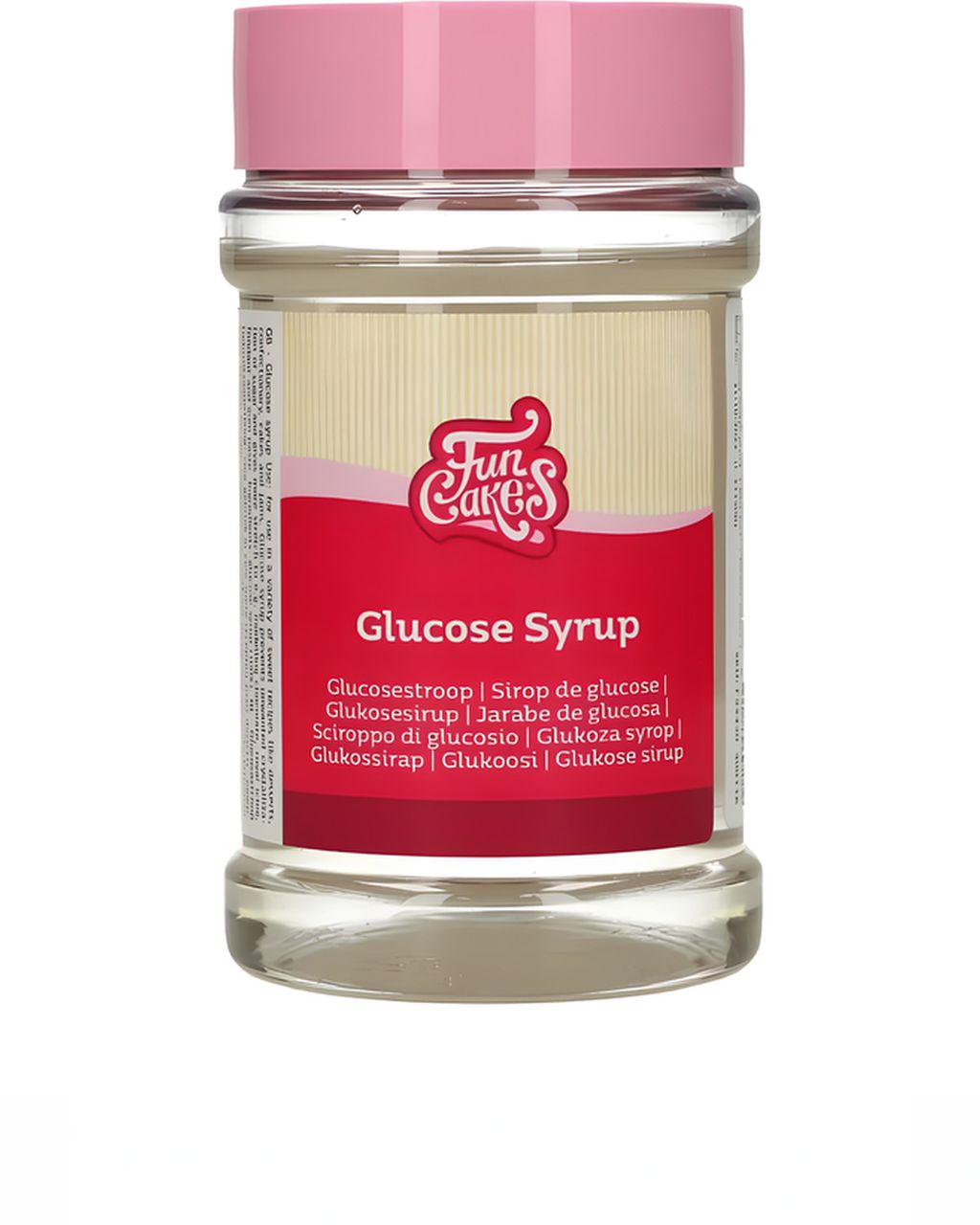
FunCakes Glucose Syrup (375 g)
Fondant for Choux Rings: How to Warm It So It Stays Glossy and Doesn't Set Rock-Hard
Updated Oct 17, 2026
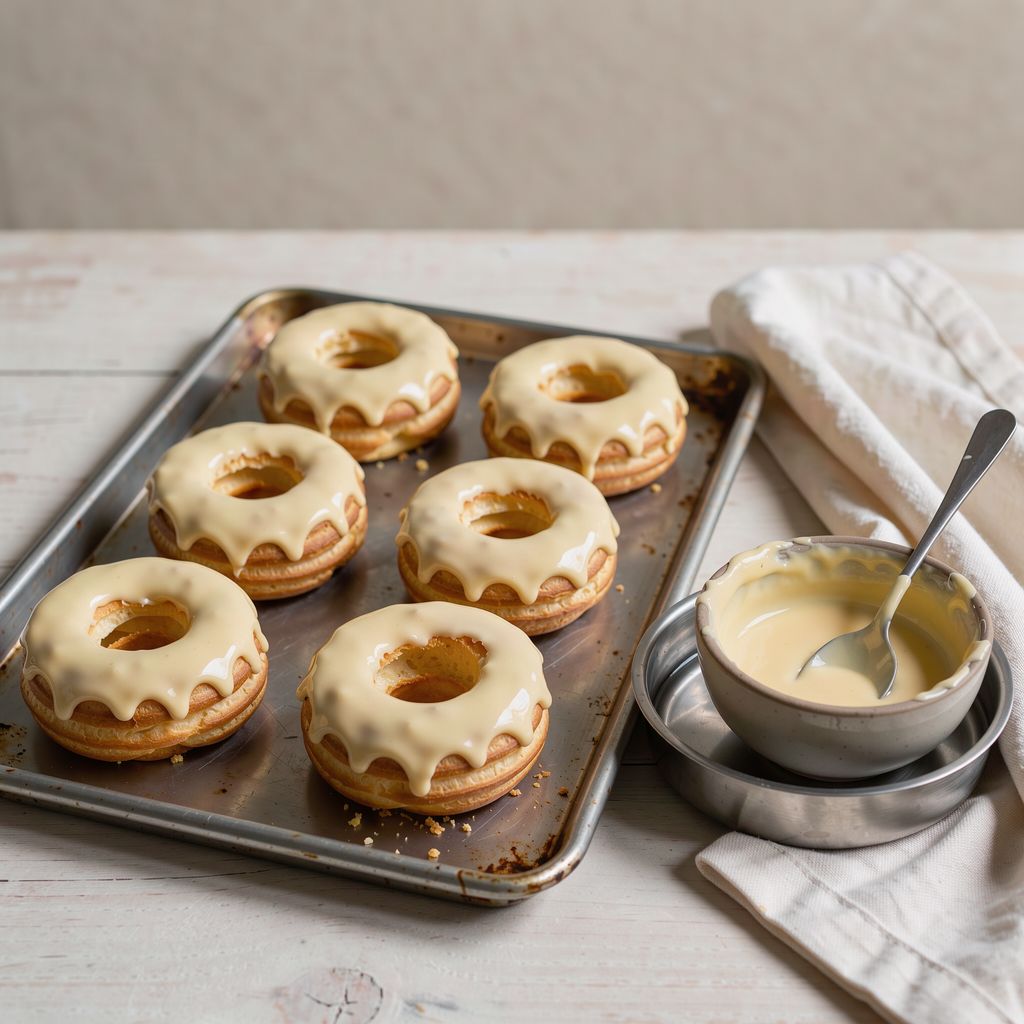
Fondant for choux rings only turns glossy if you warm it slowly in a water bath to 32–35 °C (90–95 °F) – lukewarm, never above 37 °C (99 °F) – and thin it with water a teaspoon at a time, until it runs off the spoon like thick cream. Overheated past 37 °C, it turns dull, dries brittle and starts to crack. Below you'll find the whole process: warming, thinning, classic yellow, chocolate fondant, homemade fondant from glucose syrup, and what to do when the glaze goes wrong.
Fondant for choux rings is pouring fondant: a thick white mass of sugar, water and glucose syrup, in which millions of tiny sugar crystals are coated in syrup. It's these microscopic crystals that create the smooth, velvety shine you know from bakery choux rings and rum slices.
It isn't the same as:
rolled fondant (the sheet icing used for covering cakes) – it's as firm as modeling clay and doesn't pour,
powdered sugar icing – it's more translucent, dries crisp and doesn't have that kind of shine,
chocolate and chocolate coating – they set thanks to fat (cocoa butter in chocolate, usually vegetable fat in coating), not sugar crystals.
For an overview of all the glazes and their ratios, see Types of icing for cookies and cakes: overview, ratios and when to use which. Here we're focusing purely on the technique for pouring fondant.
Warm fondant in a water bath, ideally to 32–35 °C (90–95 °F) and never above 37 °C (99 °F). Check it with a thermometer, or dab a little fondant on the inside of your wrist – it should feel only lukewarm, not warm.
Cut off only as much fondant as you'll use. For 20–25 choux rings, about 250–300 g is enough.
Cube it and put it in a bowl set over a pan of water at 50–60 °C (122–140 °F). The water shouldn't boil or touch the bottom of the bowl.
Stir with a spatula until the fondant softens and comes together. This takes 5–10 minutes.
Once the fondant is lukewarm and fluid, take the bowl off the heat. If it thickens while you work, put it back over the water for just a few seconds.
You can use a microwave too, but only on low power in 10-second bursts, stirring each time. Fondant heats unevenly in it, and the edges overheat easily.
Thin the fondant a teaspoon at a time with warm water or sugar syrup, until it runs off the spoon like thick cream and smooths itself out again within a few seconds. For 250 g of fondant, 1–3 teaspoons of liquid is usually enough.
The choux ring test: dip one. The glaze should cover, the pastry shouldn't show through, and it shouldn't run down the sides.
Fondant that's too thick makes a heavy layer that pulls into strings and cracks as it dries.
Fondant that's too thin turns see-through, runs off and stays sticky.
For a nicer shine, add 1 teaspoon of glucose syrup per 250 g of fondant instead of plain water. Glucose slows crystallization, so the glaze stays flexible and glossy for longer. FunCakes glucose syrup (375 g) will also come in handy for the homemade fondant below. To flavor the fondant, use a teaspoon of rum or lemon juice instead of water, but keep in mind that these thin it too.
For bakery-style yellow, use gel food coloring, not liquid. Gel gives a rich color from just a few drops and doesn't thin the fondant. Liquid coloring from the supermarket turns it runny before it even takes the color.
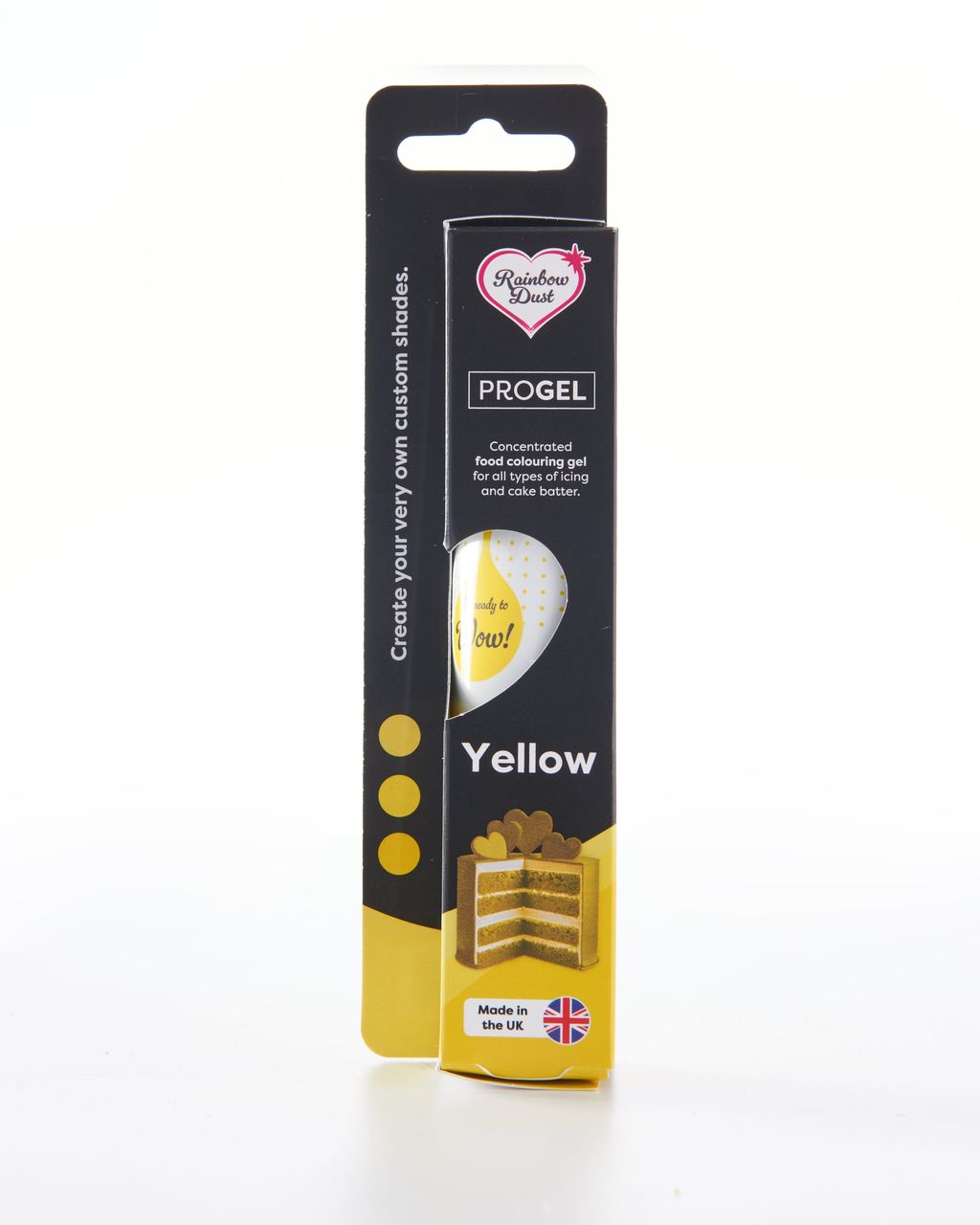
Add the color with the tip of a toothpick. For a pale yellow, a grain of rice's worth per 250 g of fondant is enough. ProGel gel color – Yellow (25 g) is concentrated, so add it gradually.
Color only after warming and thinning. The color darkens slightly as it dries, so stop one shade lighter than you want.
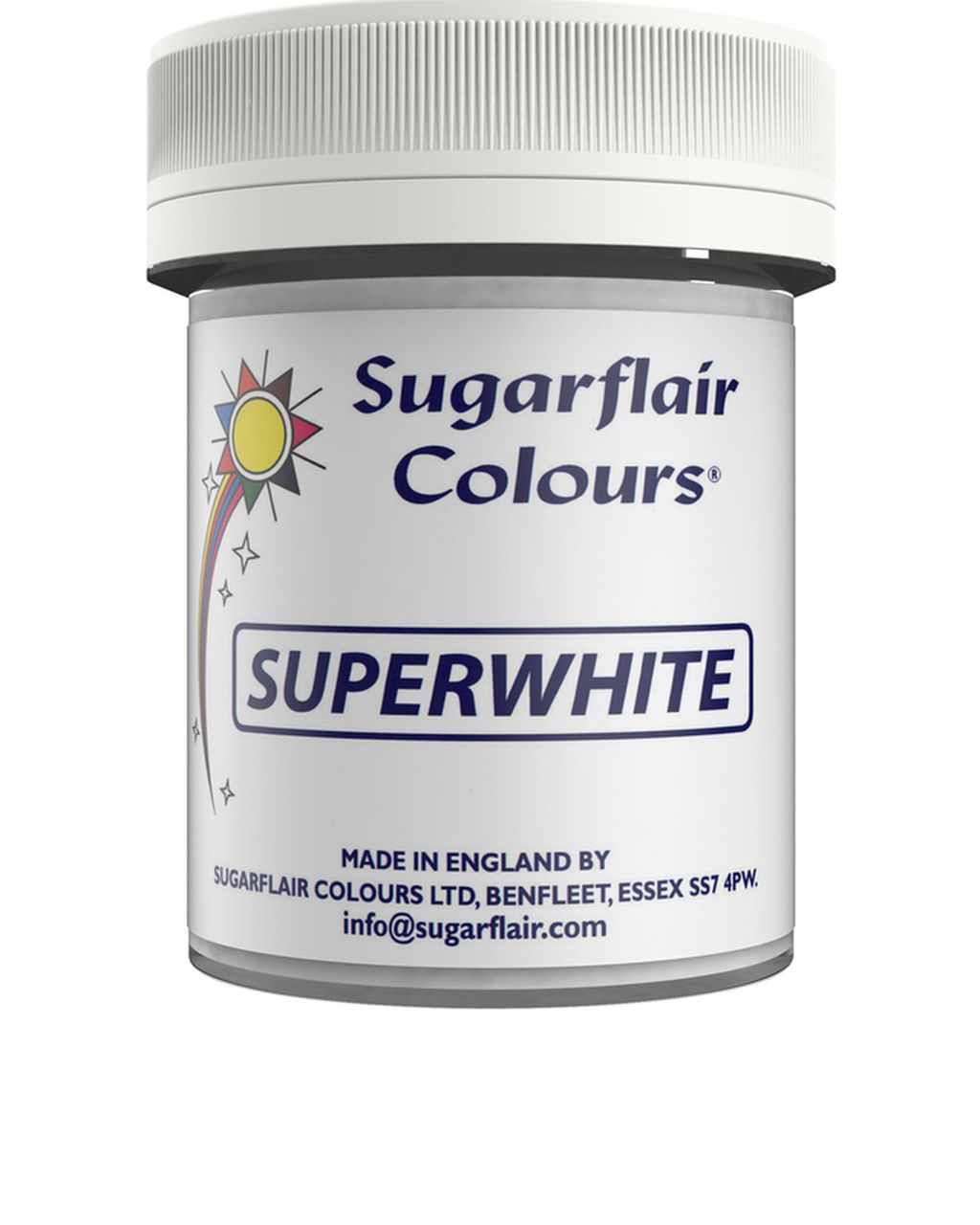
For a pure white or opaque pastel shades, add a drop of Sugarflair Super White icing color (20 g). Thinned fondant is often slightly translucent and lets the brown pastry show through. Super white covers it, so the yellow comes out brighter and the white truly white.
Other brands (Wilton, Colour Mill and more) sell gel colors too, and they work the same way. What matters is that it's a gel or paste. Oil-based colors are for chocolate – don't put them in fondant. You'll find more colors and glazes in the icing and glaze category.
Chocolate fondant for choux rings is made by stirring melted dark chocolate or cocoa into warmed white fondant. For 250 g of fondant, use:
40–60 g dark chocolate (50–70%), melted and cooled to about 35 °C (95 °F). You get a rich flavor and a deep shine.
or 1–2 tablespoons of good-quality cocoa stirred together with a teaspoon of warm water. It's cheaper and drier, and the color comes out more brown than black.
Chocolate thickens the fondant, so you'll need to thin it more – an extra 1–2 teaspoons of water is fine. Keep it below 37 °C (99 °F) as well. At higher temperatures the cocoa butter separates out, and the glaze turns gray and dull as it dries. Ready-made chocolate fondant is also sold in shops. It's convenient, but it tastes more sweetly of cocoa than of real chocolate.
Fondant most often turns dull because it was overheated. Above roughly 37 °C (99 °F), the tiny crystals begin to dissolve in the syrup. As it cools, they crystallize again, but larger and irregular, and those don't reflect light.
Other causes:
fondant that's too thin: the layer is thin and you see a sticky film instead of a satin finish,
cold or damp choux rings straight from the fridge: moisture condenses on the surface and the fondant won't dry to a shine,
stirring it into a foam: the air you mix in makes the surface milky and dull, so stir slowly with a spatula.
Rescue: you can try to save slightly overheated fondant. Let it cool and stir in a piece of fresh, unwarmed fondant. The more it was overheated, the smaller the chance that the shine comes back. If it doesn't, use it somewhere less visible or start a new batch.
Fondant cracks when the layer is too thick, overheated, or applied to damp or cold pastry. A thick layer dries on the outside before the inside and tears as it shrinks. Overheated fondant crystallizes coarsely and turns brittle like rock candy.
Keep the layer to 2–3 mm. Dip the choux ring only by its top, let the excess drip off and wipe the edge against the rim of the bowl.
The pastry should be at room temperature. Let filled choux rings from the fridge rest for 15–20 minutes before glazing.
Add glucose syrup (1 teaspoon per 250 g). The glaze stays more flexible and doesn't crack, even when you cut it.
Don't dry the finished choux rings in the oven or near a radiator. Let them dry freely at room temperature for 20–30 minutes.
Fondant left to harden in the bowl also turns rock-hard. It can be warmed again – just treat it as carefully as the first time.
You make homemade fondant by cooking 500 g granulated sugar, 175 ml water and 100 g glucose syrup to 115 °C (239 °F), the soft-ball stage. Then you let it cool to about 40–45 °C (104–113 °F) and stir until it turns white and thick. The yield is about 650 g, enough for 2–3 trays of choux rings.
Pour the water into a pan, pile the sugar in the middle and add the glucose. Heat without stirring until the sugar dissolves.
Wash down the sides of the pan with a wet brush. Every stray crystal on the edge can trigger coarse crystallization of the whole batch.
Cook to 115 °C (239 °F), using a thermometer – guessing doesn't work here.
Pour the syrup onto a wet marble slab or into the bowl of a stand mixer and let it cool, without stirring, to 40–45 °C (104–113 °F).
Then stir it (with a scraper on the slab, or with the mixer on low speed). Within 5–10 minutes the clear syrup turns white and sets. Those are the tiny crystals we're after.
Knead the mass until smooth, wrap it in plastic wrap and let it rest at least overnight. By the next day it's smoother.
Glucose is key here: it stops the sugar from crystallizing into large grains. We go into what else it can do and when you really need it in the article Glucose syrup: what it is, what to use it for and when you really need it.
For a few dozen choux rings, store-bought fondant is simpler. For Christmas, or if you bake often, homemade pays off.
Store-bought fondant (most often sold in 1 kg blocks) has consistent quality and fine crystals – you just warm it. It tends to be pricier, though, and a kilo is a lot for home baking.
Homemade fondant costs a fraction of the price and you can flavor it right away. But you need a thermometer, an hour of time and a bit of practice. The first batch may not be as smooth as from a bakery.
Powdered sugar icing (powdered sugar plus a few drops of water or lemon juice) is the emergency option. It's ready in a minute, but it lacks that velvety shine and dries crisp.
Whichever you choose, warming, thinning and coloring work the same way for both fondants.
Unheated fondant keeps for several weeks if it's wrapped well in plastic wrap and stored in an airtight container. The key is keeping moisture away from it. Fondant that has already been warmed and thinned should be used within a few days. Rewarm it to 32–35 °C (90–95 °F) before using it again.
Fondant on choux rings dries on the surface in 20–30 minutes at room temperature and sets completely in about an hour. Don't cover the rings or stack them during that time, or the glaze will get marked.
You can put fondant-glazed choux rings in the fridge, and with a cream filling they belong there, but over time the fondant turns damp and loses some of its shine. Let the glaze dry completely first, then store the rings in a box rather than under plastic wrap, so that no water condenses on the fondant.
Choux rings that are already glazed with fondant don't freeze well, because the glaze turns damp, dull and sticky as it thaws. It's better to freeze the baked, empty shells, then fill them after thawing and glaze them with fondant just before serving. Unheated fondant doesn't need freezing – wrapped well, it keeps for several weeks.
You can make fondant for choux rings without glucose syrup by replacing it with a teaspoon of lemon juice or a pinch of cream of tartar per 500 g of sugar, but the result is usually less stable. The acid breaks down some of the sugar and slows crystallization, but the glaze hardens faster. Corn syrup works much like glucose. You'll find more options in the article [What to use instead of glucose syrup](/cs/articles/cim-nahradit-glukozovy-sirup).
One recipe worth heating the oven for, one tip, and one deal from the shop. Nothing else.