How Many Grams in a Teaspoon? Salt, Baking Soda, Yeast, Sugar and More
How Many Grams in a Tablespoon of Sugar and Salt? Level vs Heaped
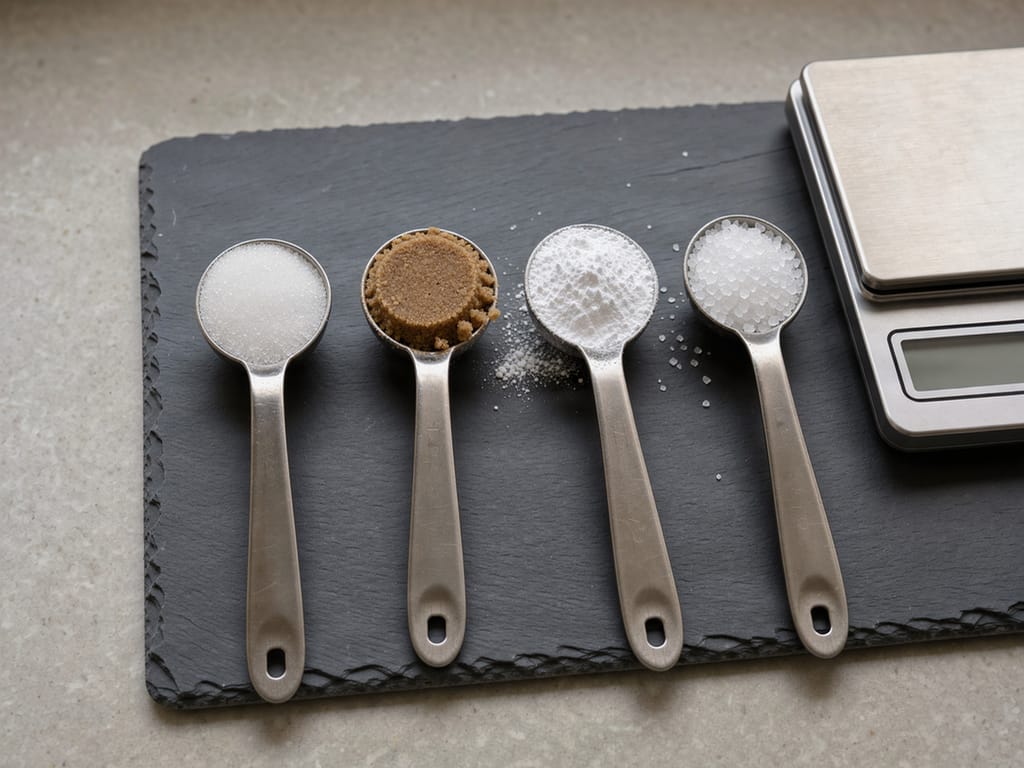
Updated Nov 20, 2026
A level US tablespoon of granulated sugar weighs about 12.5 g, and a level tablespoon of fine table salt about 18 g. Brown sugar, powdered sugar and kosher salt weigh quite differently, and a heaped spoon or an Australian 20 ml tablespoon holds more again. Here are the figures and where they come from.
Per level US tablespoon (14.8 ml), all approximate:
Granulated sugar: 12.5 g
Brown sugar, packed: 13–14 g
Brown sugar, loose: 9 g
Powdered sugar, unsifted: 8 g
Fine table salt: 18 g
Morton kosher salt: 14–16 g
Diamond Crystal kosher salt: 8–8.4 g
The sugar and table salt figures come from USDA FoodData Central. The kosher salt figures are America's Test Kitchen's teaspoon weights times three, and King Arthur Baking's tablespoon weights; the two sources differ slightly. A metric tablespoon (15 ml) holds practically the same; an Australian tablespoon (20 ml) holds about a third more.
For cups and other amounts, use our cups and spoons to grams calculator.
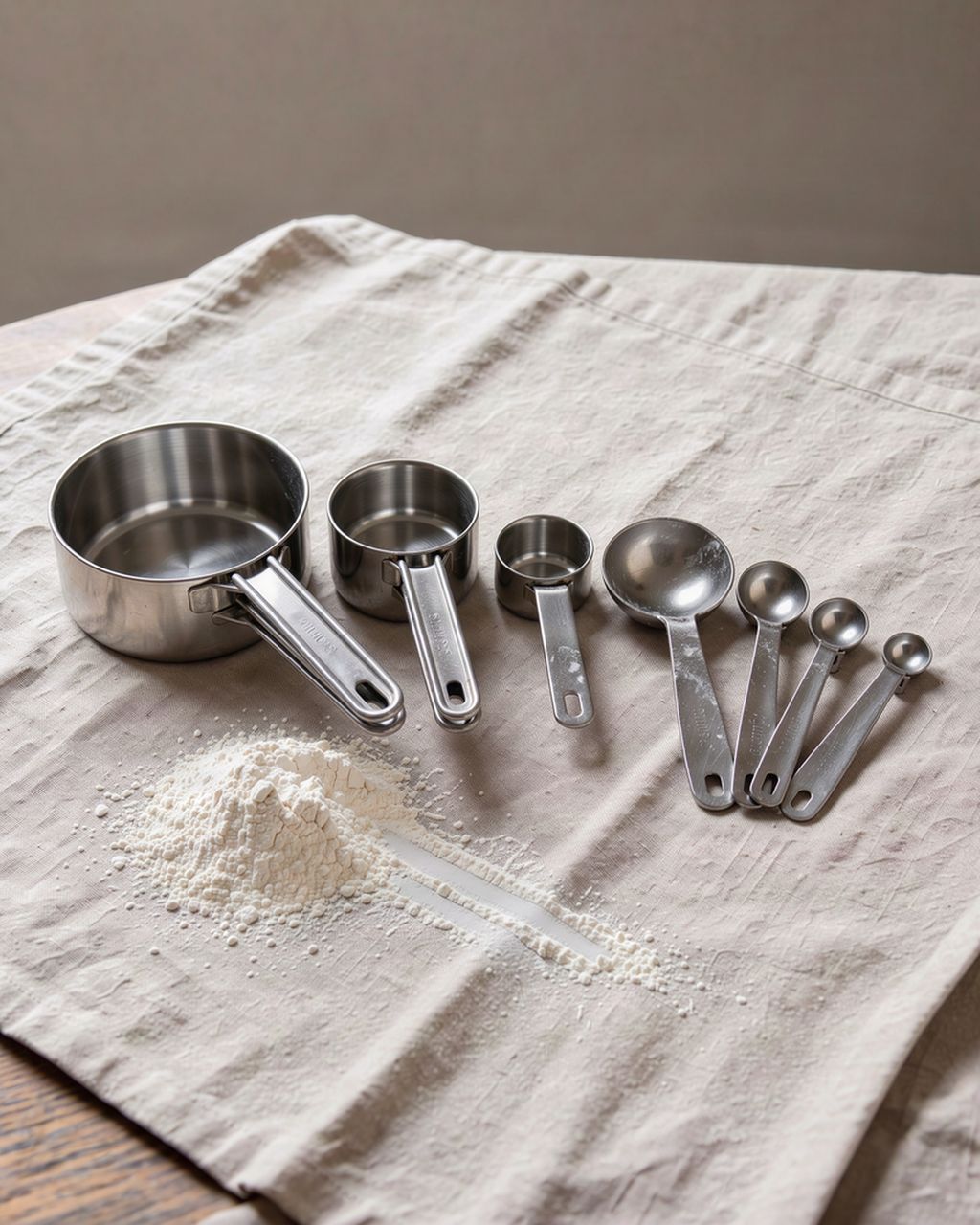
Every figure in this article is for a level measuring spoon: fill it, then sweep the top flat with the back of a knife. That is what American, British and Australian recipes mean unless they say otherwise.
A heaped (or rounded) spoon is whatever stays on the spoon when you lift it out of the bag. It can hold half as much again as a level spoon, or more, and it changes with the spoon's shape and the ingredient. Fine powders such as powdered sugar pile higher than coarse crystals.
Czech recipes use both: zarovnaná lžíce (level spoon) and vrchovatá lžíce (heaped spoon). Older Czech recipes often mean an ordinary dining spoon from the drawer rather than a measuring spoon, so treat "1 lžíce" as roughly a tablespoon and taste as you go. For sugar in a cake, a scale settles it.
Granulated sugar: about 12.5 g per level tablespoon. USDA FoodData Central lists 4.2 g per teaspoon and 200 g per US cup (236.6 ml), and a US cup is 16 tablespoons. See 1 cup of sugar in grams for the cup figures.
Brown sugar, packed: about 13–14 g. USDA lists 4.6 g per packed teaspoon and 220 g per packed US cup; King Arthur Baking lists 213 g per packed cup. Light and dark brown sugar weigh the same for this purpose.
Brown sugar, loose: about 9 g. USDA lists 3 g per unpacked teaspoon. This is why American recipes say "packed": it makes the spoon repeatable.
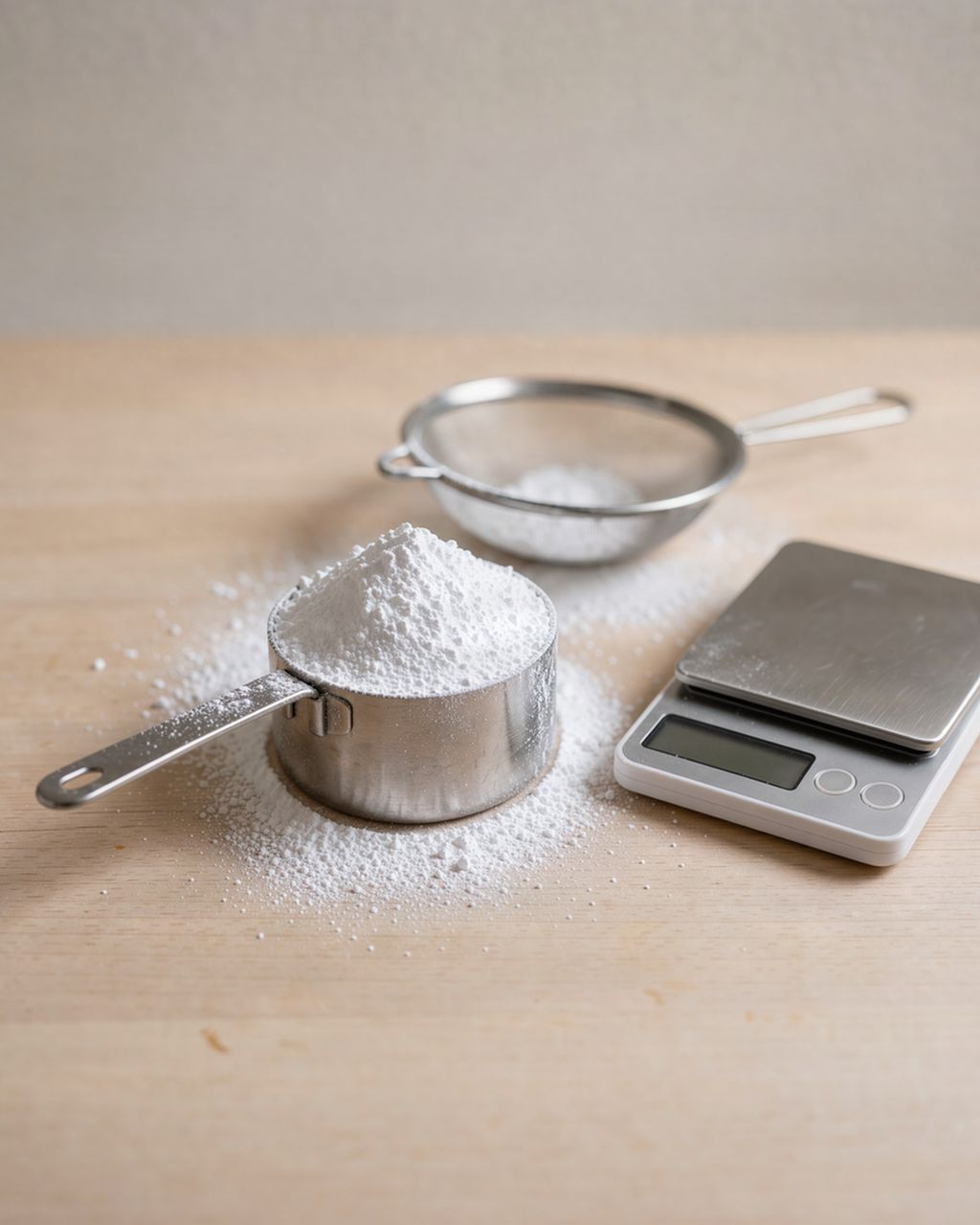
Powdered sugar (icing sugar, confectioners' sugar): about 8 g unsifted, per USDA. Sifted, USDA's 100 g per US cup works out to about 6 g per tablespoon.
Caster sugar (UK) and superfine sugar (US) are finer than granulated. King Arthur Baking weighs superfine (caster) sugar at 190 g per US cup, about 12 g per level tablespoon, so it is close to granulated. For which sugar does what in a bake, see our guide to types of sugar for baking.
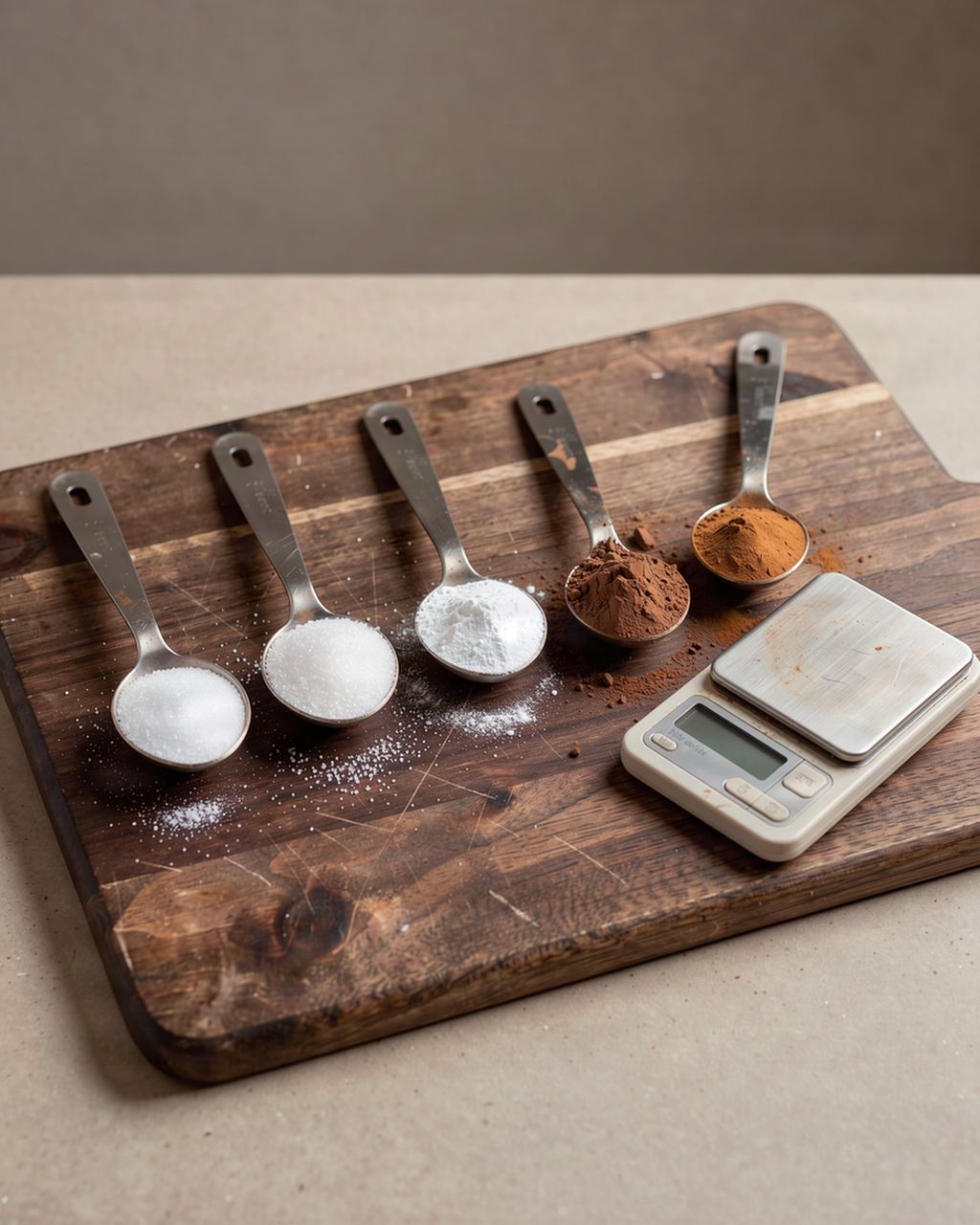
Salt is where the type of salt changes the weight most, because crystal shape decides how much air sits in the spoon.
Fine table salt: about 18 g per level tablespoon (USDA FoodData Central, which also lists 6 g per teaspoon).
Morton kosher salt: about 14–16 g. America's Test Kitchen weighs a teaspoon at 4.8 g (14.4 g per tablespoon); King Arthur Baking lists 16 g per tablespoon.
Diamond Crystal kosher salt: about 8 g. America's Test Kitchen weighs a teaspoon at 2.8 g (8.4 g per tablespoon); King Arthur Baking lists 8 g.
Sea salt: depends entirely on the grind. Fine sea salt behaves much like table salt; coarse and flaky sea salts are lighter per spoon and vary by brand. Check the label or weigh it.
By volume, 1 part table salt equals about 1¼ parts Morton kosher salt or 2 parts Diamond Crystal. The 1¼ follows from the gram weights above and matches Morton's own conversion chart; some sources, America's Test Kitchen among them, round it to 1½. So a recipe that says "1 tablespoon kosher salt" and was written with Diamond Crystal needs only about half a tablespoon of table salt. Use the full tablespoon of table salt and you double the salt.
Most salt sold in Czech and European shops is fine table salt or sea salt, so if you cook American recipes from here, that swap is the one to remember. If a dish has already gone too far, our guide on how to fix oversalted food explains what works.
Recipe of the week, one tip that saves you time and one deal from the shop. Unsubscribe in one click.
The next issue goes out on Thursday, November 26.
Australia uses a 20 ml tablespoon, which holds 4 teaspoons instead of 3. The US tablespoon is 14.8 ml, and UK, Canadian, New Zealand and European tablespoons are 15 ml.
Per level Australian tablespoon (20 ml), scaled from the figures above:
Granulated sugar: about 17 g
Brown sugar, packed: about 18–19 g
Powdered sugar, unsifted: about 11 g
Fine table salt: about 24 g
If you use an Australian recipe with a 15 ml spoon, use 1 tablespoon plus 1 teaspoon for each tablespoon. If you use a US or European recipe with an Australian spoon, measure in teaspoons: 3 teaspoons per tablespoon. With salt and baking powder, that difference matters.
Spoons are fine for seasoning a soup or sweetening a sauce, where you taste as you go. Weigh in three cases:
Salt in bread and yeast dough. Too much salt slows the yeast, and you cannot taste raw dough to fix it.
Sugar in a cake. Sugar affects tenderness and browning, not only sweetness. Four or five tablespoons of sugar can easily be off by 10 g.
Kosher salt in any American recipe. Unless you own the same brand the author used, convert to grams first.
A kitchen scale that reads in 1 g steps is enough for sugar. For salt in small amounts, a scale with 0.1 g steps is better. There is more about each on our salt and powdered sugar ingredient pages.
A level US tablespoon of granulated sugar weighs about 12.5 g. That matches USDA FoodData Central's 4.2 g per teaspoon and 200 g per US cup.
A level tablespoon of fine table salt weighs about 18 g, according to USDA FoodData Central. Kosher salt is lighter per spoon: about 14 to 16 g for Morton and about 8 g for Diamond Crystal; America's Test Kitchen and King Arthur Baking differ slightly.
A level tablespoon of packed brown sugar weighs about 13 to 14 g. Spooned in loosely, it weighs only about 9 g (USDA FoodData Central).
A level tablespoon of unsifted powdered sugar (icing sugar) weighs about 8 g, according to USDA FoodData Central. Sifted, it weighs about 6 g.
There is no fixed weight for a heaped tablespoon, because it depends on the spoon and how high you pile it. If a recipe matters, weigh the sugar or ask the author whether they meant level.
Yes, an Australian tablespoon is 20 ml, while US, UK, Canadian and European tablespoons are about 15 ml. A level Australian tablespoon of sugar weighs about 17 g, and of table salt about 24 g.
One recipe worth heating the oven for, one tip, and one deal from the shop. Nothing else.