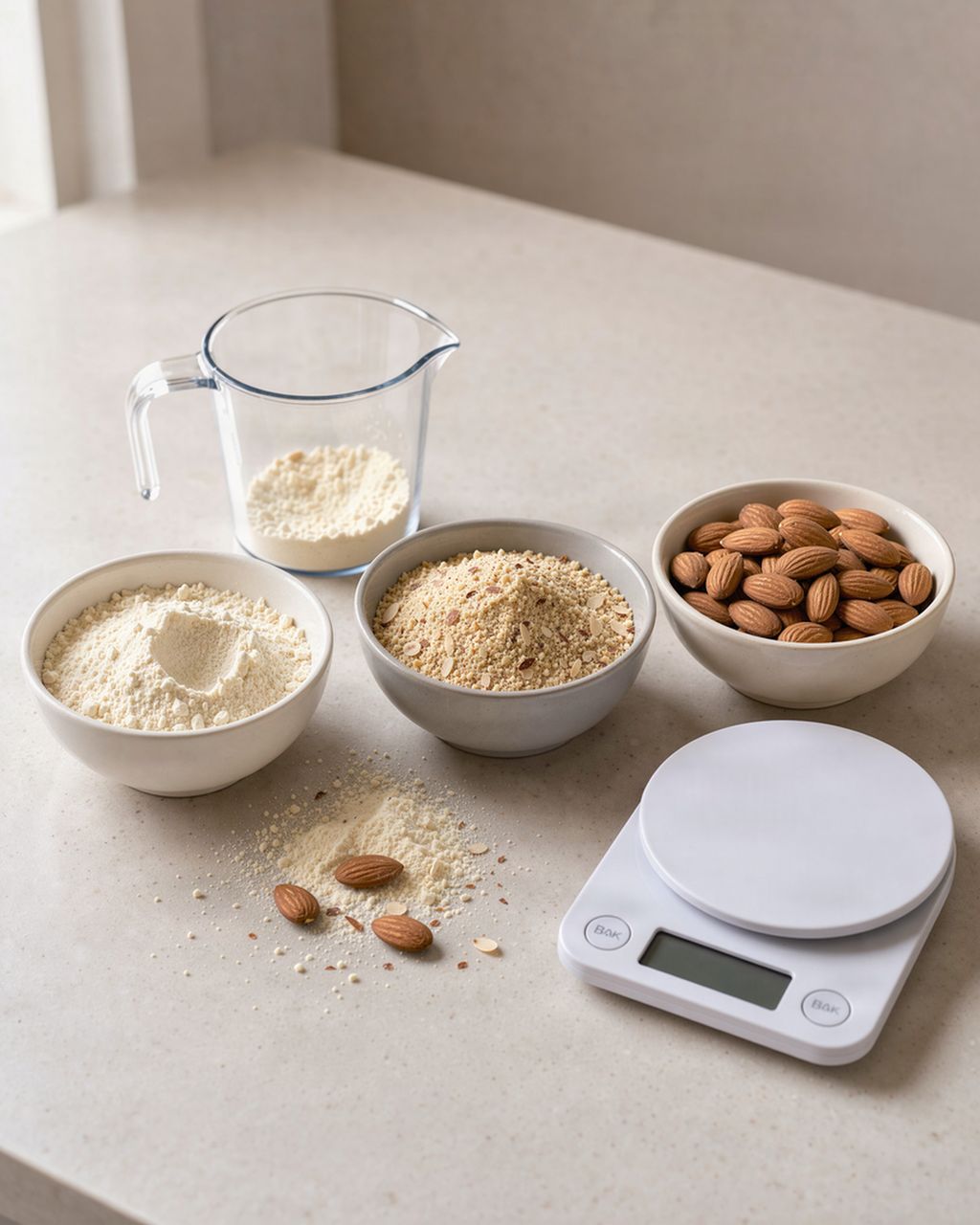
How Many Grams in a Cup of Almond Flour? Flour, Meal and Ground Almonds
Almond Flour vs All-Purpose Flour: Can You Swap Them in Baking?
Updated Nov 21, 2026
Almond flour can't replace all-purpose flour one for one, because it has no gluten, much more fat and far less starch, so bakes come out denser, moister and more crumbly. You can swap in part of the flour easily, or use a recipe written for almond flour. Almond flour is ground almonds, a tree nut, so it is not suitable for anyone with a tree-nut allergy.
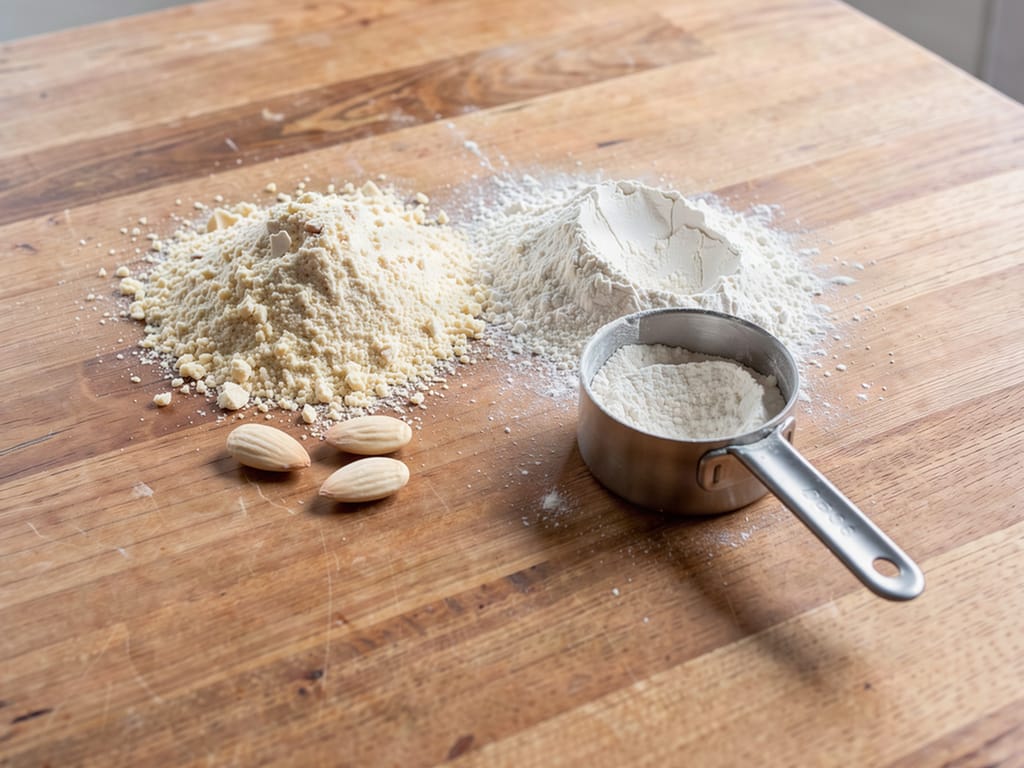
All-purpose flour (all-purpose flour, plain flour in the UK and Australia): milled wheat. Mostly starch, with proteins that form gluten when mixed with water. Gluten gives structure, stretch and rise.
Almond flour (almond flour): finely ground almonds, usually blanched (skins removed). Mostly fat and protein, with little starch and no gluten.
That single difference, gluten and starch versus fat, explains every change you'll see when you swap them. If you are deciding between almond flour and ground almonds, see almond flour vs ground almonds.
The two are close to opposites in composition. Per 100 g, roughly:
All-purpose wheat flour (USDA FoodData Central, enriched): about 10 g protein, 1 g fat and 76 g carbohydrate, around 360 kcal.
Almond flour (US package labels and Almond Board of California averages from FoodData Central): about 20–24 g protein, 49–54 g fat and 16–23 g carbohydrate, of which about 9–10 g is fiber, around 570–620 kcal.
Figures vary by brand, so check your pack. The fat is the main reason almond flour bakes are moist and tender, and why they brown faster.
Partly, yes. Fully, rarely. Here is what to expect:
Up to about a quarter of the flour: swap by weight and change nothing else. The bake gets a little moister, richer and more tender, with a nutty flavor.
Up to about half: works in forgiving bakes such as muffins, quick breads, crumble toppings and some cookies. Expect a denser, more fragile crumb. An extra egg helps hold it together.
All of it: use a recipe written for almond flour. Straight 1:1 swaps tend to spread, sink or crumble.
Yeast breads, puff pastry, strudel: don't swap. They depend on gluten to stretch and trap gas.
Weigh rather than scoop. All-purpose flour is 125 g per US cup (236.6 ml) and 132 g per metric cup (250 ml); see a cup of flour in grams. US almond flour packs list 28 g per quarter cup, so about 112 g per US cup. Swapping by the cup therefore gives you less almond flour by weight. Our cups and spoons to grams calculator handles other amounts.
In wheat baking, gluten holds the crumb together. Almond flour has none, so something else has to.
Eggs are the usual answer. Almond flour cakes and cookies often use more eggs than wheat versions.
Starch: a little tapioca starch, potato starch or cornstarch alongside almond flour helps cookies and cakes hold their shape.
Resting and cooling: almond flour bakes firm up as they cool. Let cakes and cookies cool in the pan or on the tray before moving them.
Almond flour also absorbs less liquid than wheat flour, so batters made with it can look looser. Don't add more almond flour to compensate; that makes the bake heavier.
Browns faster. The fat and protein color quickly. Many almond flour recipes bake at a slightly lower temperature, or cover the top loosely with foil partway through. Ovens can run hotter or cooler than the dial, so watch the first batch.
Rises less. Without gluten, it can't hold as much gas. Bakes are flatter and denser.
Moist and tender. That is the upside: almond flour cakes stay soft, and many Central European nut cookies and tortes rely on it.
Gluten-free baking. Almond flour is one of several naturally gluten-free flours that work best blended; if you are baking for someone who must avoid gluten, choose a pack labeled gluten-free. Our gluten-free flour guide covers the other flours and how to blend them.
Cookies: a quarter to a half almond flour gives tender, slightly chewy cookies that spread a little more. Chill the dough so it holds its shape.
Muffins and quick breads: up to about half works well. Add an extra egg if the batter seems loose, and expect a moister, denser crumb.
Pancakes: a small share adds flavor. All-almond pancakes are fragile, so make them small and flip gently.
Sponge and layer cakes: keep the swap small, around a quarter, or the cake won't rise as high.
Shortcrust and tart pastry: a quarter almond flour makes a short, crumbly, nutty pastry. It is softer to roll, so chill it well and roll between sheets of baking paper.
Breading and coating: almond flour browns quickly in the pan, so use moderate heat.
Whatever the recipe, change one thing at a time, and write down what you did.
Recipe of the week, one tip that saves you time and one deal from the shop. Unsubscribe in one click.
The next issue goes out on Thursday, November 26.
Choose almond flour for:
French macarons, frangipane and almond tortes.
Flourless or low-flour cakes, such as Spanish almond cake.
Tender, nutty cookies and crumble toppings.
Stick with all-purpose flour for:
Yeast doughs: bread, rolls, vánočka (Czech braided Christmas bread) and koláče (round filled yeast pastries).
Light sponges, layer cakes and pastry.
Sauces and gravies, where you need starch to thicken.
In Czech Christmas baking, ground nuts and almonds usually join wheat flour rather than replacing it, as in vanilla crescent cookies and Linzer dough. That partial swap is the easiest way to get almond flavor without losing structure.
Not one for one in most recipes. Almond flour has no gluten and much less starch, so a straight swap gives a denser, flatter, more crumbly bake. Replacing up to about a quarter of the flour usually works without other changes; for more, use a recipe developed for almond flour.
There is no single ratio that works everywhere. A safe start is replacing about a quarter of the all-purpose flour with almond flour by weight. Recipes made entirely with almond flour usually add extra egg for binding and use different amounts of liquid and leavening.
No. Regular flour is milled from wheat and is mostly starch with some gluten-forming protein. Almond flour is finely ground blanched almonds: mostly fat and protein, with no gluten. They behave very differently in baking.
Often, yes. Almond flour has no gluten to hold a bake together, so recipes written for it usually rely on eggs for structure and binding. If you replace more than a small share of wheat flour, expect to need an extra egg or another binder.
Almond flour is made from almonds, which contain no gluten, but it can be processed alongside wheat. If you need to avoid gluten, choose a pack labeled gluten-free and check for any may-contain warning.
No. Almond flour is ground almonds, a tree nut, and is not suitable for anyone with a tree-nut allergy. Packs may also carry a may-contain warning for peanuts or other nuts, so check the package if you are baking for someone with a peanut or tree-nut allergy.
One recipe worth heating the oven for, one tip, and one deal from the shop. Nothing else.