- Season
- Made and sold all year round.
- Price
- Low
Calories and nutrition
per 100 g
138 kcal
Calories
30.3 g
Protein
1.4 g
Carbs
1 g
Fat
Olomouc Cheese
Olomoucké tvarůžky (Olomouc curd cheese) are a Czech ripened cheese made from fat-free sour-milk quark, which ripens under a golden-yellow smear on the surface and has a strong, pungent smell. They are made in Loštice in Moravia and carry the EU protected geographical indication. Per 100 g they have about 28 g of protein and only 0.5 g of fat.
per 100 g
138 kcal
Calories
30.3 g
Protein
1.4 g
Carbs
1 g
Fat
Do not leave it in the warm for long. At room temperature it over-ripens quickly and the smell spreads. Put it out only while it is being eaten.
Keep it in the fridge at 4–8 °C, as the producer advises, in its original pack or a closed container away from other food. It keeps ripening in the fridge: if you like it riper, leave it until close to the best-before date. Use an opened pack as soon as you can.
Freezing is not worth it. Cold stops the ripening, and after thawing the cheese is watery and loses its typical texture. Bake or fry leftovers instead.
Look for the name Olomoucké tvarůžky and a producer in Loštice; only cheese made there may carry the protected geographical indication. It is sold in clear packs, so you can judge ripeness by eye. The producer A.W. links ripeness to the time left before the best-before date: four weeks before it the cheese is firm and golden-yellow with a white quark core; one week before it is elastic to soft, orange-yellow to brownish-orange and ripe almost throughout. An orange to brownish surface, a white mould that the producer names as Oospora lactis and Geotrichum candidum, and a slightly misshapen form are, according to the producer, harmless signs of ripening. Throw it away if it has black, green or grey mould, is very soft and leaking liquid, or tastes bitter.
Another sour-milk cheese, such as German Harzer or Handkäse. They belong to the same family and smell similar, but are usually larger.
Romadur or Czech beer cheese. They also ripen under a smear and smell strongly, but are made by curdling milk, so they are fattier and creamy rather than springy.
Tvarůžky are eaten with their smear; they are not peeled. Take them out of the fridge a little before serving so the aroma opens up. For bread, slice them into rounds; for a spread, grate them or mash them with butter using a fork. To fry, coat them in flour, egg and breadcrumbs and fry briefly in hot fat so they melt inside without running out. In soups and sauces, add them chopped at the end and let them melt.
Do not throw away over-ripe, soft pieces unless they are mouldy or bitter: mash them with butter into a spread, bake them with potatoes or melt them into a soup, where the strong taste does not matter.
Roughly what one piece weighs.
18 g
1 piece
Most often eaten cold on buttered bread with onion and caraway, with beer. They are marinated in oil with onion and hot peppers. Heat softens them and makes the smell stronger: they are fried in breadcrumbs, baked with potatoes or on bread, and added to soups, sauces and spreads. In Loštice they even go into savoury pastries.
Olomoucké tvarůžky (Olomouc curd cheese) are a Czech ripened cheese made from fat-free sour-milk quark, which ripens under a golden-yellow smear on the surface and has a strong, pungent smell. They are made in Loštice in Moravia and carry the EU protected geographical indication. Per 100 g they have about 28 g of protein and only 0.5 g of fat. Unlike most cheeses, tvarůžky are not made by curdling milk with rennet. The base is sour-milk quark from skimmed cow's milk, which is ground, salted, shaped into small discs, rings or sticks, dried and then ripened. The producer A.W. lists only quark, salt, acidity regulators (E500, E170) and dairy cultures, with no rennet, colours or flavourings. The quark is made from pasteurised milk. They belong to the same family of sour-milk cheeses as German Harzer and Handkäse.
The smell is pungent, cellar-like and sharp, and reaches you before the taste. Young tvarůžky taste mildly of quark and have a pale quark core. The riper they get, the more elastic, golden right through and piquant they become. The taste is salty and intense, and the texture springy, almost jelly-like, not creamy like Romadur.
4 min read
Olomoucké tvarůžky are made from fat-free sour-milk quark, salt, acidity regulators and dairy cultures, without rennet. The quark is ground, salted and shaped into discs, rings or sticks. The pieces are dried for several days, then washed to remove yeasts from the surface so that bacterial cultures can take over, and ripened on racks right through to the centre. Finally they are chilled for another day or two. They used to be shaped by hand by women known as pleskačky; machines now do part of the work.
Tvarůžky come in several packs: A.W. sells, for example, small ones (100 g, 5 pieces), large ones (167 g, 6 pieces), rings with a hole in the middle (125 g, 4 pieces) or "dukáty", plus spiced pieces. Per 100 g the producer gives 127 kcal, 28 g protein, 0.5 g fat, 2.6 g carbohydrates and 4.5 g salt; the label on the small pack says 5 g salt. Lactose is at most 0.4 g per 100 g.
Tvarůžky ripen from the surface inwards under a smear, a layer of yeasts and bacteria that break down the quark proteins. Young ones have a white quark core and a mild smell; ripe ones are golden right through and distinctly piquant. Because they contain almost no fat, nothing softens the smell. A strong smell is normal and does not mean the cheese has gone off; the warning signs are coloured moulds, leaking liquid and a bitter taste.
They differ from Romadur and Czech beer cheese in how they are made: those are made by curdling milk, tvarůžky from quark. That is why they have a springy texture and far less fat. For comparison see Romadur and pivní sýr.
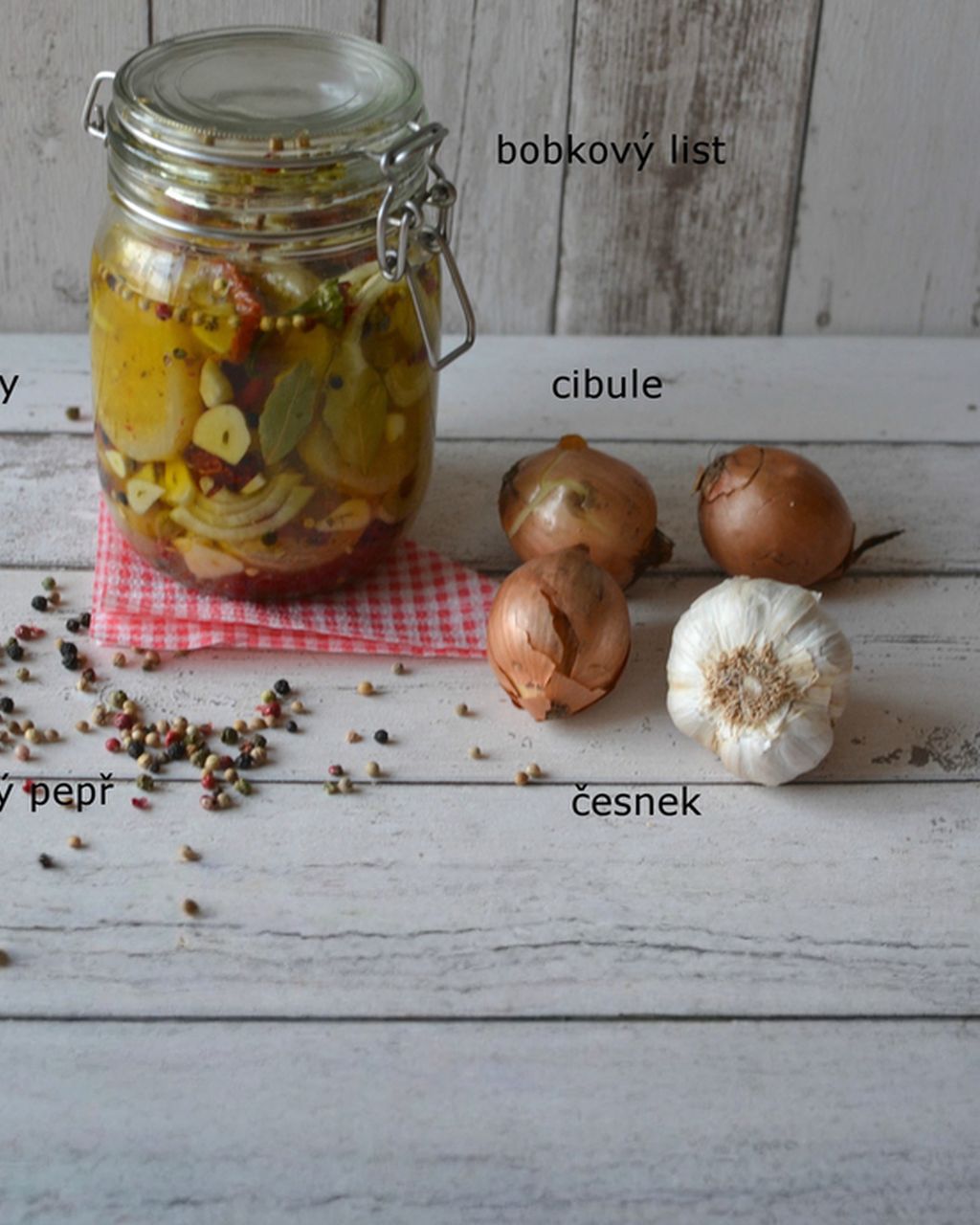
The classic is bread and butter with tvarůžky, raw onion and caraway, with a cold beer. They are also popular marinated in oil with onion and hot peppers; see our marinated spicy tvarůžky; let the jar of cheese, garlic and oil mature in the fridge, not in the pantry. For a party they suit a cheese board or the snacks for wine and beer.
Hot, they are fried in breadcrumbs, baked with potatoes, onion or on bread, and melted into soups and sauces. Heat softens them and makes the smell stronger, while the taste becomes milder.
Soft cheeses ripened under a smear are among the foods in which Listeria monocytogenes can grow, even in the fridge. The German Federal Institute for Risk Assessment (BfR) therefore advises pregnant women and other at-risk groups not to eat soft smear-ripened cheeses made from pasteurised milk, and names Olomouc cheese (Olmützer Quargel) among its examples, unless they are heated to at least 70 °C in the centre just before eating.
In pregnancy, then, tvarůžky are fine fried or baked until hot right through, but not cold on bread or marinated. Why soft cheeses do not belong on a pregnant guest's plate is also covered in our cheese board article.
Keep unopened tvarůžky in the fridge at 4–8 °C until the best-before date; they keep ripening and getting stronger in that time. Put opened ones in a closed container so the smell does not spread to other food, and eat them as soon as you can. Freezing is not worth it: ripening stops and they turn watery after thawing. More on freezing cheese in can you freeze cheese.
Olomoucké tvarůžky are named after the Olomouc markets where they were sold, but they were made mostly in the surrounding villages; the first written mention dates from the 15th century. They have been made in Loštice since 1876, when Josef Wessels started production there. After nationalisation the dairy belonged to state enterprises, and in 1991 it was returned to the founders' descendants. Since 2010 Olomoucké tvarůžky have had EU protected geographical indication status and are made entirely in Loštice, which also has a museum devoted to them.