- Season
- Available all year, mostly frozen. Chilled or thawed fish shows up at fish counters only now and then.
- Price
- Low
Calories and nutrition
per 100 g
63 kcal
Calories
13.4 g
Protein
0 g
Carbs
1 g
Fat
Barracuda
This page covers štika mořská ("sea pike"), the Czech shop name for hake: a lean white sea fish of the genus Merluccius, related to cod and sold mostly as frozen fillets. Our English listing labels it barracuda, but true barracuda (Sphyraena) is a different tropical fish.
per 100 g
63 kcal
Calories
13.4 g
Protein
0 g
Carbs
1 g
Fat
Do not leave raw fish at room temperature and do not thaw it on the counter. Refrigerate cooked fish within 2 hours.
Keep chilled or thawed hake at 0–4 °C in the coldest part of the fridge and cook it within 1–2 days. Thaw frozen fillets overnight in the fridge on a rack or in a colander so the water drains. Do not refreeze thawed fish. Eat cooked fish within 2 days.
Keep shop-frozen fish at −18 °C and use by the date on the pack. Close an opened bag well and press out the air, or the fillets get freezer burn. Thin fillets can be baked straight from frozen; allow extra time.
Read the label, not just the name. Under EU Regulation 1379/2013, fish packs must state the commercial and scientific name of the species, the production method, the catch area, the fishing gear category and, for chilled fish, whether it has been defrosted. For štika mořská, look for the Latin name Merluccius. Sphyraena is barracuda and Esox lucius is freshwater pike. Frozen fillets should lie loose in the bag, white to slightly creamy and without dry grey-yellow edges. Heavy frost inside the pack or fillets frozen into one block show the fish thawed and refroze. Compare prices by net weight, which is stated without the protective ice glaze. Thawed or chilled fish from the counter should smell only of the sea, not of ammonia or sourness. The flesh should be moist and springy; whole fish should have clear eyes and red gills.
Alaska pollock or Atlantic cod fillets. They are also lean white fish with similar flakes and work in the same recipes. Cod is firmer and usually pricier.
Any lean white fish fillet, such as hoki, pangasius or tilapia. Pangasius and tilapia are softer and blander, so season them more boldly.
Pat thawed fillets very dry with paper towels; hake holds a lot of water and would steam instead of browning. Run a finger along each fillet, because even "boneless" fillets sometimes hide a pin bone; pull it out with tweezers. Salt just before cooking. To fry, coat in flour, egg and breadcrumbs. The flesh is delicate, so turn it only once with a wide spatula. Cook it until the thickest part reaches at least 63 °C, the flesh is opaque white and flakes. Eat it raw or only marinated only if it was frozen at −20 °C or below for at least 24 hours: sea fish can carry Anisakis larvae, and marinating or salting does not kill them. Fish is one of the 14 allergens that must be declared on the label.
Simmer the head, backbone and trimmings of a whole fish for 20–30 minutes with onion, carrot, celery and a bay leaf for a light fish stock for soup or risotto. Flake leftover cooked fish into fish cakes or a spread with fresh cheese and dill.
Roughly what one piece weighs.
3,030 g
1 piece
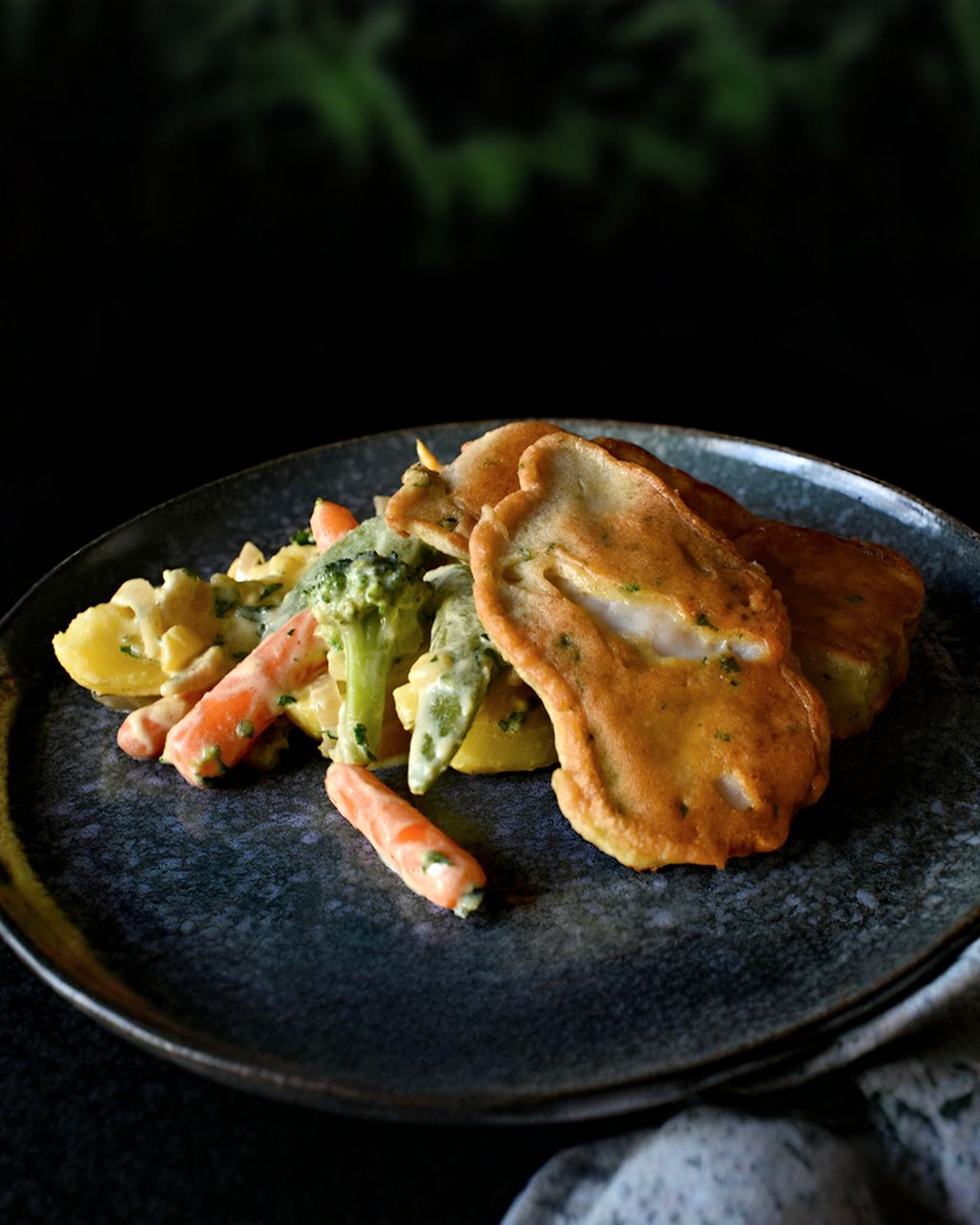
In Czech home cooking, hake is mostly baked or fried. In an oven at 230 °C, allow about 10 minutes per 2.5 cm of thickness at the thickest point; at a lower 180–200 °C, for example with vegetables on the same tray, it takes longer and a thermometer decides. It is baked with butter, lemon and herbs, with vegetables, or covered with cream and topped with cheese. Fried hake in breadcrumbs is served with potato salad or boiled potatoes. It also suits a buttered pan, steaming, a foil parcel on the grill or a short simmer in tomato or cream sauce. On an open grill rack it falls apart, so use foil or a fish basket. Take it off the heat as soon as it turns white and starts to flake; lean fish dries out fast.
Štika mořská, more often written mořská štika on Czech packs, is hake: a lean white sea fish of the genus Merluccius in the cod order. Czech Wikipedia gives "hejk" and "mořská štika" as other names for European hake, and Czech shops sell other hake species under the same name, Cape hake among them. It is mostly sold deep-frozen: fillets with or without skin, portions, whole gutted fish or breaded products, from brands such as Nowaco, Mylord and Kimbex or as supermarket own label. The name is Latin in origin. Because its body shape resembles a pike, hake was called "maris lucius", sea pike, in the Middle Ages, which gave the scientific name Merluccius. It is not related to the freshwater northern pike or to the tropical barracuda, whatever our English label says.
Hake is a mild white fish. It tastes clean and slightly sweet, without the strong "fishy" taste of oily fish such as mackerel or herring. Cooked, the flesh is white, moist and falls into large soft flakes. It is softer and more delicate than cod, and its neutral taste takes butter, lemon, dill, garlic, paprika and cream sauces well.
Seasonal baking plans, tested recipes and kitchen tricks that save you time. Unsubscribe in one click.
2 min read
Štika mořská is not one species but the Czech trade name for hake, fish of the genus Merluccius. The Latin name on the label tells you which one is in the pack. Czech shops sell, for example, Cape hake (Merluccius capensis), Argentine hake (M. hubbsi), North Pacific hake (M. productus) and European hake (M. merluccius), also called hejk in Czech. Hake also goes by its Spanish name, merluza.
In the kitchen they all behave alike: lean white flesh, mild taste and large flakes. For more on the individual species, see our pages on hake and Cape hake.
Barracuda (Sphyraena barracuda) is a large predatory fish of tropical and subtropical seas. It is not related to hake and Czech shops do not sell it as mořská štika. Northern pike (Esox lucius) is a freshwater fish from Czech rivers and ponds.
If you come across barracuda on holiday, be careful. The US CDC lists it among the high-risk fish for ciguatera, a poisoning caused by toxins that predatory fish pick up from microscopic algae on coral reefs. The toxins do not change the taste, smell or texture of the fish and are not destroyed by cooking, freezing, pickling, salting or smoking. The CDC therefore advises travellers never to eat barracuda.
Put it on the tray straight from frozen, or thawed and patted dry. For times by thickness and temperature, see baked fish in the oven: what temperature. It is done at 63 °C inside, when the flesh flakes with a fork.
For fried hake, coat it in flour, egg and breadcrumbs and fry in hot fat until golden on both sides. As a boneless fish it also works on Christmas Eve in place of carp; more options are in what to serve instead of carp on Christmas Eve.
Hake is eaten cooked, to 63 °C at the thickest point. For tartare, ceviche or lightly marinated fish, use only fish frozen at −20 °C or below for at least 24 hours. A home freezer at −18 °C may not manage that, and Anisakis larvae survive marinating and salting.
Fish is one of the 14 allergens that must be emphasised on the label. Breaded products also contain gluten from wheat flour and often egg or milk, so check their ingredients.