- Season
- Year-round
- Price
- Low
Calories and nutrition per 100 g
- 147 kcal
- 20.6 g protein
- 7.2 g fat
- 0 g carbs
Beef Shin
Beef shin, called beef shank in the US and kližka in Czech, is meat from the lower front or hind leg of cattle, laced with tendons and collagen-rich connective tissue. Raw it is tough, but after 3–4 hours of slow braising it turns tender and juicy, which makes it a classic cut for goulash, stock and stews.
Do not leave it out of the fridge; chill it as soon as you get home.
Store raw shin at 0–4 °C on the bottom shelf in a closed container. A whole piece keeps 3–5 days, diced goulash meat 1–2 days, packaged meat until the use-by date on the pack. Cooked shin goulash keeps 3–4 days in the fridge if you chill it within 2 hours of cooking.
Well-wrapped or vacuum-packed raw shin keeps its quality for 4–12 months at −18 °C. Freeze cooked goulash or braised meat for 2–3 months. Thaw in the fridge.
Choose deep red meat with white to pearly tendons and membranes. They belong there and melt during braising, so there is no need to trim them. Avoid grey, sticky or off-smelling meat. Hind shin tends to be meatier and comes in larger pieces; fore shin is smaller with more connective tissue. Both suit goulash. For goulash, buy a whole piece and cut it yourself into 3–4 cm cubes of even size. For osso buco or braising whole, ask for bone-in slices of the same thickness so they soften at the same time.
Oxtail: similarly high in collagen, bone-in, and behaves the same way when braised. The result is just as rich and gelatinous.
Beef chuck or neck: less collagen, but fine for goulash and they soften a little sooner.
Pat the cubes or slices dry with paper towel, salt them just before searing, and brown them in small batches in hot fat so they colour rather than release juice. The dark crust flavours the goulash or sauce. Don't trim off membranes and tendons; they melt during braising and thicken the sauce. Snip the edges of bone-in slices so they don't curl in the pan.
Strain the braising liquid once it cools: use the set fat on top for frying, and add the jelly underneath to soup or sauce. Spread marrow from bone-in slices on toast or stir it into the sauce. Shred leftover meat into sandwiches, tacos or a pasta ragù, and simmer the bones for stock.
Roughly what one measure weighs, scooped the way you normally would in the kitchen.
Shin belongs in the pot for long, slow cooking: goulash, beef braised in wine, osso buco, stock, soups and pho. On the hob, braise it covered at a gentle simmer for 3–4 hours; in the oven at 150–160 °C for about as long; in a slow cooker for 8–10 hours on LOW. A pressure cooker softens it in 45–60 minutes at pressure. It is done when a fork slides through without resistance and the cube falls apart.
Beef shin is meat from the lower leg of cattle, below the shoulder (fore shin) or below the round (hind shin). These are hard-working muscles laced with tendons and membranes high in collagen. That is why it is tough raw and unsuited to quick searing, but in a slow braise the collagen turns into gelatine and the meat becomes tender enough to pull apart. Czech shops sell it mostly boneless, as a whole piece or diced for goulash. Butchers also cut it bone-in, crosswise into slices 3–5 cm thick with marrow in the centre, as for osso buco. In Britain it is called beef shin, in the US beef shank, and in Czech kližka.
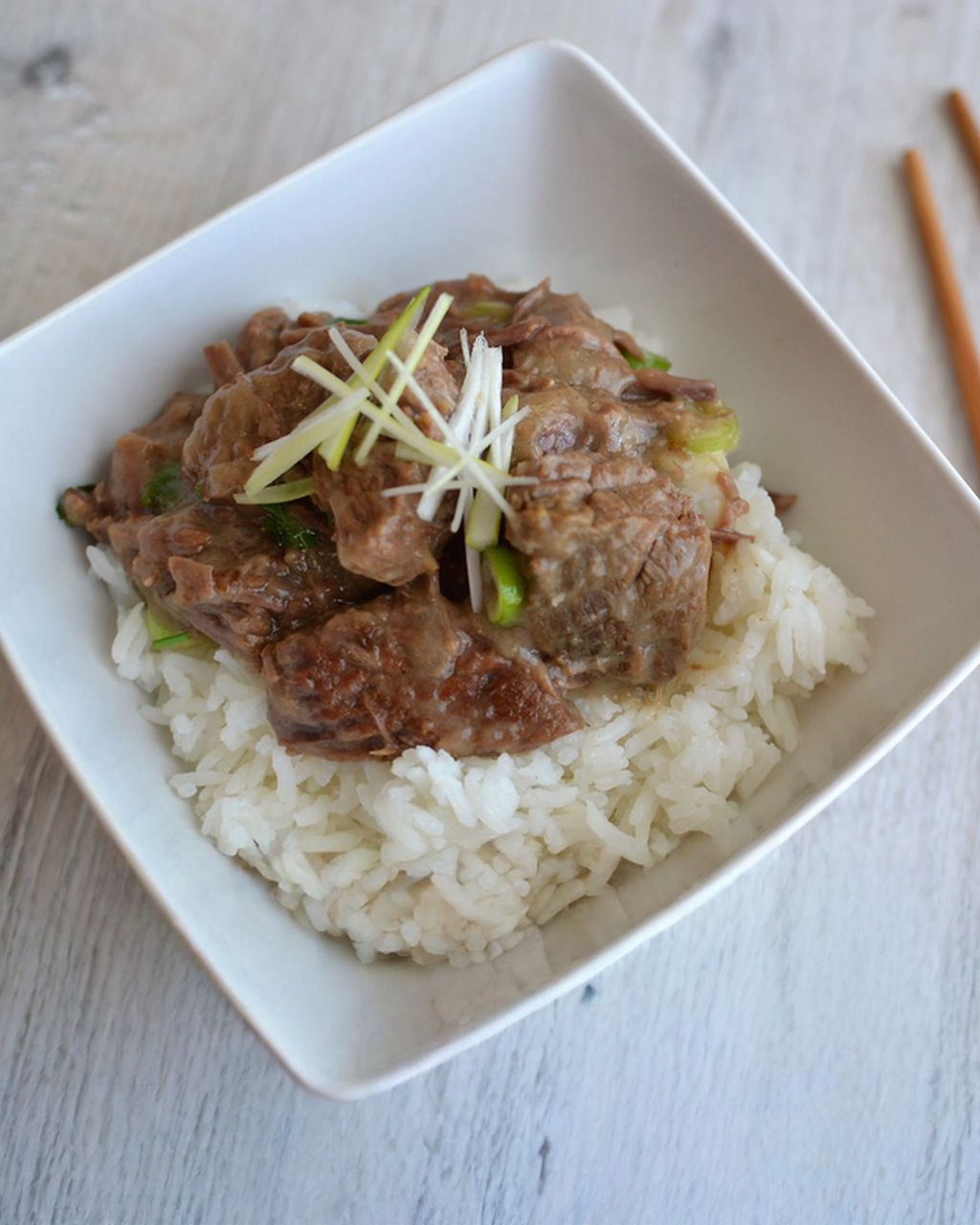
Shin has a full, pronounced beef flavour, stronger than the lean cuts from the hindquarter. After a long braise the meat is juicy and falls into strands, and the melted connective tissue gives the sauce a smooth, slightly sticky richness. Bone-in shin adds the buttery taste of marrow.
Seasonal baking plans, tested recipes and kitchen tricks that save you time. Unsubscribe in one click.
3 min read
Shin is the lower part of the leg, between the knee or elbow and the hoof. The fore shin sits below the shoulder (chuck), the hind shin below the round. Each piece is made of several small muscles wrapped in membranes and tendons that run down to the bone. Because the animal uses these muscles with every step, they carry a lot of connective tissue and a lot of flavour.
The Czech word kližka translates as beef shin in British English and beef shank in American English. Veal shin is veal shank, and in Italian it becomes osso buco, meaning "bone with a hole" after the marrow bone in the centre of the slice. In Austria shin is called Wadschinken and is used for Viennese Saftgulasch.
Shin is one of the best beef cuts for goulash because it is rich in collagen. In a long braise it melts into the sauce, which thickens and turns glossy without much extra thickening, and the meat stays juicy. In return it needs more time than chuck or neck.
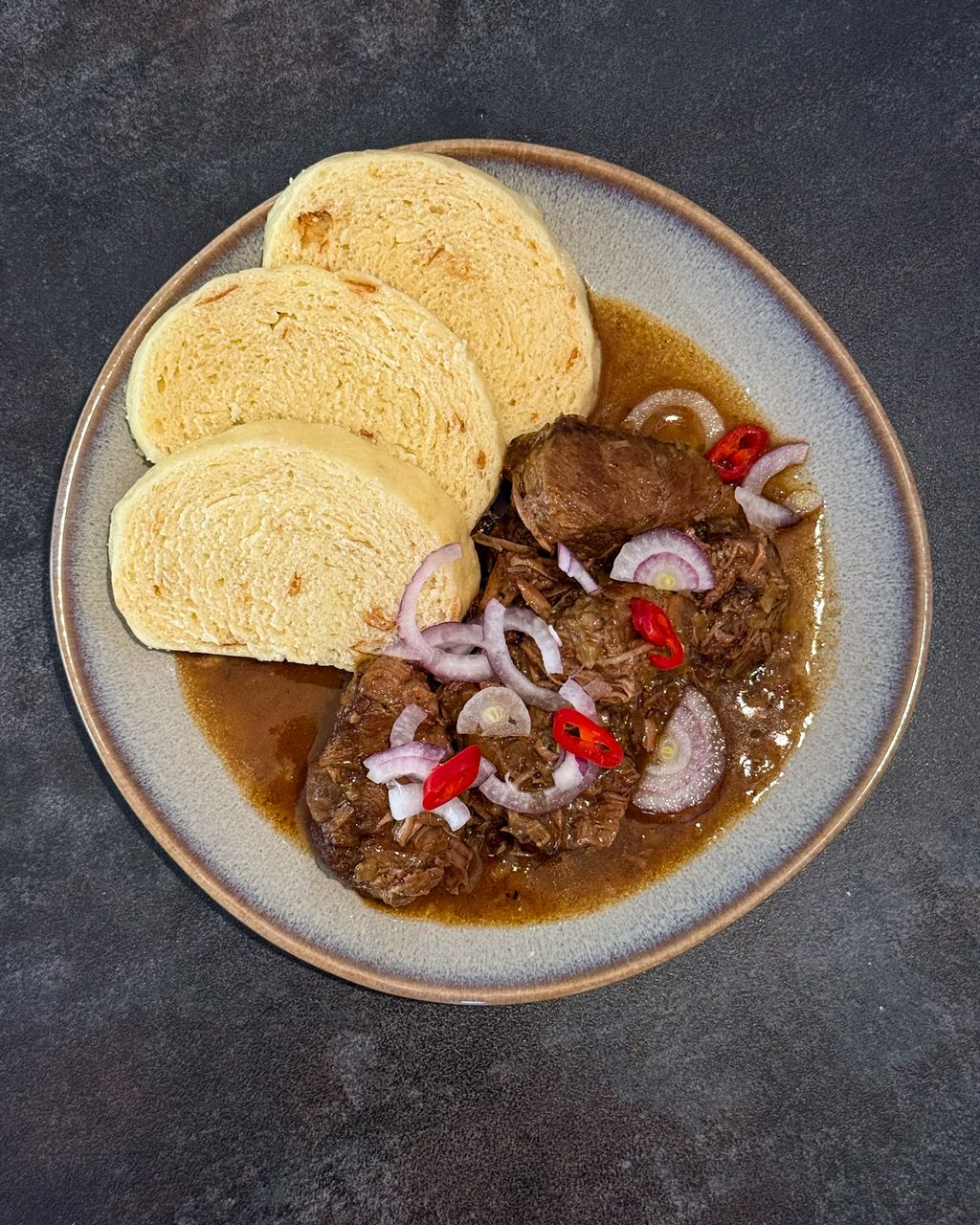
The method is the same as for any beef goulash: about the same weight of onion as meat, cooked slowly until golden, ground paprika added off the heat, seared 3–4 cm cubes of meat, and hot water or stock added a little at a time. Try the classic Czech beef goulash with bread dumplings.
Cubes of shin for goulash need 3–4 hours at a gentle simmer under a lid on the hob, counted from when the meat goes into the liquid. In the oven at 150–160 °C under a lid, allow about the same. In a slow cooker 8–10 hours on LOW; in a pressure cooker 45–60 minutes at pressure followed by a natural release. Times and liquid amounts for each appliance are in goulash in a pressure cooker, slow cooker or oven.
Bone-in slices for osso buco need 2.5–3.5 hours depending on thickness; for stock, shin is simmered for 4–6 hours. Treat the clock as a guide and trust the fork test. If the meat still won't give, it was usually cooked too hard or too briefly; see why your goulash is tough.
Collagen is the protein of connective tissue, tendons and membranes, and it is what makes raw shin tough. When heated it first contracts and squeezes juice out of the meat, which is why shin is tougher after an hour than at the start. Above roughly 70 °C it slowly turns into gelatine. Gelatine binds water, so the finished meat feels moist even though the muscle fibres themselves are fully cooked.
The change takes hours and works best at a gentle simmer just below boiling. A hard boil does not soften the meat faster; it only dries out the muscle fibres more. You can see the collagen has melted once it cools, too: the liquid from shin sets into a jelly.
Keep raw shin in the fridge at 0–4 °C and cook it within 3–5 days as a whole piece, or within 1–2 days once diced. Cool cooked goulash and refrigerate it within 2 hours; it keeps 3–4 days, or 2–3 months in the freezer. Reheat it until it is hot all the way through, at least 70 °C for 2 minutes. Details are in how long goulash lasts in the fridge and freezer.
Besides goulash, shin is a classic cut for beef stock and hearty soups because it adds both flavour and body. How to keep stock clear is covered in how to make beef stock clear and rich. In Italy bone-in slices are braised as osso buco and served with gremolata; in Vietnam shin goes into pho; in Korea it is used for jangjorim, beef simmered in soy sauce.
Shin is one of the cheapest beef cuts and is well suited to cooking ahead. Goulash and braised shin taste even better the next day, as the sauce comes together and thickens overnight.