- Season
- Year-round
- Price
- Low
Calories and nutrition per 100 g
- 265 kcal
- 28 g protein
- 16 g fat
- 0.5 g carbs
Edam 30%
Edam 30% is a semi-hard Dutch-style cow's milk cheese with 30% fat in dry matter, which works out at about 16 g of fat per 100 g. In Czechia it is sold mainly as a rindless block or in slices, and is the everyday cheese for sandwiches and fried cheese.
Keep it out of the fridge only for serving, for no more than about 2 hours. Take it out 20–30 minutes ahead so the flavour opens up.
Store in the fridge at the temperature on the pack, usually 4–8 °C. Use an unopened block by the date on the pack. Wrap a cut block in baking paper, then in a bag or box, and eat it within about 2–3 weeks. Use opened sliced packs within 3 days, as producers state. If mould appears on a block, cut it away with at least 2.5 cm of cheese around it. Throw away slices or grated cheese with mould entirely.
Edam freezes well, best grated in a bag. It keeps its quality for about 6 months at −18 °C. Once thawed it crumbles and breaks, so use it for cooking and baking rather than sandwiches. Thaw it in the fridge, or sprinkle grated cheese straight from the freezer.
Check the pack for "30% FDM" and the ingredients: milk, salt, cultures and rennet, not vegetable fat. A product made with vegetable fat cannot be called Edam and is labelled as a cheese analogue or plant-based product. The cheese should be pale yellow, smooth, with only a few small holes, and free of sticky patches or mould. For fried cheese and bakes, 45% Edam melts more creamily. For sandwiches, salads or grating over dishes, 30% does fine.
Edam 45%, Gouda or another semi-hard Dutch-style cheese. They behave the same in cooking, with more fat and better melting.
Emmental, Tilsiter or mild Cheddar. For cold dishes, mozzarella works too, though it is milder and wetter.
Slice the cheese cold, it cuts more neatly. It grates better cold too, with less smearing. For fried cheese, cut slices 1–1.5 cm thick, coat them twice (flour, egg, breadcrumbs) and fry briefly in hot oil so the cheese does not leak out. For sauces and bakes, grate the cheese and add it near the end; long boiling makes 30% Edam seize into rubbery strands.
Grate dried-out edges and last bits into a bag and keep it in the freezer. Use it on pasta bakes, potato pancakes, toasties or in cheese sauce.
Roughly what one measure weighs, scooped the way you normally would in the kitchen.
Edam 30% is mostly eaten cold: on bread and rolls, in sandwiches, salads and on a cheese plate. Grated, it goes over baked potatoes, pasta, pizza and toasties, where it browns into a crust and releases less fat than richer cheeses. It also works for fried cheese, oven cheese crisps and spreads. For smooth cheese sauces, a richer cheese is better.
Edam 30% is a semi-hard ripened Dutch-style cheese made from pasteurised cow's milk. The 30% figure is fat in dry matter (FDM), not in the whole cheese: since the cheese is roughly half water, Edam 30% has about 16 g of fat per 100 g. The label usually lists milk, salt, dairy cultures and rennet, sometimes calcium chloride. Reduced-fat Edam is a Czech speciality. Shops sell it as a block ripened in foil, without rind or wax, or sliced and grated. Edam 45% sits next to it on the shelf. Dutch cheese with the protected name Edam Holland is different: it has 40–44% fat in dry matter and the shape of a ball or loaf.
Edam 30% tastes mild and milky, lightly salty and faintly tangy, with a hint of nuttiness. It is a young cheese, so it has none of the sharpness or bitterness of aged cheeses. Compared with 45% Edam it is less creamy and firmer, and its slices are springy and a little rubbery to bite.
Seasonal baking plans, tested recipes and kitchen tricks that save you time. Unsubscribe in one click.
2 min read
The percentage on an Edam pack is fat in dry matter (FDM): the share of fat in the cheese once water is excluded. Edam 30% is about 50% water, so the whole cheese holds roughly 16 g of fat per 100 g. For Edam 45% it is about 24–26 g. FDM is used because cheese dries as it ripens and its total fat changes, while the ratio of fat to dry matter stays the same. On the label, Edam 30% carries about 250–265 kcal and 27–30 g of protein per 100 g.
The cheese is named after the small town of Edam in North Holland, where it was made as early as the Middle Ages. Dutch cheese with the EU protected geographical indication Edam Holland has 40–44% fat in dry matter under its specification and is traditionally shaped as a ball or loaf, often in red wax for export. Czech eidam is a generic name for a semi-hard Dutch-style cheese. It is made in Czechia and neighbouring countries, usually as a block ripened in foil, without rind. Cheese with 20–30% fat in dry matter is described in the technical literature as a Czech speciality; elsewhere, Edam this lean is uncommon.
Pasteurised milk is standardised to the target fat content, and starter cultures and rennet are added. The milk sets, the curd is cut, and some whey is drained off and replaced with water. This curd washing removes milk sugar, which is why Edam is mildly tangy and springy. The curd is pressed into moulds, salted in brine and ripened for several weeks at 8–12 °C, usually wrapped in foil. During ripening, bacteria ferment the remaining lactose and enzymes break down proteins, which builds the flavour.
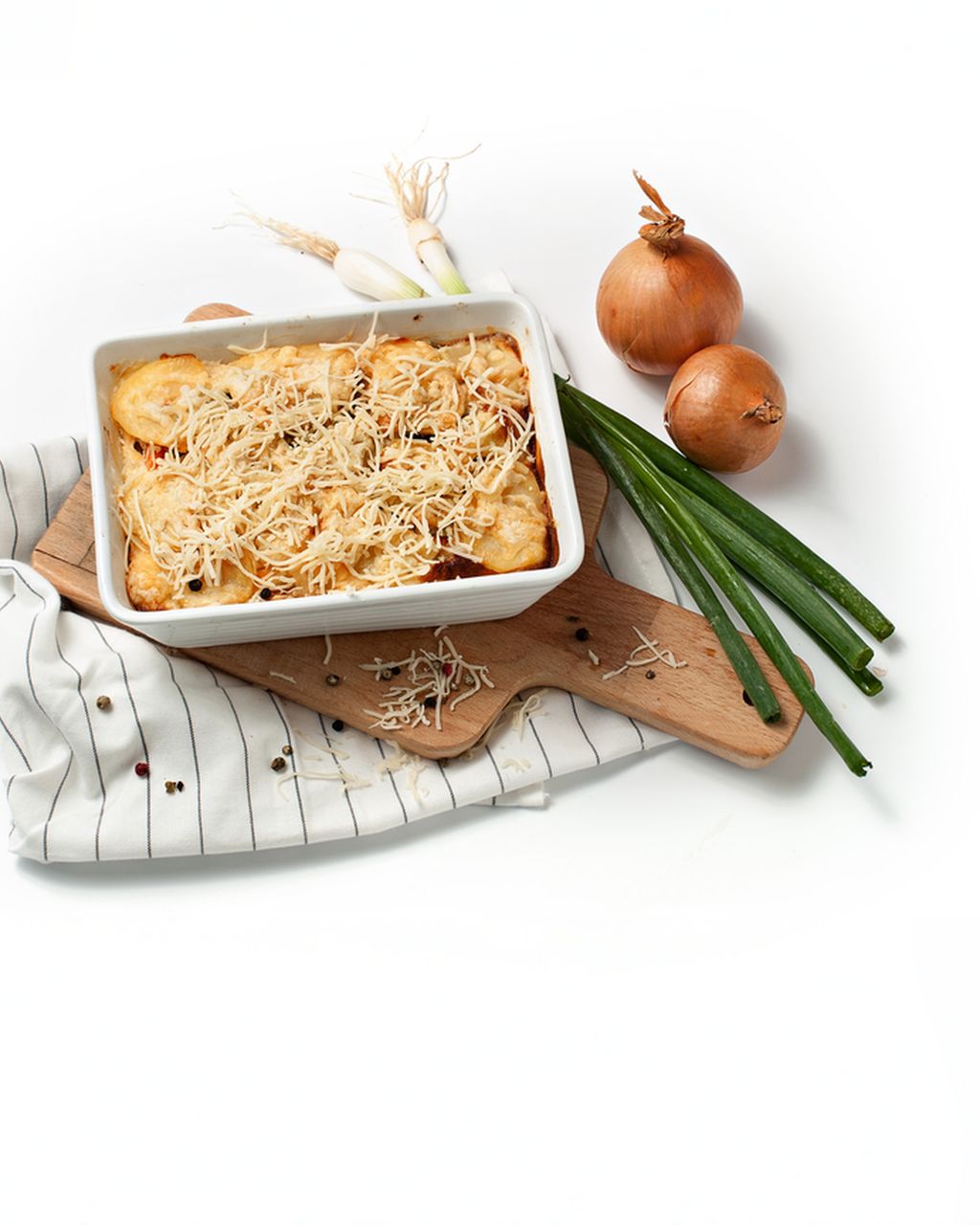
Cold, Edam 30% is the most versatile cheese in the fridge: on bread, in sandwiches and on a cheese board, where it balances stronger cheeses. Grated, it forms a golden crust on bakes such as Baked Potatoes with Cottage Cheese and Vegetables.
Melting shows the difference from richer cheeses. Fat acts as a lubricant between the proteins, and with less of it the cheese melts more slowly and, when overheated, tightens into rubbery strands. For fried cheese, choose 45% Edam, or keep 30% slices thicker and fry them briefly. Leftovers can be frozen, as our guide Can You Freeze Cheese? explains.