Why Are My Waffles Not Crispy? How to Fix Soggy Waffles
Why Do Waffles Stick to the Waffle Maker? Causes and Fixes
Updated Nov 21, 2026
Waffles stick when the iron is not fully preheated, the batter has too little fat, the lid is opened before the waffle has set, or the plates are coated in sticky residue from cooking spray. A waffle that splits in half, with one side left on the lid, was almost always opened too early or cooked in a cool iron. Preheat fully, keep the fat in the batter, brush the plates with oil and wait until the steaming stops.
Waffle batter is wet and full of sugar and protein, which all want to bond to hot metal. It releases cleanly only when the plates are hot enough to set the outside fast, there is fat between batter and metal, and the waffle has cooked long enough to firm up.
The usual causes:
the iron isn't fully preheated
the batter has too little fat
the lid was opened too early
the plates are coated in residue, often from cooking spray
the nonstick coating is worn or scratched
the batter is very sugary, or has fruit, chocolate or cheese in it
A whole waffle glued to both plates points to heat or fat. A waffle that tears in two, half on each plate, points to opening too early.
Recipe of the week, one tip that saves you time and one deal from the shop. Unsubscribe in one click.
The next issue goes out on Thursday, November 26.
When you open the iron, the waffle has to come away from the top plate. If it hasn't set yet, the soft middle can't hold the two halves together, and the top half stays on the lid.
Wait for the steam. A waffle is done when the steam from the sides has almost stopped. Betty Crocker's Bisquick directions, for example, say to bake about 5 minutes or until the steaming stops.
Open slowly. If the lid resists, close it again and give it another minute. Waffles that stick at first often release once they are fully cooked.
Don't rely on the ready light alone. On many irons the light only tells you the plates have reached temperature, not that the waffle is done.
Don't overfill. Batter that overflows the edges glues the lid down and makes the waffle harder to release.
Preheat properly. Batter that lands on plates that aren't fully hot sinks into every corner and sets slowly, bonding as it goes. Wait for the ready light, then another minute or two. The first waffle of the batch is the most likely to stick.
Keep the fat in the batter. Waffle batter normally has more fat than pancake batter, for good reason: the fat melts against the plates and keeps the waffle from bonding. A lean batter, or pancake batter used as it is, sticks far more. If you are using pancake mix, add a couple of tablespoons of oil or melted butter. Betty Crocker's Bisquick waffle directions add 2 tablespoons of vegetable oil that its basic pancake directions don't have.
Watch the sugar. Sugar caramelizes against the plates. A sweet batter, or one with banana, fruit, chocolate chips or cheese, sticks more. Brush the plates with oil before every waffle for these.
This is the cause people least expect. Waring's waffle maker FAQ advises against nonstick cooking spray because it builds up into a tacky layer on the plates over time, and The Kitchn gives the same advice for nonstick waffle irons. Once that layer forms, waffles stick however much you grease.
What to use instead:
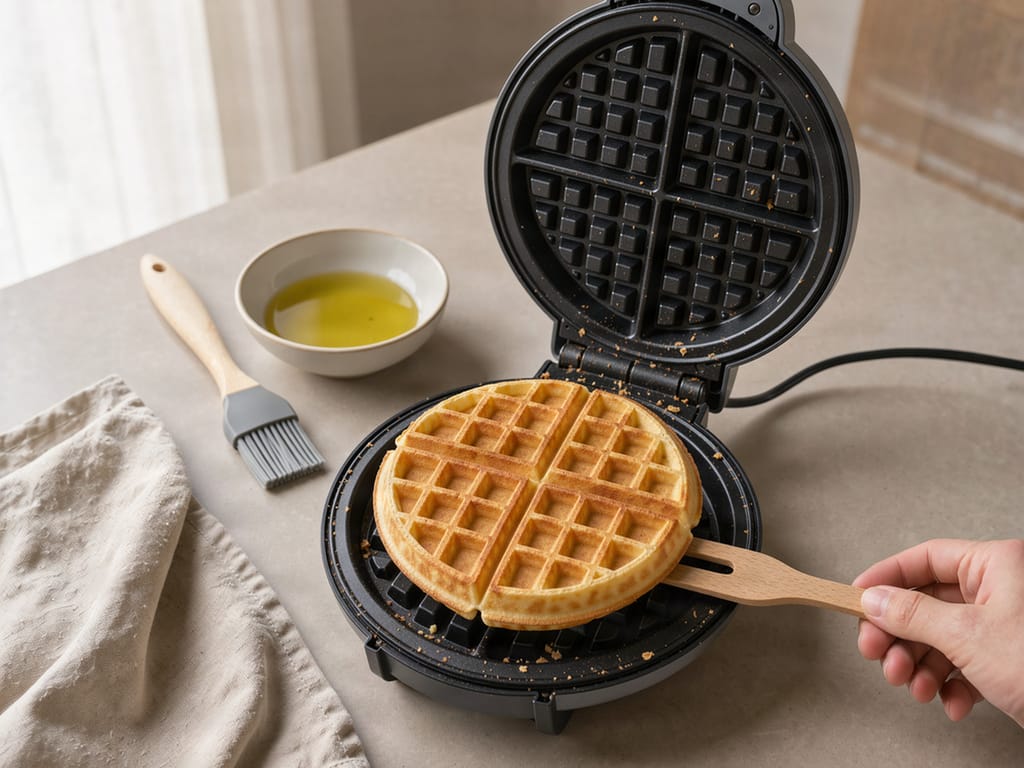
A thin film of oil, such as sunflower oil or canola oil, brushed on with a silicone pastry brush.
Clarified butter or ghee, which tastes of butter but doesn't leave burnt milk solids behind like ordinary butter. More on ghee.
Check your waffle maker's manual first, because manufacturers' instructions differ.
Removing buildup: unplug the iron and let it cool until it is just warm, then wipe the plates with a damp cloth or paper towel. For stubborn spots, the manufacturer's manual is the safe guide. Never immerse an electric waffle maker in water.
Worn nonstick. Once a coating is scratched or dull, waffles stick in patches no matter what you do. A thin brush of oil before every waffle helps. Eventually, the plates or the iron need replacing.
Cast-iron irons have no coating. They rely on seasoning: thin layers of oil baked onto the metal. A new or stripped cast-iron iron sticks badly until it is seasoned, so follow the maker's seasoning instructions, and grease it before every waffle. Like a baking pan, it releases better the more you use it.
Gluten-free and egg-free batters are more fragile and stick more easily. Give them a little extra fat, a fully hot iron, and an extra minute before you open the lid.
Preheat until the ready light comes on, then wait another minute or two.
Make sure the batter has its full amount of oil or butter.
Brush the plates thinly with oil for the first waffle, and before each one for sweet or fruity batters.
Fill the plates to just short of the edges.
Close the lid and leave it shut until the steaming has almost stopped.
Open slowly. If it resists, close it and wait.
Lift the waffle out with a wooden or silicone utensil.
Wipe the plates once the iron has cooled to warm, and skip the cooking spray.
For waffles that come out soft rather than stuck, the same steps help: a hot iron and enough fat also make a crisper crust.
Waffles stick when the iron isn't fully preheated, the batter has too little fat, the lid is opened too early, or the plates have a sticky buildup from cooking spray. Preheat well, keep oil or butter in the batter, brush the plates with oil, and cook until the steam stops.
Waffles split in half when the lid is opened before the waffle has set, so the top half sticks to the lid and tears away. Wait until the steaming from the sides has almost stopped, then open the lid slowly; if it resists, close it and give it another minute.
Most cleaning and appliance guidance says no. Waring's waffle maker FAQ and The Kitchn both advise against nonstick cooking spray on nonstick plates, because it builds up into a tacky layer over time. Brush on a thin film of oil instead, and follow your manual.
Lift the waffle out with a wooden or silicone utensil, starting at one edge, once it has stopped steaming. Don't use metal forks or knives, which scratch nonstick plates and make future waffles stick more.
Often only lightly, but a thin brush of oil on the first waffle or two helps, especially with low-fat, sugary or gluten-free batters. A batter with enough fat in it releases on its own.
One recipe worth heating the oven for, one tip, and one deal from the shop. Nothing else.