Why Do Waffles Stick to the Waffle Maker? Causes and Fixes
Why Are My Waffles Not Crispy? How to Fix Soggy Waffles
Updated Nov 21, 2026
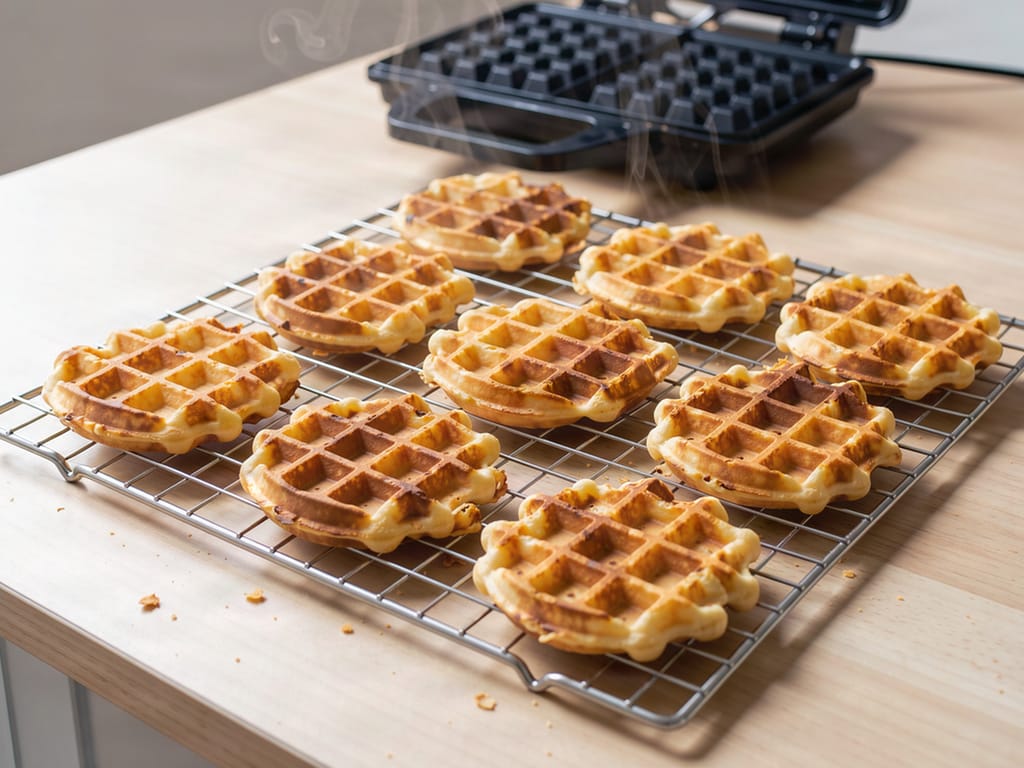
Waffles come out soft or soggy when the batter has too little fat or sugar, the iron is not hot enough, they are taken out before the steam stops, or they are stacked on a plate where their own steam softens them. A batter with enough fat, a little cornstarch, a fully preheated iron and a wire rack fixes most of it. Here is what each step does.
A crisp waffle is a race between steam and heat. The hot plates turn the water in the batter to steam, which escapes, and the dry surface left behind browns and hardens. Anything that leaves water in the surface, or lets steam back in, gives you a soft waffle.
The usual causes:
a lean batter, with too little fat or sugar
a waffle iron that isn't fully preheated
taking the waffle out before it stops steaming
stacking or covering the cooked waffles
a thick, heavy batter, or too much liquid
A waffle that is soft straight from the iron points to the batter or the iron. One that is crisp at first and soft a minute later points to how you hold it.
Recipe of the week, one tip that saves you time and one deal from the shop. Unsubscribe in one click.
The next issue goes out on Thursday, November 26.
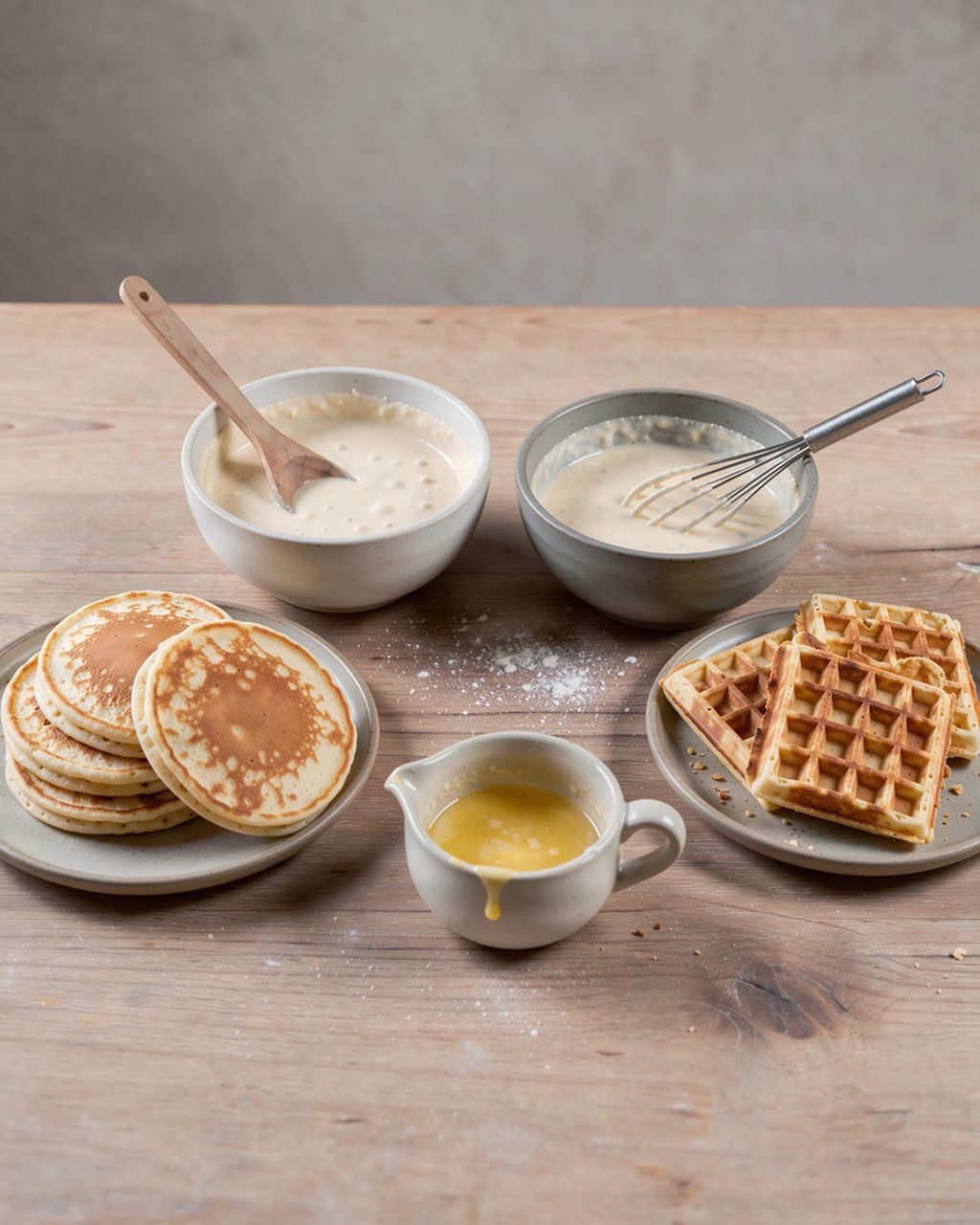
Waffle batter is not the same as pancake batter. It usually has more fat and a little more sugar, and both matter for crispness.
Fat coats the surface, helps it fry against the hot plates, and stops the crust from turning leathery. A batter with only a spoonful of butter will make a soft, pancake-like waffle.
Sugar browns and caramelizes, which gives a crisp, golden shell. Too much, though, makes waffles brown before they dry out, and they can stick.
Thickness: a very thick batter (lots of yogurt or sour cream, or packed flour) holds more water and bakes up softer and cakier. It should pour thickly but spread when the lid closes.
If you are using pancake mix, add extra oil or melted butter. Betty Crocker's Bisquick directions, for example, add 2 tablespoons of vegetable oil to the waffle version and none to the pancakes.
Three tricks make a noticeable difference.
Cornstarch. Swap about a quarter of the flour for cornstarch. It has no gluten and dries into a brittle, crunchy shell. Potato starch works the same way.
Whipped egg whites. Separate the eggs, mix the yolks into the batter, whip the whites to soft peaks and fold them in last. The air makes a lighter waffle with a thinner, crisper crust. Our guide on how to tell whipped egg whites are ready shows what soft peaks look like.
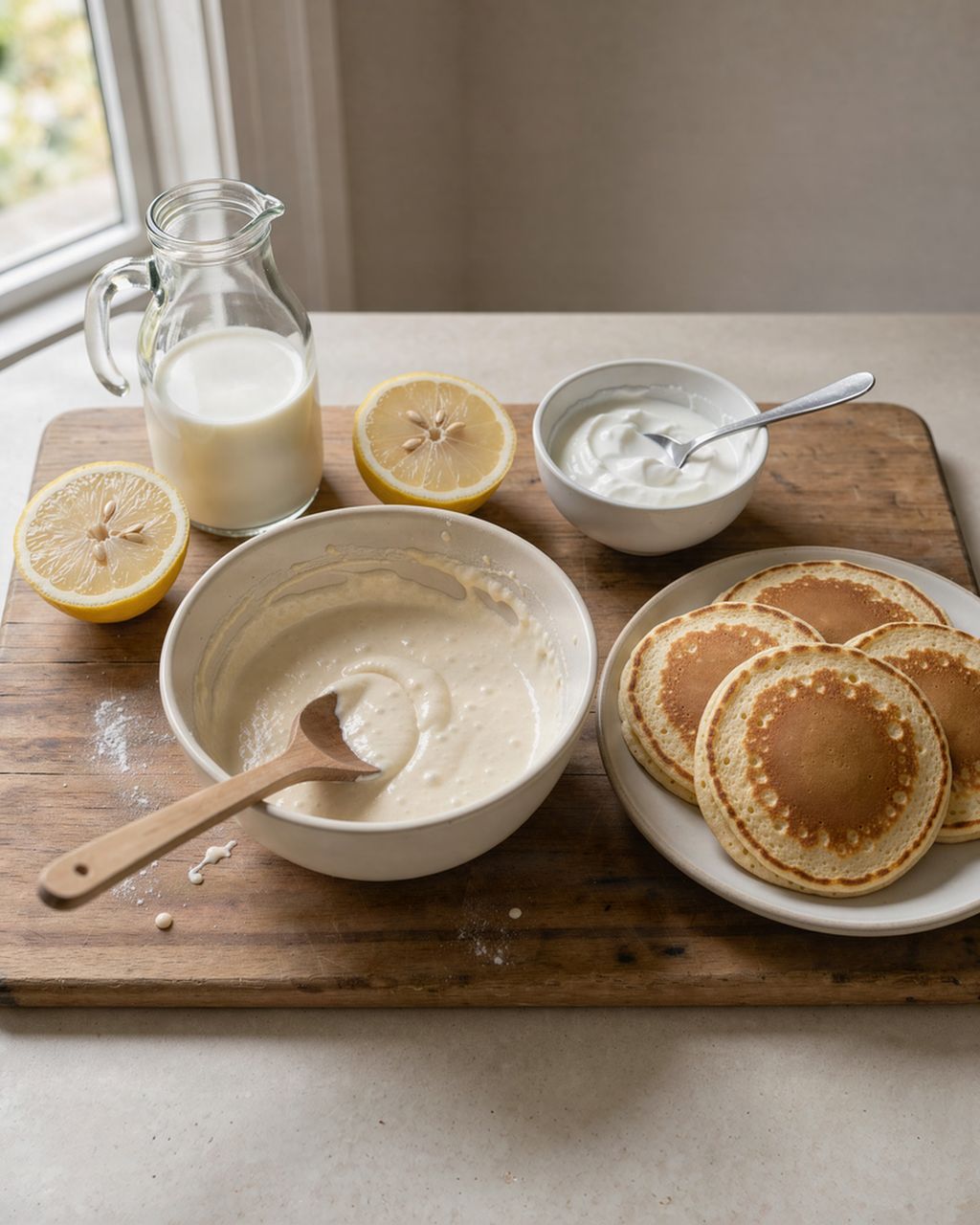
Buttermilk. The acid makes a more tender inside, which contrasts with a crisp outside. If you have none, our buttermilk substitutes guide has swaps.
Some cooks also add a splash of sparkling water or replace part of the milk with water, which makes a thinner, crisper batter. It works, at the cost of a little flavor.
Most soft waffles come out of an iron that wasn't hot enough or wasn't given enough time.
Preheat fully. Wait for the ready light, then give it another minute or two. The first waffle often comes out softer because the plates are still coming up to heat.
Don't open it early. Opening the lid before the waffle has set tears it and lets the steam out unevenly.
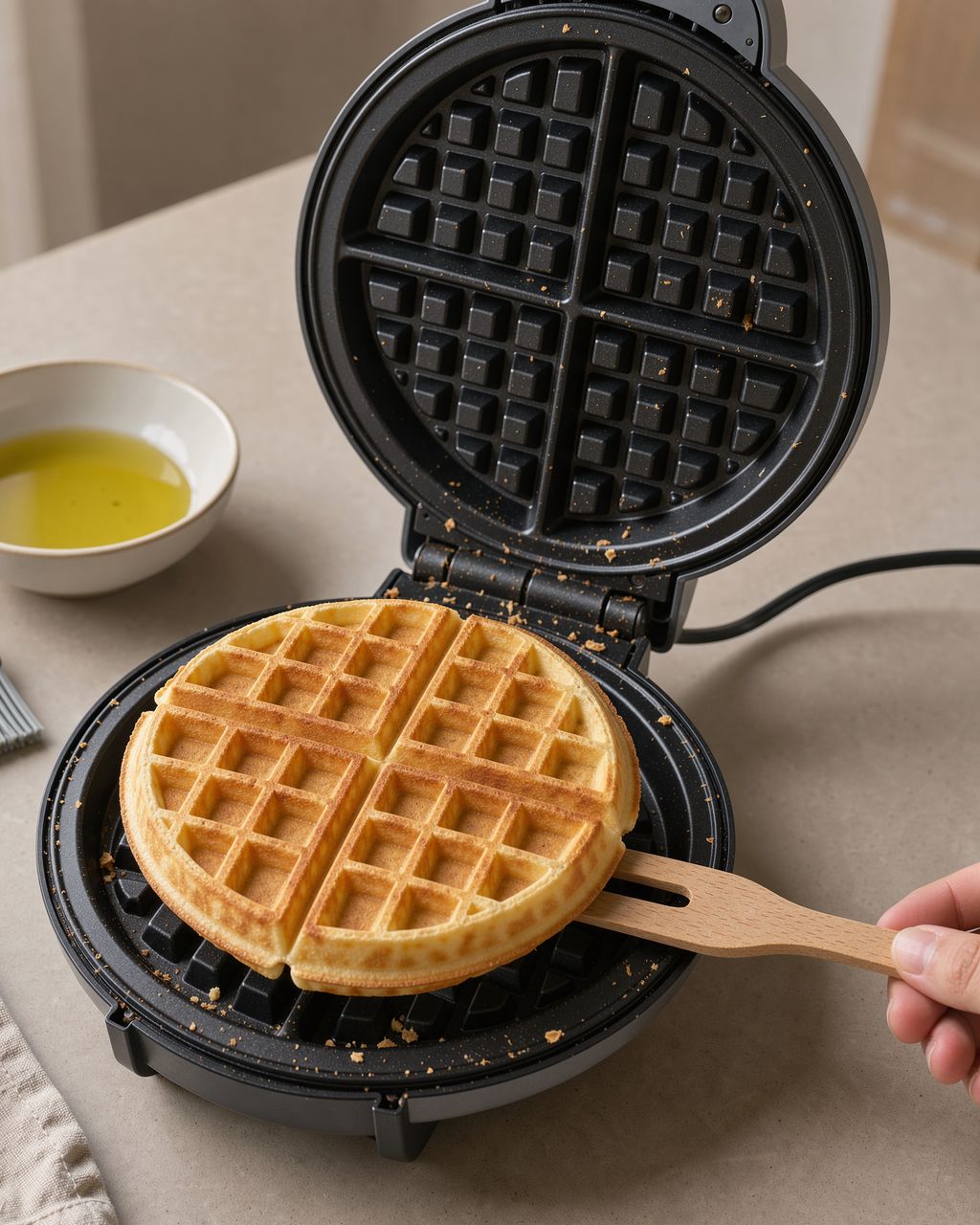
Watch the steam, not the clock. A waffle is done when the steaming from the sides has almost stopped. Betty Crocker's Bisquick directions say to bake about 5 minutes or until the steaming stops.
Use the darker setting if your iron has one. A deeper brown is a drier, crisper waffle.
Don't overfill. Too much batter squeezes out, and a thick waffle takes longer to dry out.
Belgian-style irons with deep pockets make thicker waffles that need longer. Thin, American-style irons crisp faster.
Cooking for a crowd means the first waffles wait for the last. To keep them crisp:
Set a wire rack on a baking sheet.
Heat the oven low, around 100 °C (about 200 °F), conventional.
Put each waffle on the rack as it comes out, in a single layer, uncovered.
The dry heat drives off the last of the steam and keeps the crust crisp. Don't cover them with foil or a towel, which traps steam. If your oven runs fan only, the oven temperature converter gives the fan setting.
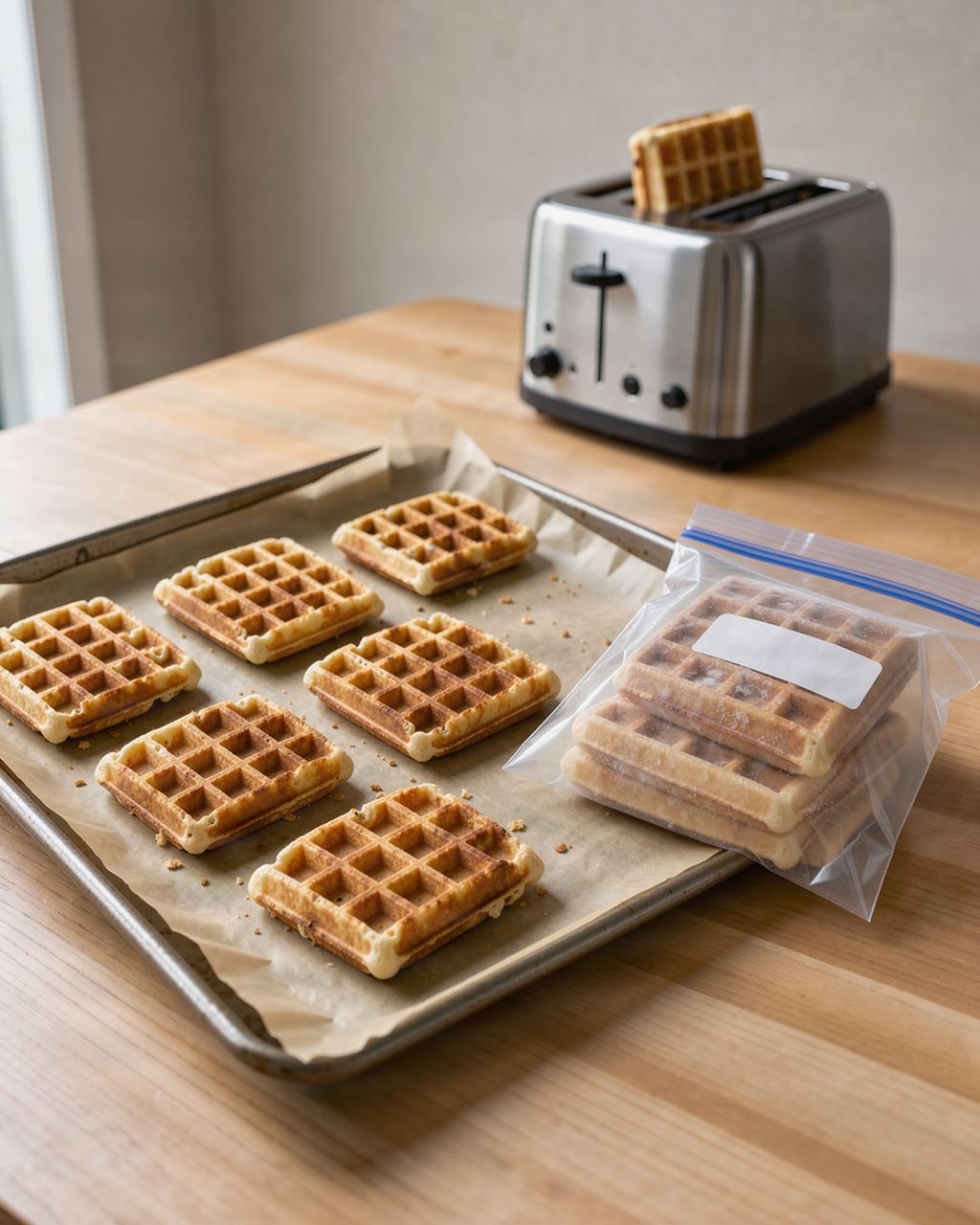
A waffle that has gone soft can be crisped again in a toaster or a hot oven for a few minutes.
The opposite problem has its own causes.
Dry or hard: cooked too long or too dark, or a batter with too little fat or liquid. Use a lighter setting and check the batter's thickness.
Tough or rubbery: overmixed batter or too much egg. Stir only until no dry flour shows, and leave the small lumps.
Not rising: old baking powder, or a buttermilk recipe made with plain milk. Test the baking powder by stirring a little into hot water: it should fizz hard.
For Liège-style waffles, the crunch comes from a yeast dough studded with pearl sugar, which caramelizes on the plates. That is a different style of waffle from a batter waffle, and it needs its own recipe.
Waffles aren't crispy when the batter is low in fat or sugar, the iron isn't fully preheated, the waffle comes out before the steaming stops, or it is stacked and goes soft in its own steam. Add enough fat, preheat well, cook until the steam stops and cool on a wire rack.
Waffles go soggy when steam is trapped, either inside an undercooked waffle or underneath one stacked on a plate. Cook until the iron stops steaming, then put each waffle on a wire rack in a single layer, or in a low oven, rather than on a plate.
Yes. Replacing part of the flour with cornstarch makes waffles crisper, because cornstarch has no gluten and dries into a brittle, crunchy shell. A common approach is to swap about a quarter of the flour for cornstarch.
Rubbery waffles usually come from overmixed batter, too much egg, or too little fat. Stir the batter only until no dry flour shows, keep the butter or oil in, and don't add extra eggs.
Keep finished waffles in a single layer on a wire rack set on a baking sheet in a low oven, around 100 °C (about 200 °F) conventional, while you cook the rest. Don't stack them or cover them, which traps steam.
One recipe worth heating the oven for, one tip, and one deal from the shop. Nothing else.