Soft gingerbread cookies
Lemon Icing: The Perfect Ratio, Shine, and Variations

Updated Jul 19, 2026
Lemon icing is a smooth blend of sifted icing sugar and fresh lemon juice — that's all you need for the basic version. There's no cooking involved: just mix it cold, get the ratio right, and spread it in a thin layer. In this guide you'll find the exact ratios for a glossy glaze and a thicker icing for cookies, how to apply it so it sets properly without turning dull, plus variations with lime, orange, and rum.
Lemon icing (often called lemon glaze) is a simple mix of just two ingredients: sifted icing sugar and lemon juice. Here's the one thing lots of recipes get wrong — basic lemon icing is not cooked. You don't need butter or a saucepan; heat melts the sugar unevenly, which leaves the icing dull or crystallised.
So what actually goes into it:
Icing (powdered) sugar — it needs to be finely milled and sifted. Caster or granulated sugar won't dissolve when mixed cold, and the icing will stay grainy.
Lemon juice — ideally freshly squeezed and strained through a sieve. It brings both the tartness and the liquid. Bottled juice works too, but the flavour is flatter.
Optional additions: lemon zest (just the yellow part — the white pith turns bitter) for a bolder aroma, a pinch of salt to round out the flavour, and a spoonful of glucose syrup for extra shine.
The basic ratio is roughly 2 parts icing sugar to 1 part lemon juice by weight — so about 100 g sugar to 2 tablespoons (30 ml) of juice. The result is an icing with the consistency of runny honey that drips off the whisk in a slow, unbroken ribbon.
The method takes just a couple of minutes:
Sift the icing sugar into a bowl so there are no lumps.
Pour in the lemon juice gradually, stirring constantly with a whisk or spoon.
Keep adding juice a teaspoon at a time until you reach the consistency you want — every drop visibly changes the thickness.
Adjust the consistency depending on how you'll use it:
Runny glaze for drizzling (bundt cake, poppy seed cake, muffins): thinner, so it spreads on its own. Add a few extra drops of juice or water.
Thicker icing for cookies (gingerbread, choux pastries): firmer, so it holds its shape and doesn't run. Add more sugar.
If you overshoot, it's easy to fix: too thin → sift in more sugar; too thick → add juice or water a drop at a time.
Apply the icing to a cooled dessert in a thin layer — on a warm surface, the icing thins out, soaks in, and loses its shine. For drizzling, pour the glaze in the centre and let it run down the sides naturally; for cookies, spread it with a teaspoon or pipe it from a piping bag with a small tip, working from the centre outward.
A few things determine the outcome:
A thin layer. Less is more — a thick layer cracks and takes ages to dry.
One pass. The icing starts setting almost immediately, so work quickly and don't go back over spots that have already dried.
Let it set. Give the icing time to firm up before stacking or wrapping the dessert.
For extra shine, stir a spoonful of glucose syrup or honey into the finished icing; for a splash of colour, mix a pinch of food colouring into a portion of the icing.
Gingerbread and choux pastries need a thicker lemon icing that holds its shape and doesn't run into the decoration. Cut back on the juice or add more sugar so the mixture drops slowly off the spoon and settles smooth within a few seconds. Apply a thin layer starting from the centre; a few drops of rum flavouring give the icing that classic Christmas note.
If you want crisp lines and fine detail work on cookies, reach for proper egg-white royal icing for cookies instead of lemon icing — it holds its shape better and is easier to pipe with.
Soft gingerbread cookies
Soft gingerbread cookies decorated with lemon icing

For soft, tender bakes — bundt cake, poppy seed cake, and muffins — a thinner lemon glaze works best, spreading on its own and soaking lightly into the surface. Pour it on once the dessert has cooled: on warm cake, the glaze disappears and won't leave a glossy layer. Bundt cake looks lovely finished with thin lemon slices or grated zest; poppy seed cake pairs well with a sweeter orange version.
Lemon juice and zest brighten up the cake itself, not just the icing — which is why lemon icing is such a classic match for poppy seed bakes. Try it on this orange and almond bundt cake, where citrus and nuts pair beautifully together.
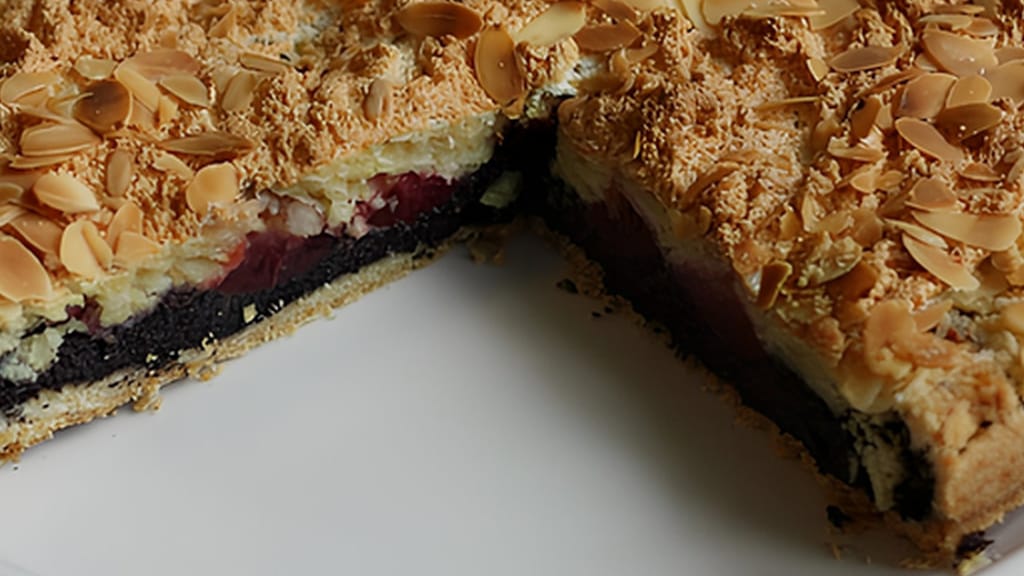
Heavenly poppy seed cake with plums
A poppy seed cake given a fresh lift by lemon icing
The base stays the same — sugar plus a tart liquid — only the citrus and extras change. Three tried-and-tested variations:
Lime: swap the lemon juice for lime juice. It's sharper and more aromatic, great for summer desserts.
Orange: orange juice is sweeter and less acidic, so cut back on the sugar; it pairs beautifully with poppy seed and chocolate.
Rum-lemon: mix 50 ml dark rum with 100 ml lemon juice and thicken with about 150 g icing sugar. The flavour is bold but not overly sweet or too boozy; it works well on bundt cakes and slices. For a milder version, cut back on the rum or add more juice.
Pour rum-lemon icing more slowly so it soaks into the cake, and finish with lemon slices or grated zest.
You can make lemon icing without refined sugar in two ways: with powdered erythritol or xylitol for a hard, glossy layer, or with honey or agave syrup and coconut oil for a softer, more tender glaze. Erythritol and xylitol behave much like icing sugar — you can sift them and mix with lemon juice exactly the same way, and the icing sets into a smooth, glossy layer. Honey and agave, on the other hand, give a softer, stickier icing; coconut oil adds a silkier texture, but the glaze won't dry hard and stays soft.
Honey and agave are often billed as the "healthier" choice. The difference is smaller than people assume, though: available comparisons show honey has a somewhat lower glycemic index than white sugar (around 55 versus roughly 65) and contains trace vitamins and antioxidants — but it's still a source of simple sugars best used in moderation. Think of it more as a flavour swap than a health upgrade.

You can make lemon icing ahead of time: sealed in a container, it keeps in the fridge for 3–4 days. A skin will form on top and the icing will firm up — let it sit at room temperature for a bit before using, then whisk it smooth again, adding a few drops of lemon juice if needed to loosen it.
Once a dessert is iced and the glaze has dried, store it at room temperature in a sealed container; the dried icing even acts as a thin protective layer that helps keep the bake soft for longer. Only refrigerate it if the filling requires it (like cream or curd filling), not for the icing's sake — cold, damp conditions make the glaze go tacky and lose its shine.
A thin layer of lemon icing will feel dry to the touch in about 15–30 minutes and fully harden within 1–2 hours at room temperature. The thinner the layer, the more sugar, and the drier the air, the faster it sets.
Usually there's too much liquid in it, or the air is too humid. Add more sifted icing sugar to thicken it, apply a thin layer, and let the cookies dry in a dry room — gingerbread needs a firmer icing than the runny glaze you'd drizzle over a bundt cake.
Yes. Lemon icing isn't cooked, so the alcohol in the rum doesn't evaporate and stays in the finished icing. For kids, pregnant women, or drivers, swap the rum for a few drops of rum flavouring, which gives the taste without the alcohol.
You can, but freshly squeezed lemon juice has a brighter, more vibrant flavour. Strain bottled juice before using and expect a flatter taste; the sugar ratio stays the same.
Grainy icing is almost always caused by undissolved sugar — use sifted icing sugar, never granulated, and mix it cold. If the icing has already set and feels gritty, add a few drops of lemon juice and whisk it smooth again.
One recipe worth heating the oven for, one tip, and one deal from the shop. Nothing else.