Iced frothy caffè latte
Iced Coffee: Step-by-Step Recipes and Variations
Updated Aug 23, 2026
Iced coffee is really just strong coffee, chilled fast and poured over ice — and it lives or dies on one thing: not letting the melting ice water it down into nothing. That's why it so often turns out only half-right at home. Below you'll find the basic method, ratios that actually work, and six variations, from Greek frappé to cold brew to an ice cream version. Each one tackles the dilution problem in its own way.
Brew your coffee about a third stronger than usual, chill it quickly, then pour it over a glass full of ice — in that order. The whole thing takes five minutes and you don't need a shaker or a blender.
Basic ratio for one serving:
150–200 ml strong coffee (espresso, moka pot, French press or drip — any works)
a glass full of ice, not just three or four cubes
30–60 ml milk or cream, if you want it creamy
sweetener should be liquid only — granulated sugar won't dissolve in a cold drink
Go for coffee with a bold, leaning-dark flavour profile — chocolate, nutty, caramel. Cold dulls how we perceive sweetness and aroma, so a delicate light-roast coffee that's floral and fruity when hot often ends up tasting thin and sour once it's poured over ice.
Equipment matters less than people think. Both a moka pot and a French press produce a brew strong enough to survive the ice; coffee made in a standard drip ratio doesn't. The difference comes down to concentration, not the gadget.
Homemade iced coffee tastes watery because normally brewed coffee isn't strong enough to withstand the melting ice, which can easily add another third to half its volume in water. Cafés solve this by brewing a stronger base, not by using less ice.
Three fixes that actually work, easiest first:
Brew it stronger. This cuts out roughly a third of the water. Where you'd normally use 15 g of coffee to 250 ml of water, use the same 15 g with just 170 ml.
Freeze coffee ice cubes. Pour leftover coffee into an ice cube tray. That way the cubes melt into more coffee instead of water, so the last sip tastes the same as the first.
Pour hot coffee straight over ice (the Japanese "flash brew" method). Replace part of your brewing water with ice, in a ratio of roughly 60:40 — 60% hot water to 40% ice by weight. The coffee cools within a minute and holds onto its aroma.
That last point has real science behind it. The hotter coffee is, the faster it releases aromatic compounds — a mug left to cool slowly on the counter loses far more aroma than coffee chilled over ice in under a minute. That's why coffee "left to cool down" tastes noticeably flatter — so don't skip this step.
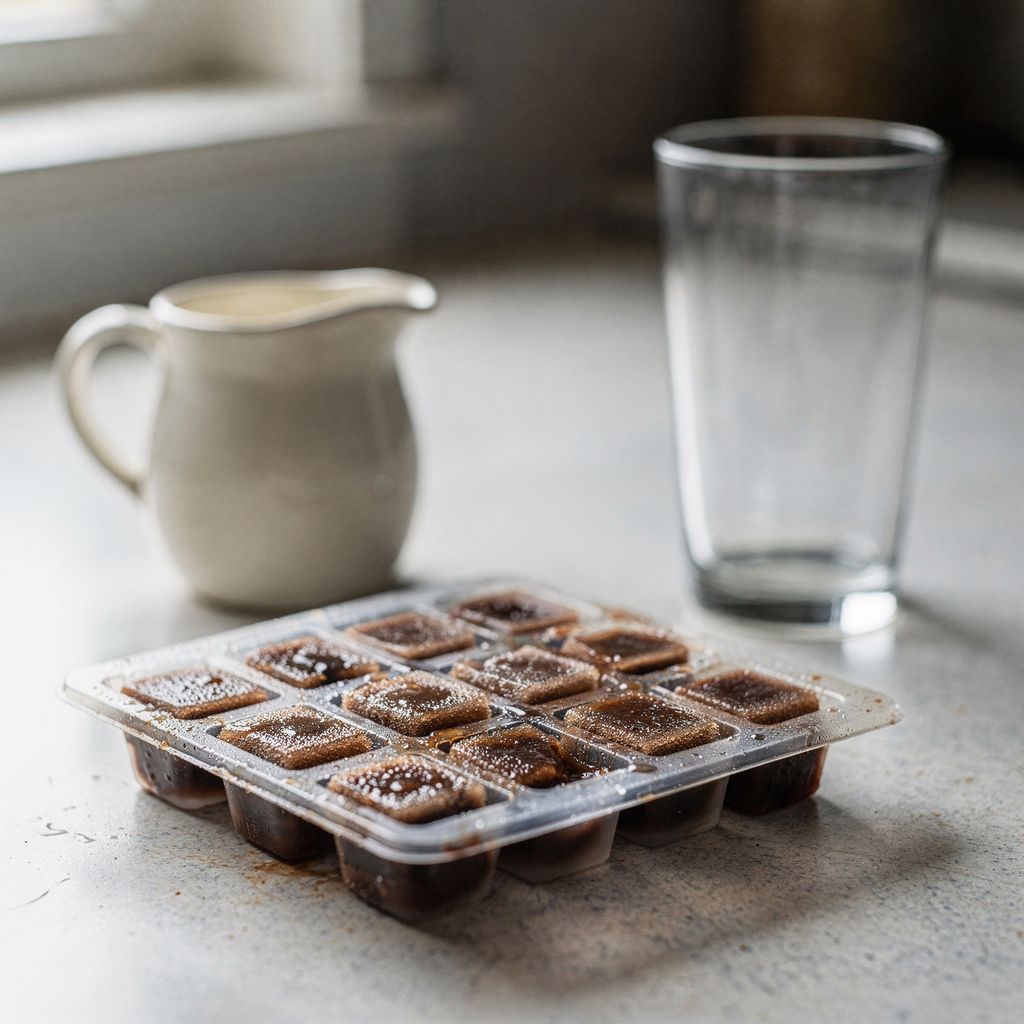
Basic iced coffee comes down to six steps: brew strong coffee, chill it fast, fill the glass with ice, pour the coffee over it, add milk, and sweeten with syrup. In detail:
Brew 150–200 ml of strong coffee.
Chill it — either pour it straight over ice or pop it in the freezer for 10 minutes. Don't let it cool down slowly on the counter.
Fill a tall glass right to the top with ice. Less ice melts faster than more ice, so skimping on ice actually makes for a more watery coffee, not a stronger one.
Pour the coffee over the ice.
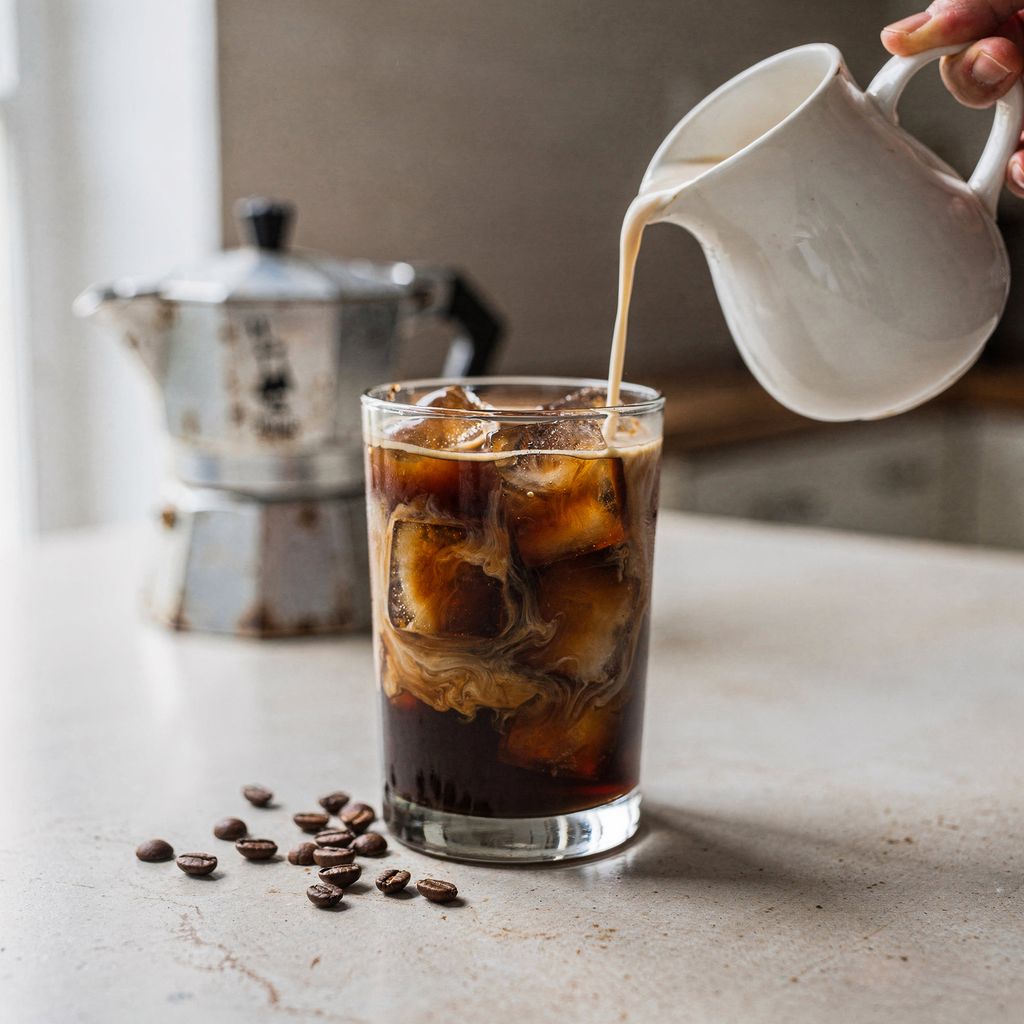
Add milk or cream and stir with a long spoon, reaching down to the bottom.
If sweetening, use sugar syrup or honey stirred into a little warm water.
You can make iced coffee with nothing more than a long spoon — just stir in circular motions for at least a minute. The point is to work air into the drink and dissolve the sweetener, which a shaker does faster, but not better.
Two things make this easier: a wider glass with a smooth base, giving the spoon room to work, and syrup instead of granulated sugar. Cold coffee simply won't dissolve sugar, and you'll end up with an unsweetened drink and sugar sitting at the bottom.
Iced frothy caffè latte
Iced frothed caffé latte — creamy iced coffee with a thick milk foam
Seasonal baking plans, tested recipes and kitchen tricks that save you time. Unsubscribe in one click.
Greek frappé is made from instant coffee, sugar and about 50 ml of cold water, whisked together until you get a thick, pale foam — only then do you add the ice and milk. Instant coffee here isn't a compromise. It's the only version that actually works.
The reason is down to the proteins that hold the foam together by coating air bubbles. Instant coffee can be dissolved into a highly concentrated solution and is low in coffee oils, which otherwise break the foam down. Espresso is rich in oils, so its foam collapses within about half a minute. Ground bean coffee simply won't give you a frappé, no matter how long you whisk it.
The method below is the traditional Greek whisking technique, not just a list of ingredients to combine — which is why we're showing the whole thing. Without it, you won't get a frappé at all:
Add 2 teaspoons of instant coffee and 1–2 teaspoons of sugar to a tall glass.
Pour in 50 ml cold water — just enough to cover the mixture. More water means thinner foam.
Whisk with a handheld milk frother or blender for 30–60 seconds, until the foam thickens and turns pale.
Add ice and top up with milk or water.
For the sweetened version (glykós), add the sugar straight into the whisking stage — it won't dissolve once the drink is done. A pinch of cinnamon or a few drops of vanilla extract work well added during whisking; syrup added at the end will deflate the foam.
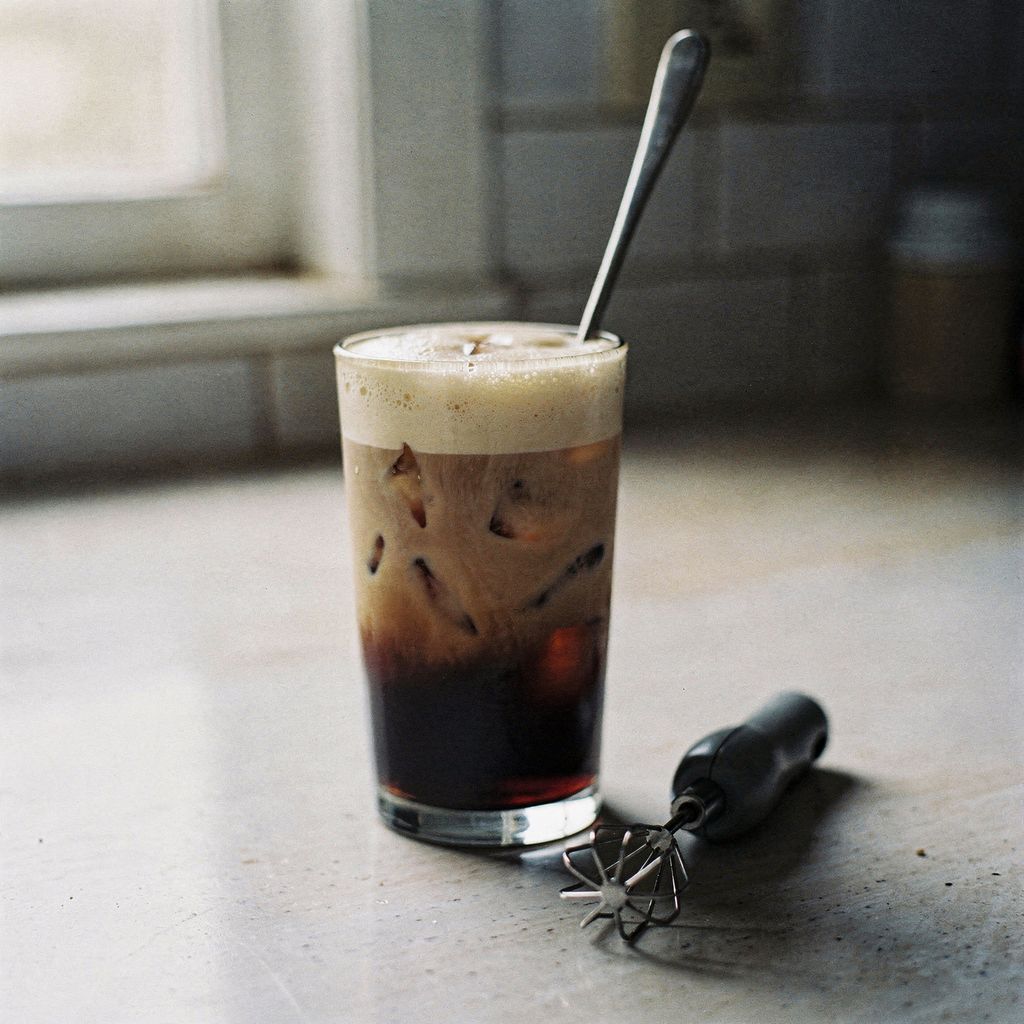
Pull a double espresso and pour it straight over a full glass of ice — the faster it cools, the less bitter it turns out. Espresso sitting in a cup loses its crema quickly and grows more bitter by the minute through oxidation; the ice chills it before that has a chance to happen.
Then choose what to top it up with:
Cold water (about 100 ml) — keeps the coffee flavour clean, closest to an iced Americano.
Milk (60–100 ml) — creamier, softer, and mellows the bitterness.
Tonic water — an espresso tonic, a bittersweet combination that's surprisingly refreshing. Pour the espresso onto the tonic, not the other way round, or you'll lose the fizz.
A teaspoon of vanilla or caramel syrup, a pinch of cinnamon or nutmeg is all you need to dress it up. Add whipped cream and a dusting of cocoa on top and you're edging closer to a dessert than a drink — which is also a valid option, just know the coffee flavour will get lost underneath.
Cold brew is coarsely ground coffee steeped in cold water for 12 to 24 hours, then strained through cloth or a filter. There's no heat involved at all — and that's the entire difference.
Cold water pulls different compounds out of the beans than hot water does. Measurements show cold brew has somewhat lower titratable acidity than coffee brewed with hot water — roughly a quarter less — while the pH stays nearly identical (4.85–5.13 for both). In practice, that means a smoother taste without a sharp acidic edge. Cold brew is also made as a concentrate, at a ratio of 1:5 to 1:8 (coffee to water), which means the ice dilutes it without wiping out the flavour. Of all the methods here, cold brew holds up best against dilution.
What to watch for:
Coarse grind, roughly like for a French press. A fine grind won't strain through cloth and will leave your drink cloudy.
Steep it in the fridge, not on the counter — it's safer and the flavour comes out cleaner.
The finished concentrate keeps for 7–10 days in the fridge; diluted cold brew keeps for two to three days.
Keep in mind the concentrate is strong. Per serving, cold brew usually packs more caffeine than a standard iced coffee, since it's made at a much more concentrated ratio — dilute it at least 1:1 with water or milk.

Jasmine cold brew with pear and thyme
Jasmine cold brew with pear and thyme — cold-steeped coffee with a fruity, herbal layer
Drop two scoops of ice cream into a glass and pour hot espresso or chilled strong coffee over them. The difference between the two matters a lot, and most recipes don't mention it:
Hot espresso over ice cream is the true Italian affogato — "drowned" ice cream. The scoop starts melting immediately, creating a creamy layer. It's served right away and eaten with a spoon.
Cold coffee over ice cream keeps the scoops holding their shape, giving you a drink you can sip through a straw and take your time with. This is the version you want if you're staying at the table for more than three minutes.
The ice cream really matters here, since it makes up half the drink. Vanilla is the safest bet — it complements the coffee without competing with it. Salted caramel works even better, since the salt draws out the sweetness that cold otherwise mutes. Nutty or chocolate ice cream deepens the bitterness. Steer clear of fruit flavours — the acidity fights with the coffee.
Roughly chopped hazelnuts or pecans, a teaspoon of caramel syrup, or grated dark chocolate all work well on top.
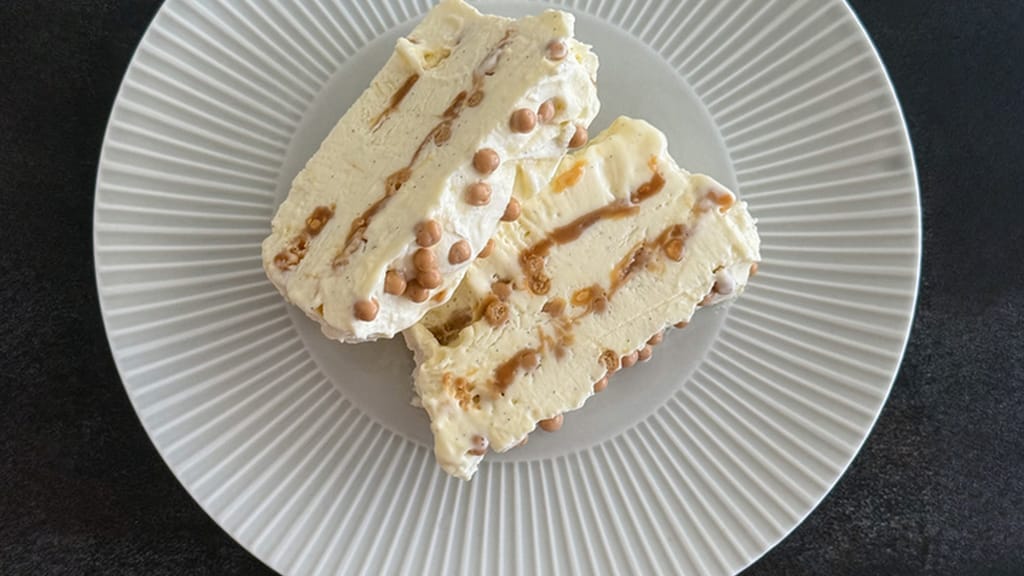
No-churn vanilla ice cream with peanut butter swirl
No-churn vanilla ice cream with peanut butter — the base for iced coffee with ice cream
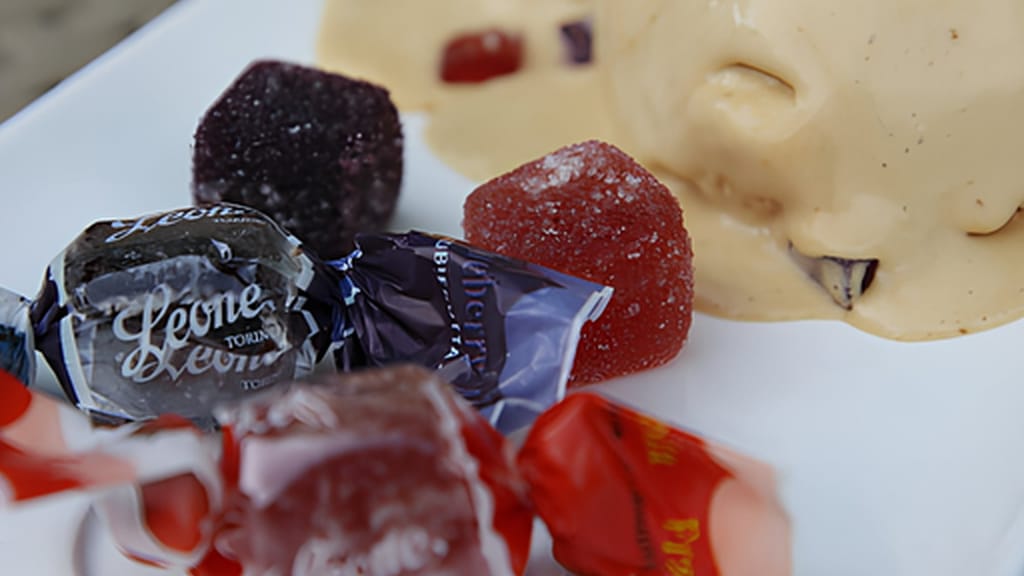
Salted caramel ice cream
Salted caramel ice cream — a salty variation for coffee, the salt draws out the espresso's sweetness
Irish iced coffee is cold, strong coffee with Irish whiskey and a layer of lightly whipped cream floating on top. It needs more sweetening than you'd expect — both whiskey and coffee are bitter, and a cold drink mutes sweetness further, so without a spoonful of syrup it comes out harsh.
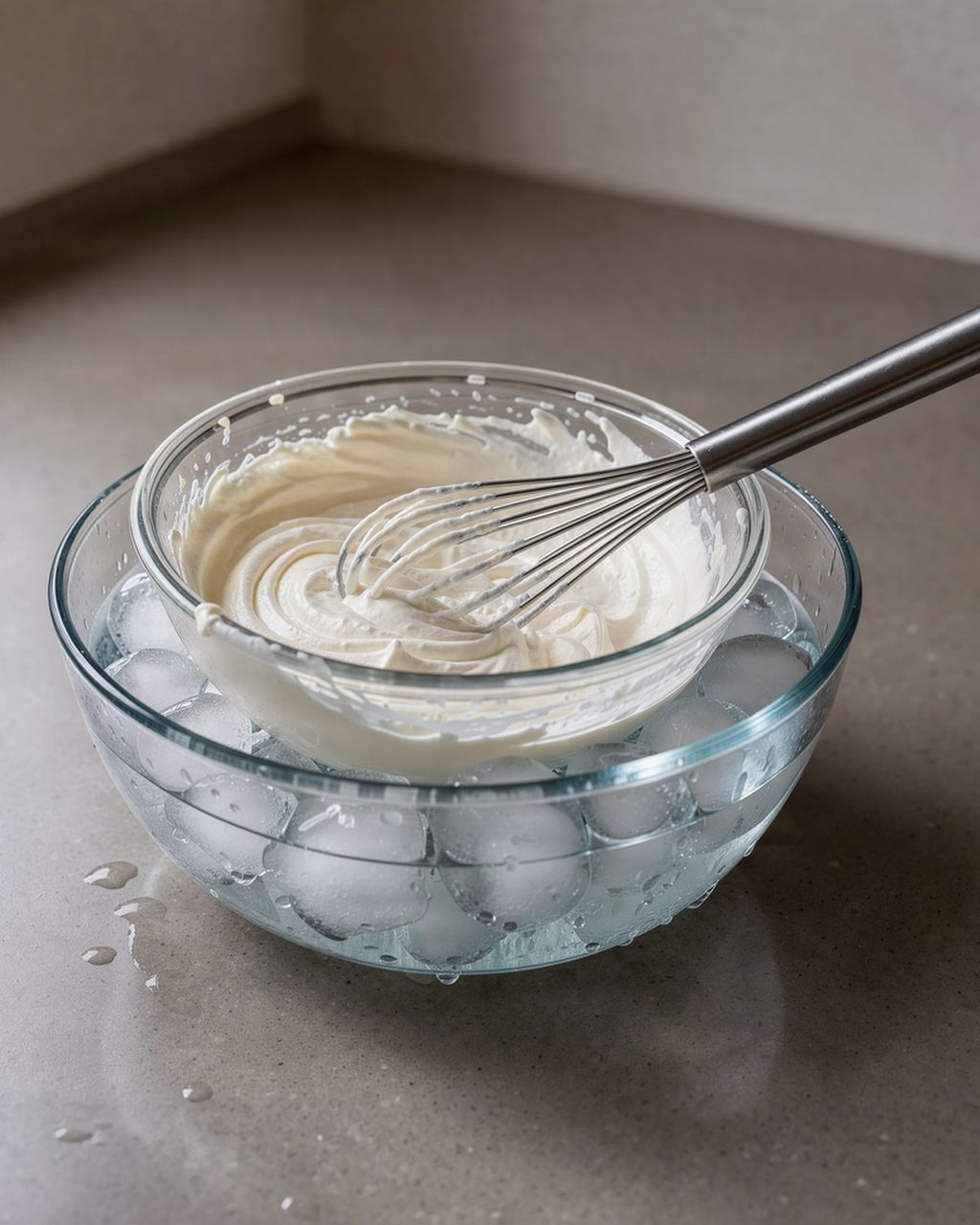
The whole trick lies in the cream. Whip it only until it still flows but holds a trail from the whisk, then pour it over the back of an upturned spoon. Whipped too stiffly, it will sit on top like a cap without blending in; too loose, and it'll sink to the bottom. Getting that in-between stage right is the only tricky part.
A coffee smoothie is espresso blended with frozen banana, plant-based milk and a handful of ice — breakfast and coffee in one glass. Use a properly frozen banana, sliced beforehand: it gives the smoothie a creamy thickness that fresh banana with ice never quite achieves, and it's also why you won't need to add any sweetener.
Variations that work well:
Avocado in place of some of the banana — thicker, less sweet.
Almond milk for a subtle nutty flavour, coconut milk for something bolder.
Rolled oats or peanut butter, if you want the smoothie thicker and more filling.
Berries and mango, on the other hand, don't really belong here — the fruit's acidity clashes with the coffee, just as it does with ice cream. If you want fruit, go for dates or figs instead.
Iced coffee pairs with sweet treats better than hot coffee does, since the cold mutes its bitterness. Anything buttery or nutty works best — cookies, sponge cake, caramel.
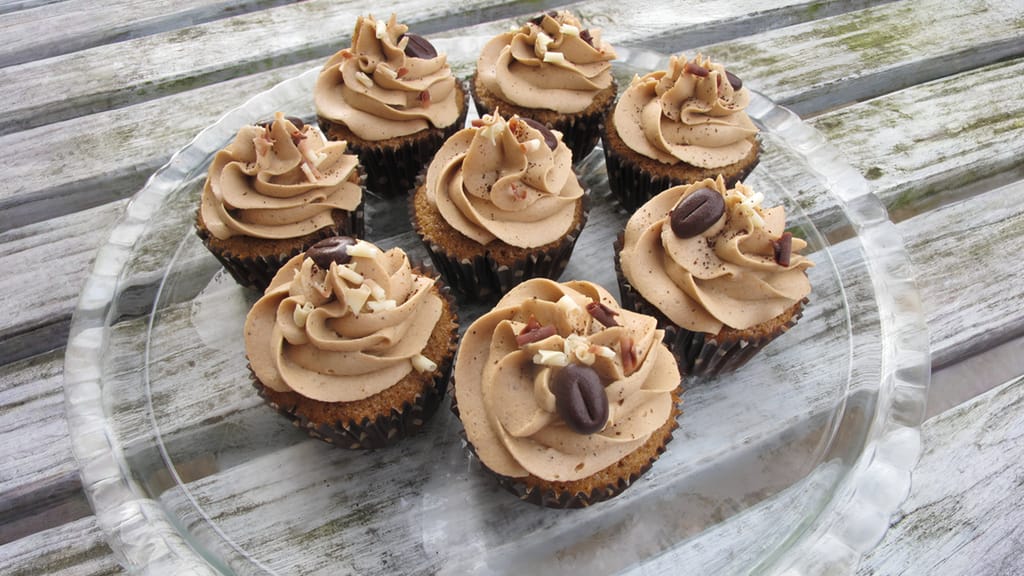
Coffee cupcakes with silky cream frosting
Coffee cupcakes with light frosting — a coffee dessert to pair with iced coffee
Brewed black coffee keeps for 2 to 3 days in a sealed container in the fridge, while cold brew concentrate lasts 7 to 10 days. Once you add milk or cream, cut that down to a single day. It tastes best on day one — coffee gradually oxidises and flattens out, even though it's still safe to drink.
It curdles because of the coffee's acidity combined with a temperature shock — the proteins in oat, soy or almond milk clump into flecks when they hit a hot, acidic liquid. Three things fix it: pour the milk into the glass first and add the coffee on top, use chilled coffee instead of hot, and reach for milk labelled 'barista' — it has added stabilisers built for exactly this. Cold brew curdles the least, not because its pH is dramatically different, but because it's poured cold, so there's no temperature shock to begin with.
Use sugar syrup instead of granulated sugar — in a cold drink, sugar simply won't dissolve and will sit at the bottom of the glass. Syrup takes five minutes to make: dissolve sugar and water in a 1:1 ratio in a pan, let it cool, and it keeps in the fridge for a month. The other option is to stir sugar into the coffee while it's still hot, before chilling it.
Roughly 60 to 120 mg per serving, depending on how much coffee you use — the ice itself and the chilling don't affect the caffeine content. A double espresso has about 80–130 mg depending on the dose and bean, while a standard 300 ml serving of cold brew usually has more, since it's made as a concentrate. Two teaspoons of instant coffee in a frappé work out to roughly 60 to 115 mg depending on how heaped your spoonfuls are — so frappé is by no means the weak option.
Large ice cubes are best for iced coffee, ideally frozen from coffee itself, since they melt more slowly and won't dilute the drink. A big cube has less surface area relative to its volume, so it melts slower than the same amount of crushed ice. Crushed ice only really makes sense for frappé and smoothies, where you want fast chilling and a thick texture.
One recipe worth heating the oven for, one tip, and one deal from the shop. Nothing else.