Royal Icing: How to Store It and How Long It Lasts
Can You Freeze Sugar Cookies with Royal Icing? Dough, Baked or Iced
Updated Nov 20, 2026
Yes, you can freeze sugar cookies decorated with royal icing, as long as the icing is completely dry and the cookies thaw in a closed container, but freezing the dough or the plain baked cookies and icing them later is safer. The two real risks with iced cookies are condensation, which leaves spots and sticky patches, and dark colors that bleed or blotch. Here is how each option works and how to thaw without damage.
Yes. Dry royal icing is mostly sugar, and it survives the freezer well. What goes wrong happens after the freezer, during thawing, when cold cookies meet warm, humid air.
You have three options, from safest to riskiest:
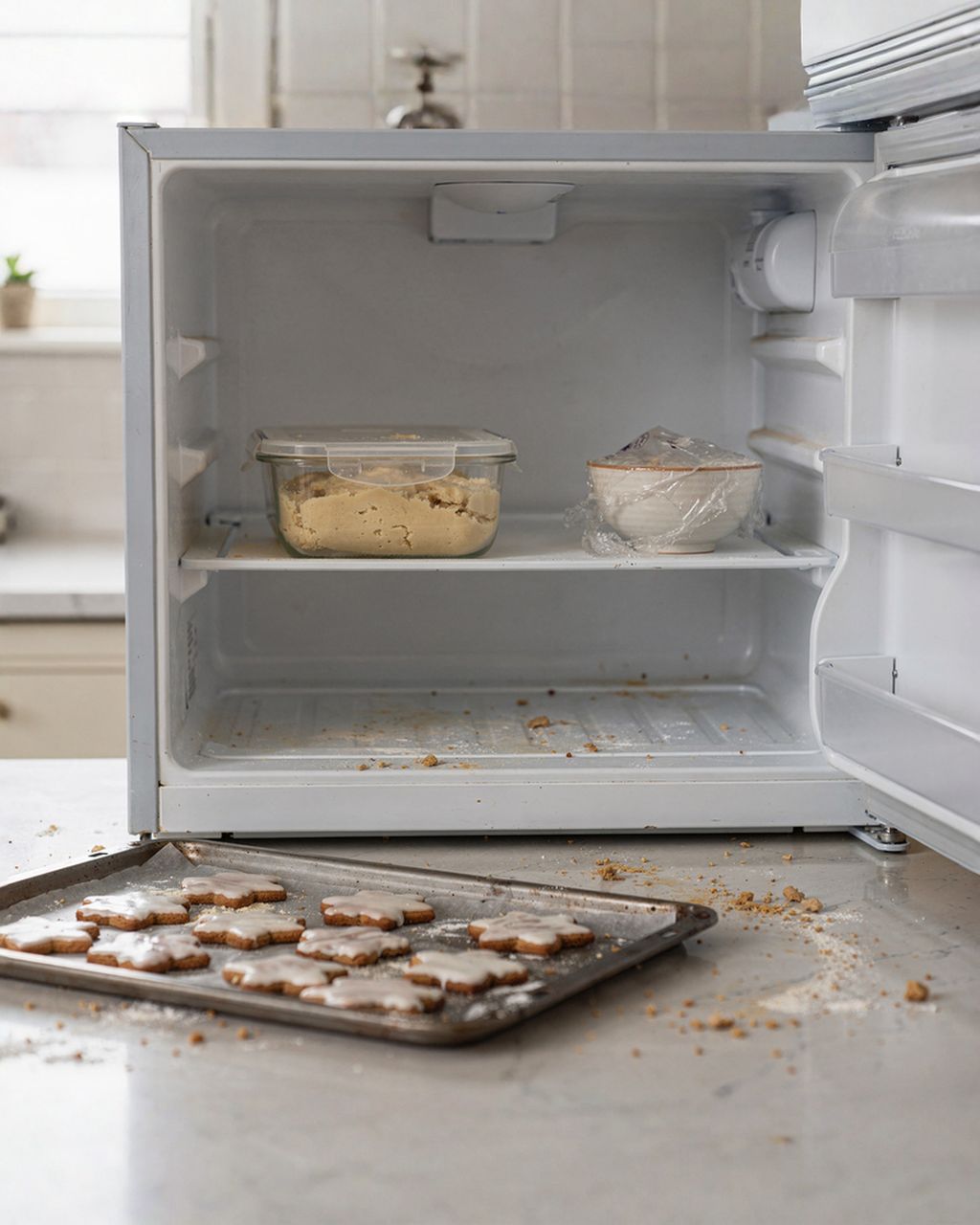
Freeze the dough and bake and decorate later.
Freeze the plain baked cookies and decorate after thawing.
Freeze the finished, iced cookies.
If you have the time to decorate closer to the day, options 1 and 2 give the best result. Option 3 is for when the cookies must be finished well ahead: a wedding, a big order or a busy December.
Raw dough freezes very well and takes up little space.
As a disc or slab: wrap it tightly in plastic film and then in a freezer bag. Thaw it overnight, covered, in the fridge, then roll as usual.
Rolled into sheets: roll the dough between baking paper to the thickness you want, stack the sheets flat and freeze. You can cut shapes straight from a sheet that has softened for a few minutes, and the shapes come out sharper.
Already cut out: freeze the shapes on a tray, then pack them in a box. Bake straight from frozen, adding a minute or two.
As with any raw dough, do not taste it: it contains raw flour and raw egg. The University of Illinois Extension's freezer chart gives unbaked cookie dough 3 months at 0 °F (−18 °C) for best quality.
This is what most cookie decorators do. Plain cookies have nothing to bleed or spot.
Let the cookies cool completely.
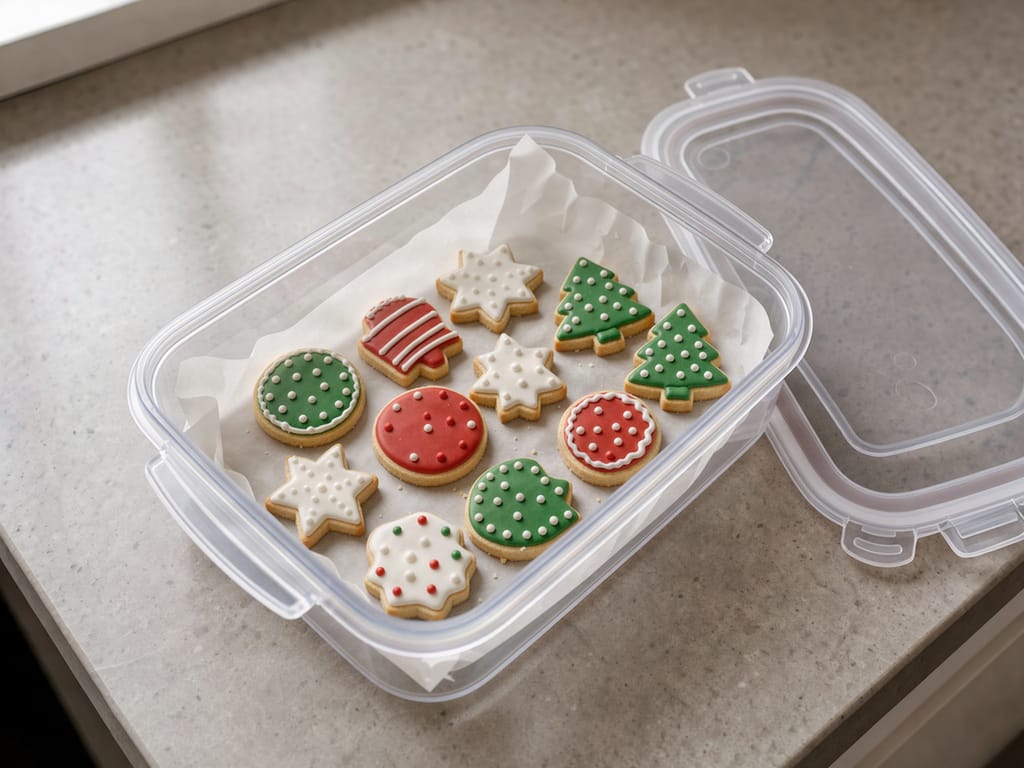
Pack them flat in an airtight container with a sheet of baking paper between layers.
Thaw them in the closed container at room temperature, then decorate.
The University of Illinois Extension lists home-baked cookies at 8 to 12 months at 0 °F (−18 °C) for quality, and USDA's food safety service notes that food kept constantly at 0 °F (−18 °C) stays safe while frozen; only the quality slowly declines. Our general guide to freezing cookies and dough covers other cookie types too.
The rule that matters most: the icing must be completely dry. Flooded royal icing needs many hours to set through; decorators commonly dry it overnight, and thick layers or humid kitchens need longer. Icing that is dry on top but soft underneath can crack, stick to the packaging or go blotchy.
Then:
Pack in a single layer in a rigid, airtight container. If you need to stack, put baking paper between layers and stack only flat cookies with no 3D details.
Or wrap each cookie in a small cellophane bag and heat-seal it, as many bakers do for sale. Then place the bagged cookies in a box.
Avoid zip bags on their own. The icing can stick to the plastic, and the cookies break.
Label the box with the date and leave it flat in the freezer where nothing can be piled on it.
Iced cookies are less predictable in the freezer than plain ones. Decorators report blotches on dark colors after as little as a week in some batches and none in others, so freeze a test cookie or two first.
Recipe of the week, one tip that saves you time and one deal from the shop. Unsubscribe in one click.
The next issue goes out on Thursday, November 26.
Most damage happens in the first hour out of the freezer.
Keep the lid on. Leave the container closed on the counter until the cookies are fully at room temperature, a few hours for a full box. Condensation then forms on the outside of the box, not on the icing.
Do not thaw in the fridge. The fridge is humid, and the cookies meet warm air again when you take them out, so they go through condensation twice.
Lay them out in one layer. Cookies thawed in a stack can stick to the paper.
A paper towel on top of the last layer catches any moisture inside the box.
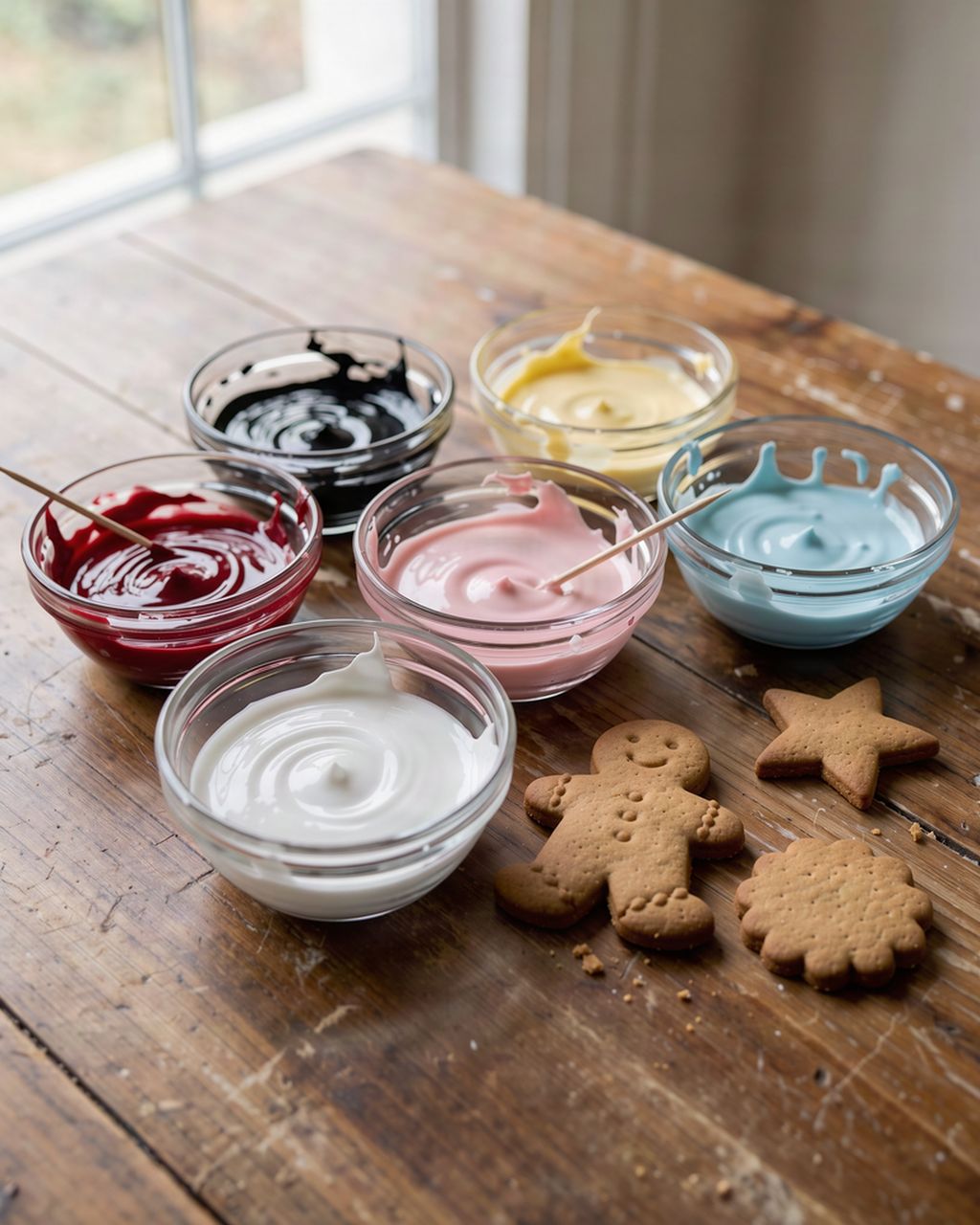
As for colors: deep red, black and navy are the most likely to bleed into white or blotch. The causes are the same as on the counter: too much coloring, icing that was too wet, and humidity. Our article on coloring icing and stopping bleeding goes through them. Sprinkles and colored sugar can also bleed when they meet moisture.
Leftover royal icing can be frozen on its own too, in a freezer bag or a piping bag with the air pressed out. How long it keeps depends on whether it was made with raw egg white, pasteurized egg white or dried egg white (meringue powder). We cover the details in how to store royal icing and how long it lasts.
If you make icing with raw egg white, remember it is eaten uncooked. The US FDA recommends pasteurized eggs or pasteurized egg products for any recipe in which eggs are served raw, which is one more reason many decorators use meringue powder or pasteurized whites. Our royal icing ratios guide has mixes for each.
Yes, once the icing is fully dry, usually after drying overnight. Freeze them in a single layer or between sheets of baking paper in an airtight container, and thaw them with the lid closed so no condensation forms on the icing.
Before icing is safer: plain baked cookies freeze with no risk of bleeding or spotting, and you decorate them after thawing. Freeze iced cookies only when you need them fully finished ahead of time.
Leave them in the closed container on the counter until they reach room temperature, a few hours, before you open it. Moisture then forms on the outside of the box rather than on the icing.
Deep colors like red, black and navy are the most likely to bleed or blotch, often because moisture reached the icing while it thawed or the icing was not fully dry before freezing. Dry the cookies longer and thaw them sealed.
For quality, the University of Illinois Extension lists home-baked cookies at 8 to 12 months and unbaked cookie dough at 3 months at 0 °F (−18 °C), and USDA notes that food kept constantly frozen at that temperature stays safe. Iced cookies can lose their looks sooner, so test one before relying on a long freeze.
One recipe worth heating the oven for, one tip, and one deal from the shop. Nothing else.