How Long Does Honey Cake Keep, and Why Does It Need to Rest to Soften?
Czech Honey Cake (Medovník): Marlenka and Russian Medovik Compared
Updated Nov 18, 2026
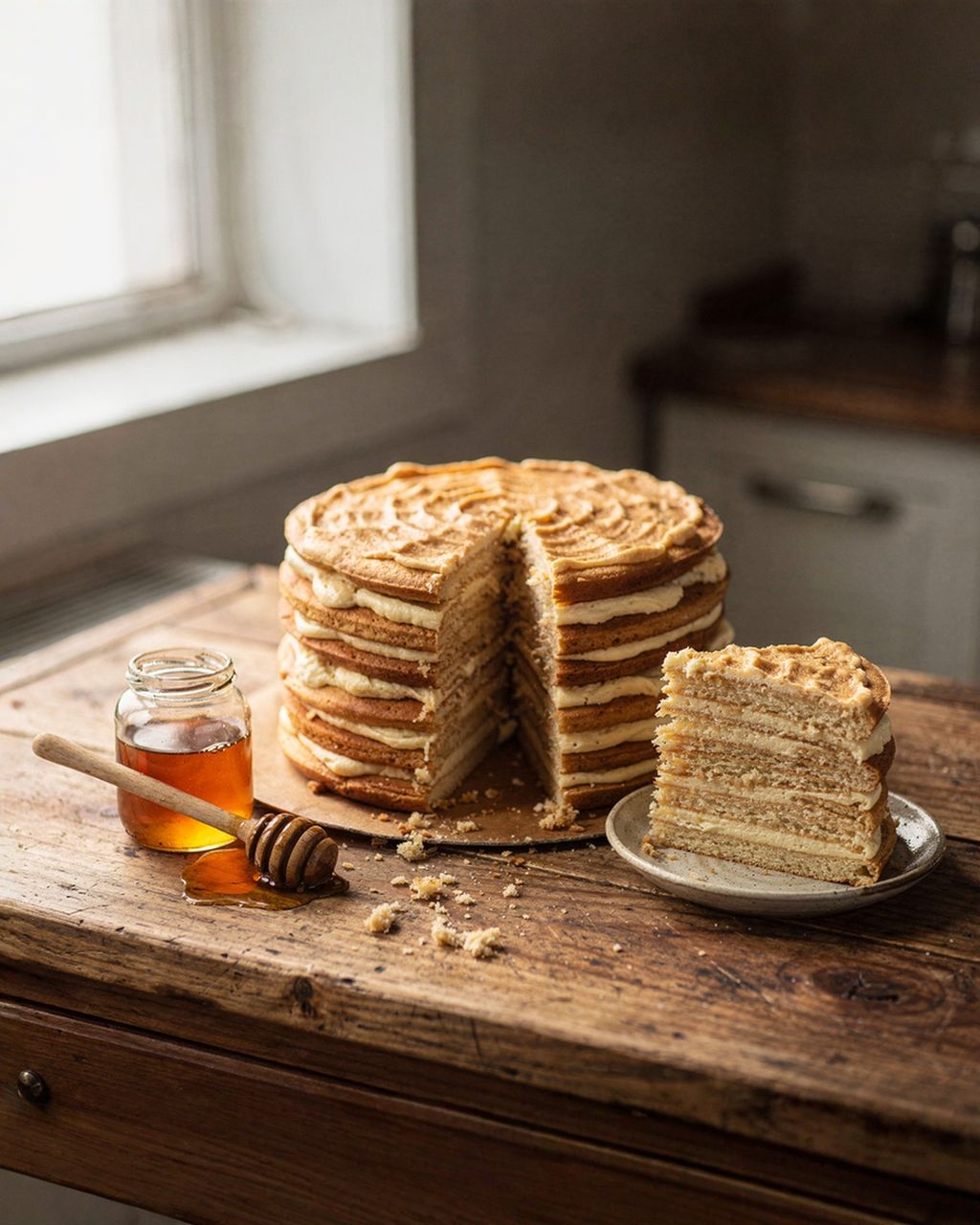
Medovník is the Czech layered honey cake: thin, dark honey sponge layers stacked with a cooked milk or caramel cream and coated in honey-cake crumbs. Marlenka is a brand of honey cake made in Czechia from an Armenian family recipe, and Russian medovik is a close cousin, usually filled with a tangy sour cream frosting. Home-made medovník and medovik both need to rest before you cut them, because the hard layers only turn soft after they soak up the cream.
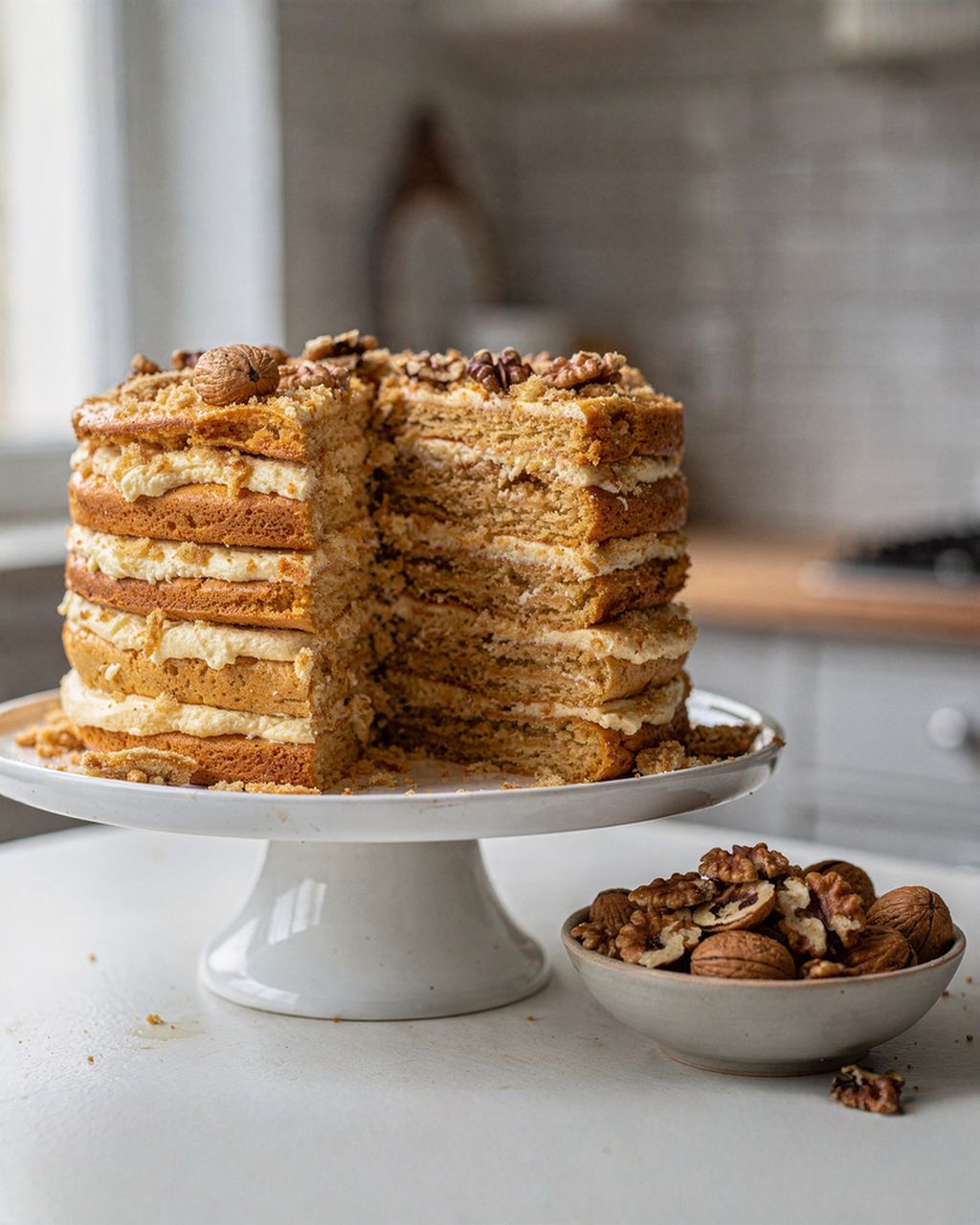
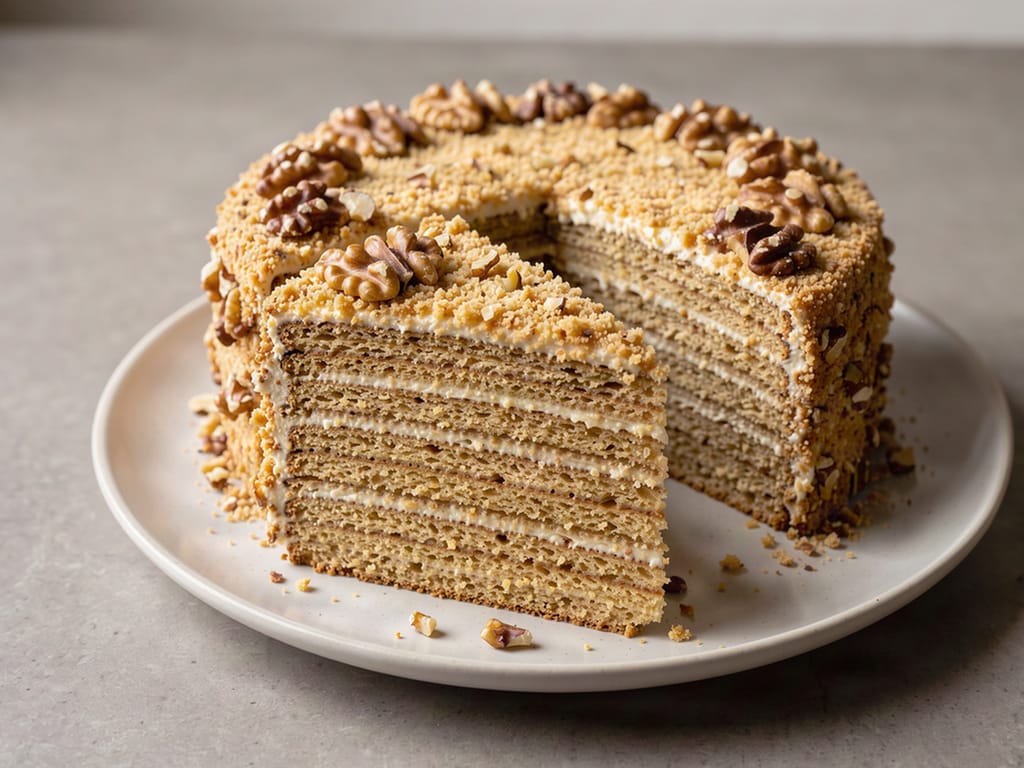
Medovník (from med, honey) is a layered honey cake sold in almost every Czech café and bakery. A slice shows many thin, caramel-colored layers with cream between them, and the outside is covered in fine crumbs, often with chopped walnuts on top.
It tastes of honey and caramel, sweet but not cloying, with a soft, almost fudgy texture once it has rested. It is a cake for coffee, birthdays and Sunday visits, and many Czechs buy it rather than bake it.
Layered honey cakes are shared across Central and Eastern Europe and the Caucasus: Poland, Czechia, Slovakia, Russia, Ukraine and Armenia all have versions. No country owns the idea, and the Czech medovník is closely related to the Russian medovik.
Recipe of the week, one tip that saves you time and one deal from the shop. Unsubscribe in one click.
The next issue goes out on Thursday, November 26.
This is the outline, not a full recipe.
The dough. Honey, sugar and butter are warmed together, then eggs and baking soda go in. The soda reacts with the warm honey, the mixture foams and darkens, and that gives the cake its caramel color and flavor. Flour is worked in to make a soft dough.
The layers. The dough is divided, rolled very thin and baked as separate round sheets, usually six to ten of them. They bake in minutes and come out firm, almost like a cookie. One sheet, or the trimmings, is crushed into crumbs for the coating.
The cream. It is spread thinly between every layer and over the outside.
The crumbs. The whole cake is pressed with crumbs, sometimes mixed with chopped walnuts.
The rest. The cake sits so the layers soften.
Czech recipes weigh honey; if yours is in spoons, a tablespoon of honey is about 21 g. For layer baking times, see how long to bake honey cake layers.
Czech home bakers use two main creams:
Cooked milk cream: milk thickened with flour or fine semolina, cooled, then beaten into soft butter and sugar. It is pale, mild and lets the honey taste lead.
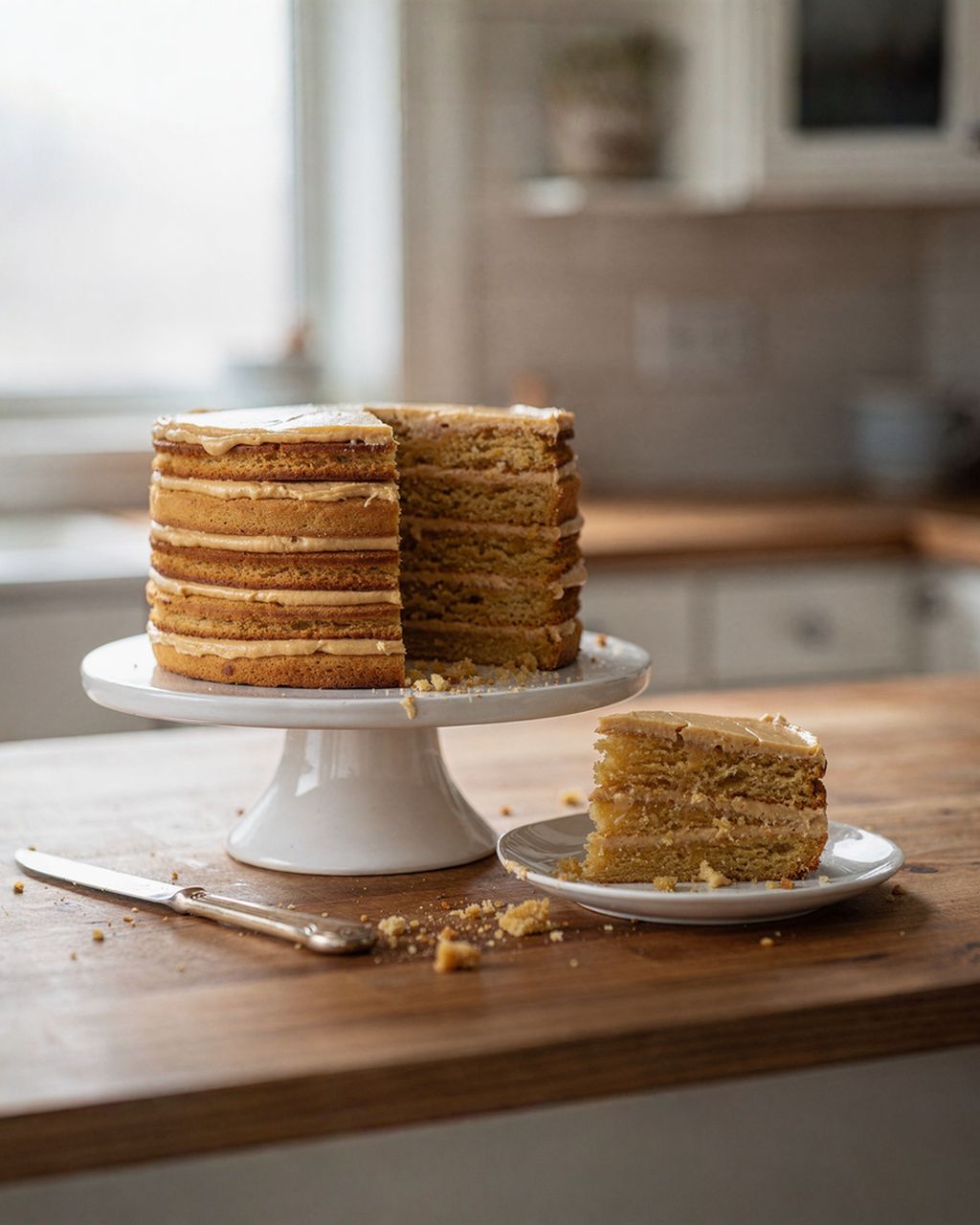
Caramel cream: sweetened condensed milk cooked until it turns into thick caramel (open the can first and cook it in a pan, double boiler or oven dish; never heat a sealed can), then beaten with butter. It is darker, richer and sweeter, and closest to what many people know from shop-bought honey cake.
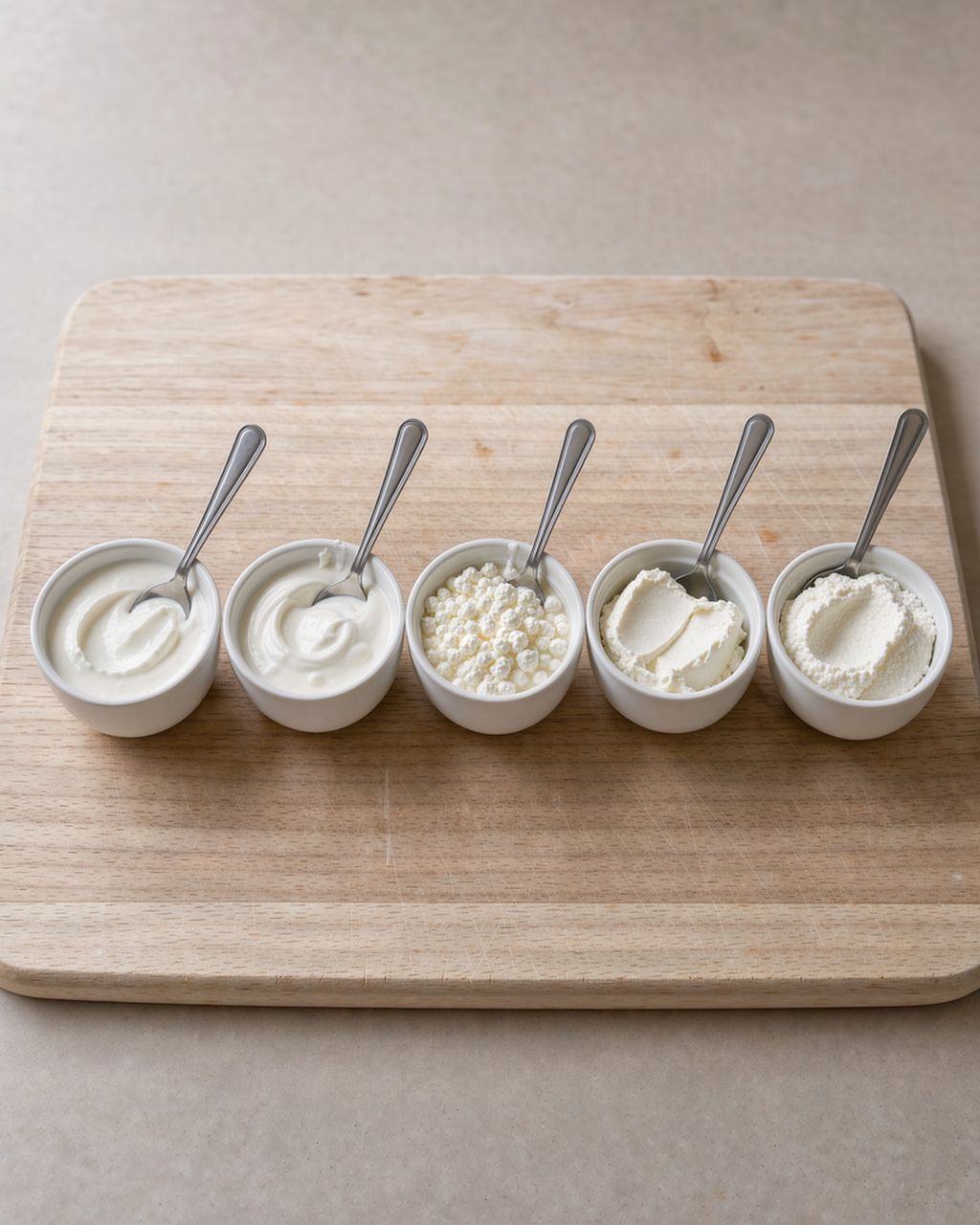
Some bakers fold chopped walnuts into the cream, some use a little sour cream for tang. The cream layers are always thin: the cake should be mostly honey sponge, not mostly cream.
Marlenka is a brand, not a type of cake. It is a honey cake made by Marlenka International in Frýdek-Místek, in the Moravian-Silesian Region of the Czech Republic.
Who founded it: Gevorg Avetisyan, who moved from Armenia to the Czech Republic in 1995. He founded the company with his sister in 2003.
The recipe: an old Armenian family recipe for honey cake.
The name: from the names of Avetisyan's mother and daughter.
The cake: thin honey layers with a cream based on sweetened condensed milk, sold whole or in slices. The classic version has walnuts; there is also a cocoa version and others.
The company started with one employee and, according to the Czech Ministry of Foreign Affairs, exports to more than 50 countries. Outside Czechia, Marlenka is one of the most widely sold Czech honey cakes, which is why the two names are often used together.
The honey layers are almost the same. The differences are in the cream and the finish.
Czech medovník: cooked milk cream or condensed-milk caramel cream with butter. Sweet, rich, caramel-forward. Often walnuts on top.
Russian medovik: classically a sour cream frosting (sour cream whipped with sugar), sometimes with condensed milk or whipped cream. Lighter and tangier, with more contrast against the honey. Usually crumbs all over, sometimes no nuts at all.
Marlenka: a condensed-milk based cream, sweeter and denser, with walnuts or cocoa.
You will often read that medovik was invented for the Russian Empress Elizabeth Alexeievna in the early 19th century. Treat that as legend: the cake does not appear in 19th-century Russian cookbooks, and it became truly popular in the Soviet era.
Everything for medovník is easy to find in the US, UK, Canada and Australia, with a few name traps.
Honey: any runny flower honey works. A darker honey, such as buckwheat or forest honey, gives a stronger, slightly bitter edge; a light one keeps it mild.
Condensed milk: for caramel cream you need sweetened condensed milk, not evaporated milk. Evaporated milk has no added sugar and will not turn into caramel.
Flour: US all-purpose or UK plain flour is fine for the layers. Czech recipes often call for hladká mouka (fine flour), which is the closest match.
Baking soda: Czech recipes call it jedlá soda. It is the same as US baking soda or UK bicarbonate of soda, not baking powder.
Butter: Czech recipes give butter in grams. A US stick is 113 g; see the calculator for other amounts.
If you would rather not bake, many Central European delis and online shops sell Marlenka and other ready-made honey cakes.
Freshly assembled honey cake is not ready. The baked layers are firm and dry, close to a thin cookie. Over the rest, they draw moisture from the cream and turn soft and tender, while the cream firms up between them. That is what gives the cake its typical dense, moist slice.
Cut it too soon and you get hard layers sliding on soft cream. Most Czech recipes rest the cake at least overnight in the fridge, and many bakers prefer a full day. Keep the assembled cake in the fridge: both creams are made with milk and butter.
If your cake stayed hard even after resting, the layers were probably baked too long or the cream was too thin; see why your honey cake stayed hard. For how long it keeps once it is soft, see how long honey cake keeps.
Czech honey cake is called medovník, from med, the Czech word for honey. It is a layered cake of thin honey sponge sheets and cream, coated in crumbs.
Marlenka is both: it is a Czech company making a cake from an Armenian family recipe. Gevorg Avetisyan, who came to the Czech Republic from Armenia in 1995, founded it with his sister in Frýdek-Místek in 2003, and named it after his mother and daughter.
The main difference is the cream. Czech medovník is usually filled with a cooked milk cream or a caramel cream made from condensed milk and butter, while Russian medovik is most often filled with a tangier sour cream frosting; the honey layers themselves are very similar.
Honey cake needs to rest because the baked layers are firm and dry until they absorb moisture from the cream. Most Czech recipes rest it at least overnight in the fridge, and many bakers prefer a full day, so the layers soften and the cake slices cleanly.
Many Czech honey cakes have walnuts, usually chopped on top and sometimes in the cream, but nuts are not essential. Marlenka sells versions with walnuts and with cocoa; the cocoa version has no nuts in the recipe, but its label warns it may contain traces of nuts (and, on some pack sizes, peanuts) as well as soy, so check the package of the exact product if you have an allergy.
One recipe worth heating the oven for, one tip, and one deal from the shop. Nothing else.