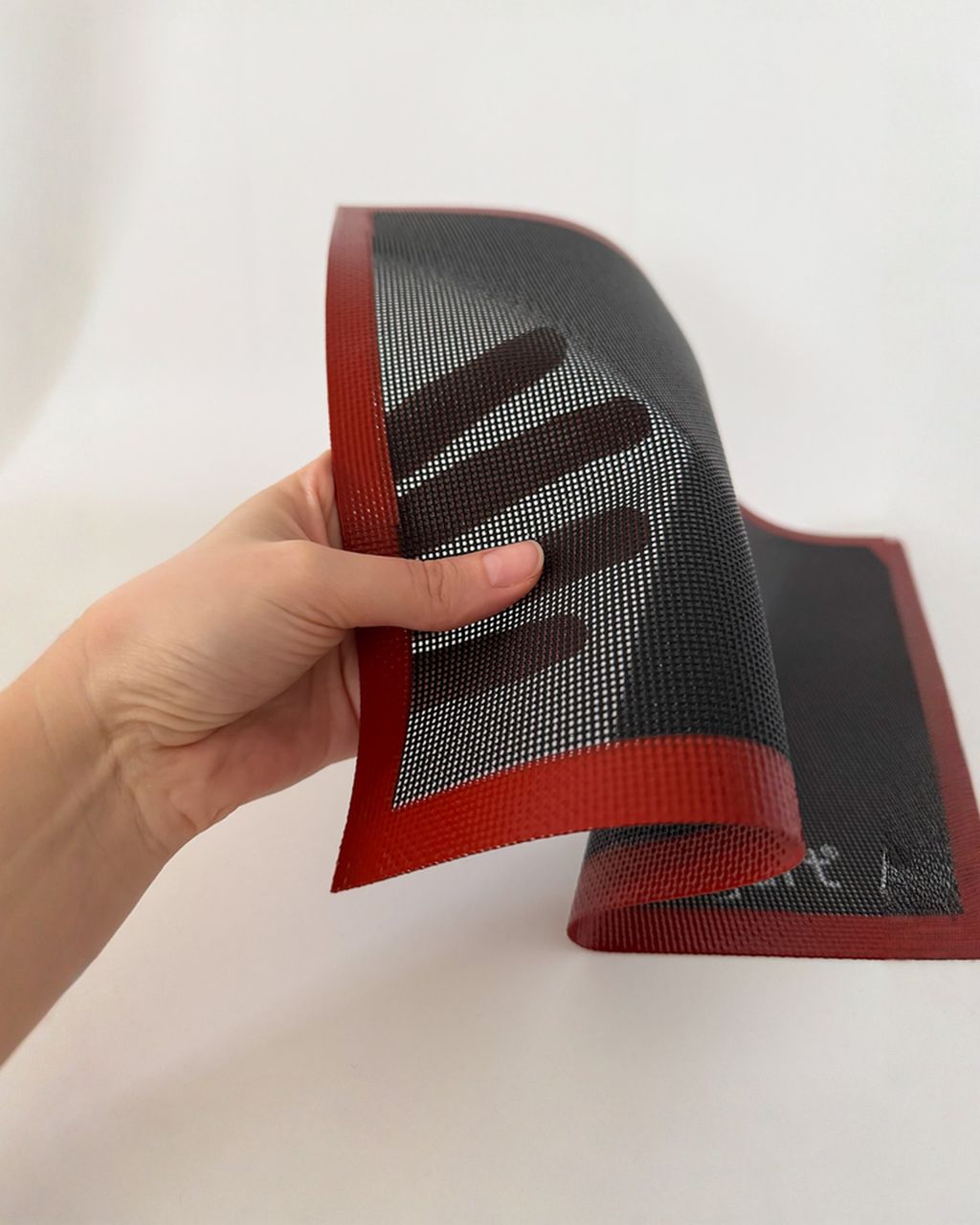
Perforated Silicone Baking Mat
Boží Milosti in the Oven and From Puff Pastry: How to Bake Them Tender and Bubbly Without Frying
Updated Nov 16, 2026
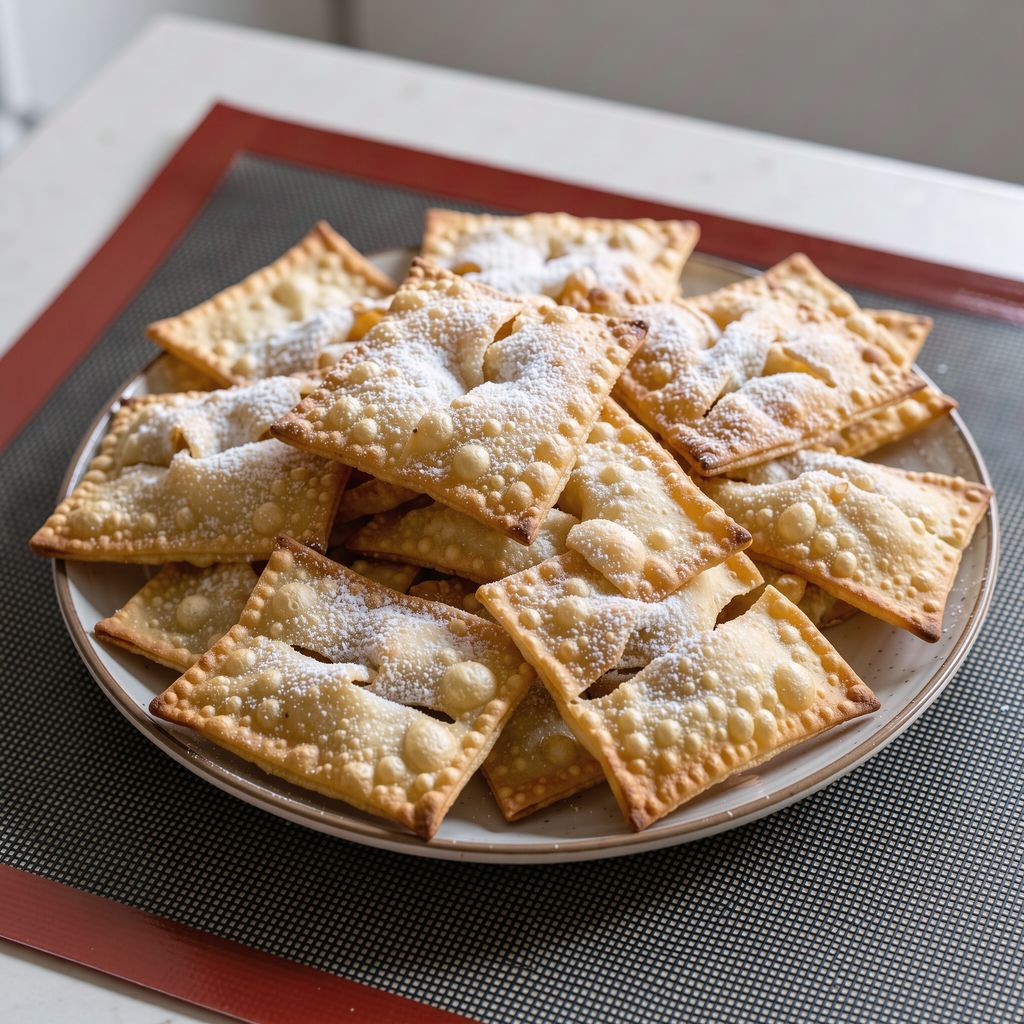
You can bake boží milosti (Czech carnival pastries, traditionally fried) two ways. Roll classic sour cream dough to 2 mm and bake it on a perforated mat at 180°C (350°F), or 160–170°C (320–340°F) with a fan, for 12–15 minutes until light golden. Store-bought puff pastry goes in at 200°C (400°F) for about 12–15 minutes, until deep golden. Compared with the fried version, you lose some of the big bubbles and that oil-soaked, shattering crunch. What you get is a drier, more delicate pastry that's closer to a crisp cookie. Here's how to get the most out of your oven: roll thin, cut properly, add the sugar at the right moment, and store them so they don't go soft.
Bake boží milosti from classic dough at 180°C (350°F) for 12–15 minutes, and those from puff pastry at 200°C (400°F) for 12–15 minutes. Keep the temperature on the high side. The dough needs a quick blast of heat so the water in the butter and cream can turn to steam and puff up the bubbles before the dough dries out.
Classic sour cream dough: 180°C (350°F) top and bottom heat, or 160–170°C (320–340°F) with a fan, for 12–15 minutes. They're done when light golden with darker blisters along the edges.
Store-bought puff pastry: 200°C (400°F), or 180–190°C (355–375°F) with a fan, for 12–15 minutes. Wait until they're deep golden. Pale puff pastry is rubbery inside.
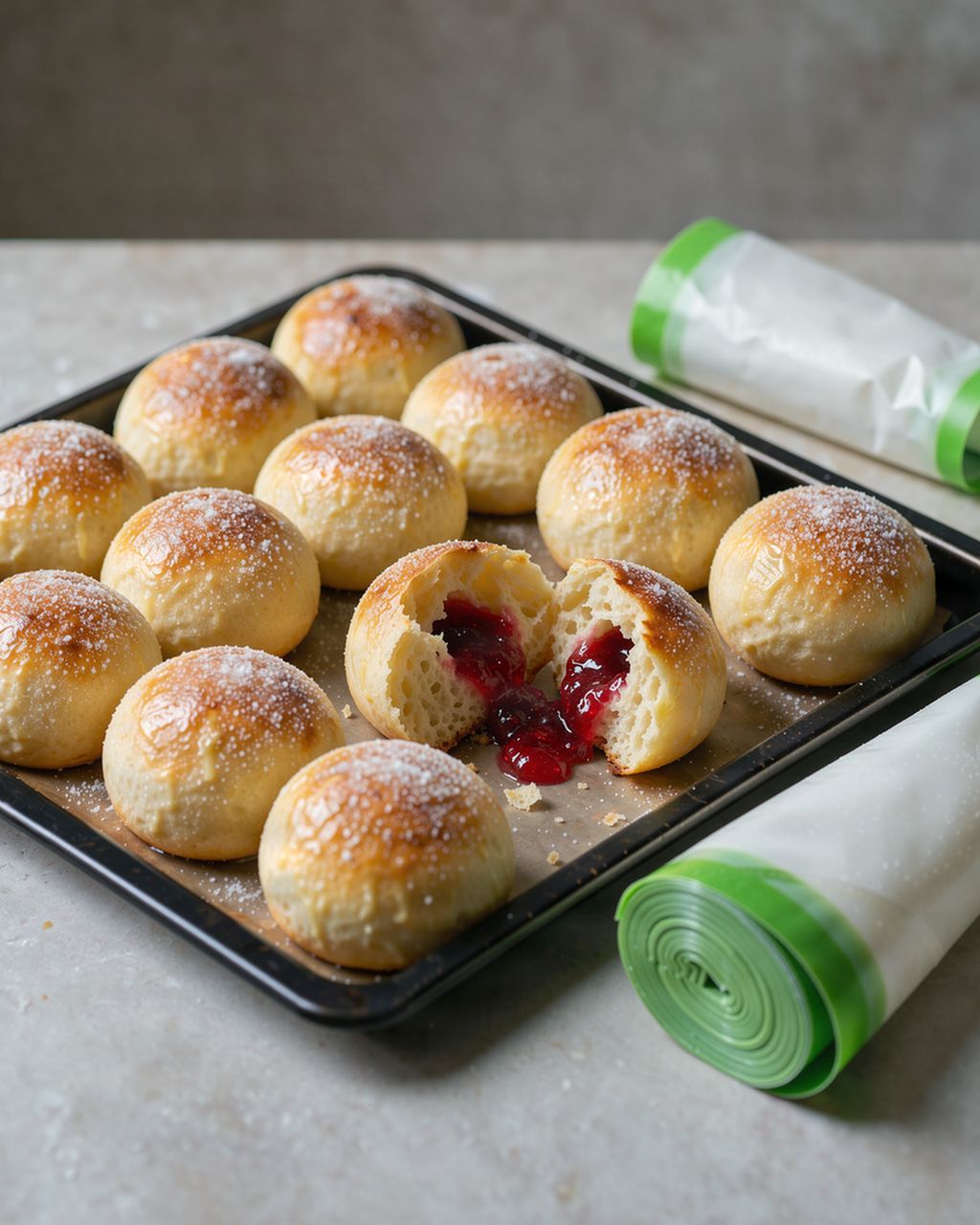
Baking sheet: a perforated silicone mat, or at least parchment paper. Steam escapes through the holes, so the bottom doesn't steam and bakes through just like the top.
Bake one sheet at a time on the middle rack. Two sheets at once do work in a convection oven, but the lower one tends to lag by 2–3 minutes, so go by color, not by the timer.
Boží milosti are traditionally fried in oil. How the baked version differs is covered in the next section.
Seasonal baking plans, tested recipes and kitchen tricks that save you time. Unsubscribe in one click.
Compared with fried ones, baked boží milosti have smaller, flatter bubbles and a drier, more delicate texture, without the oil-soaked crunch. Hot oil passes heat into the dough much faster than oven air does, so steam inflates big pockets within seconds. In the oven the dough heats up more slowly, which is why the bubbles are smaller.
What you gain:
No smell of oil in the house and no need to monitor the temperature of frying fat.
A whole sheet at once instead of frying three pieces at a time.
Dry, non-greasy fingers, because the dough doesn't soak up frying oil.
If you want something in between, boží milosti also work in an air fryer: 170–180°C (340–355°F), roughly 6–8 minutes, in a single layer. The blisters there are more pronounced than in the oven.
Classic boží milosti dough is all-purpose (plain) flour, cold butter, egg yolks, sour cream, a spoonful of rum or white wine, and a pinch of salt. The basic ratio: for 250 g all-purpose flour, 125 g cold butter, 2 egg yolks, 3–4 tablespoons sour cream and 1 tablespoon rum. That's twice as much flour as butter (2:1). There's no sugar in the dough at all. The sweetness comes only from the vanilla sugar on top. Each ingredient has its job:
Sour cream supplies moisture for steam and acidity, which makes the dough more tender.
Cold butter in small pieces melts in the oven and leaves little hollows behind. Those are your bubbles.
Egg yolks give color and tenderness. Egg whites would make the dough firm and hard.
Rum or wine slows gluten development, and much of it evaporates during baking, so it helps with crispness.
Add the sour cream gradually: 3 tablespoons, and a fourth only if the dough is crumbly. Just bring the dough together quickly and don't knead it smooth. The longer you work it, the more gluten develops and the tougher the boží milosti will be. Then wrap it and chill it for at least 30 minutes in the fridge. Chilled dough rolls out more easily and the butter stays in pieces. The right dough is supple, not sticky, and you can see small bits of butter when you cut through it.
Boží milosti from puff pastry are the fastest route: unroll the sheet, cut, and bake at 200°C (400°F). The layers come from butter folded into the dough, so they puff up more than the classic dough, but upward rather than into blisters, and they taste more buttery and less like grandma's.
A few things make the difference:
All-butter puff pastry tastes noticeably better than the kind made with vegetable fat. For the differences, and when it's worth making your own, see our article puff pastry: store-bought, homemade, or rough puff.
Don't overroll the sheet. A store-bought sheet only needs a light pass with the rolling pin to even it out. A sheet that's too thin won't separate into layers or rise in the oven.
Cut straight down with a sharp knife or wheel, without dragging. A dull cut squashes the edges and the layers won't separate.
The dough must stay cold. If it softens, put the cut pieces in the fridge for 10 minutes before they go into the oven.
Roll classic dough to 2 mm, cut it into rectangles of roughly 5 × 10 cm, and slit each one lengthwise down the middle. Thickness matters most here. Unlike in oil, thicker dough in the oven doesn't have time to puff and dries out hard.
Roll in batches and keep the dough you're not working with in the fridge.
Use as little dusting flour as you can. Every extra spoonful of flour makes the dough drier and tougher. Rolling between two sheets of parchment paper helps.
Cut with a fluted pastry wheel. The zigzag edge looks traditional and blisters more readily. A plain knife or pizza cutter works fine too.
Make one to three lengthwise slits in the middle, about 3–4 cm long, leaving the edges intact. The slit lets steam out so the piece doesn't puff up like a pillow, and it gives boží milosti their typical shape.
Optionally, pull one end through the slit. This makes a twisted "bow" that unfolds into a more interesting shape in the oven and has more crisp edges.
Place them on the baking sheet at least 2 cm apart. Boží milosti don't spread much, but they need air to circulate around them.
Don't brush classic boží milosti with egg. A brushed surface browns quickly before the dough has baked through, forms a tough, shiny shell, and vanilla sugar then clings to it less well than to a matte, tender surface.
Puff pastry is different: a thin layer of beaten egg helps give a deep golden color. But brush only the top, never the cut edges. The egg would glue the layers together at the edge, and the pastry wouldn't puff there.
Baked boží milosti most often turn hard because the dough is too thick or was baked too long at a low temperature, so it dries out before it can puff. Crisp means thin and airy; hard means dense and dried out.
The usual culprits:
Dough thicker than 3 mm. The center can't form bubbles and bakes to a dry, rusk-like density.
Too much flour when rolling, or adding flour to sticky dough by eye.
Long kneading. Developed gluten makes the dough elastic and, once baked, tough.
Low temperature. At 150–160°C (300–320°F) top and bottom heat, the dough dries more than it bakes. Stick to 180°C (350°F).
Overbaking. Once they're brown all over, it's too late. Take them out at the light golden stage with darker blisters. They'll finish on the baking sheet in a minute.
Warm butter in the dough. If it melts while you're rolling, there are no pieces left in the dough to make hollows in the oven.
Coat boží milosti in vanilla sugar while they're lukewarm, not hot. On a hot surface the sugar dissolves and turns into a sticky layer, and on fully cooled pastries it doesn't cling and falls off.
Timing depends on when you serve them:
Serving the same day: coat them while they're lukewarm.
Baking ahead: let them cool without sugar and sugar them just before serving. Sugar attracts moisture, and the boží milosti would go soft under it. To make sugar stick to cooled ones, warm them for 3–5 minutes at 150°C (300°F) and coat them once they're lukewarm.
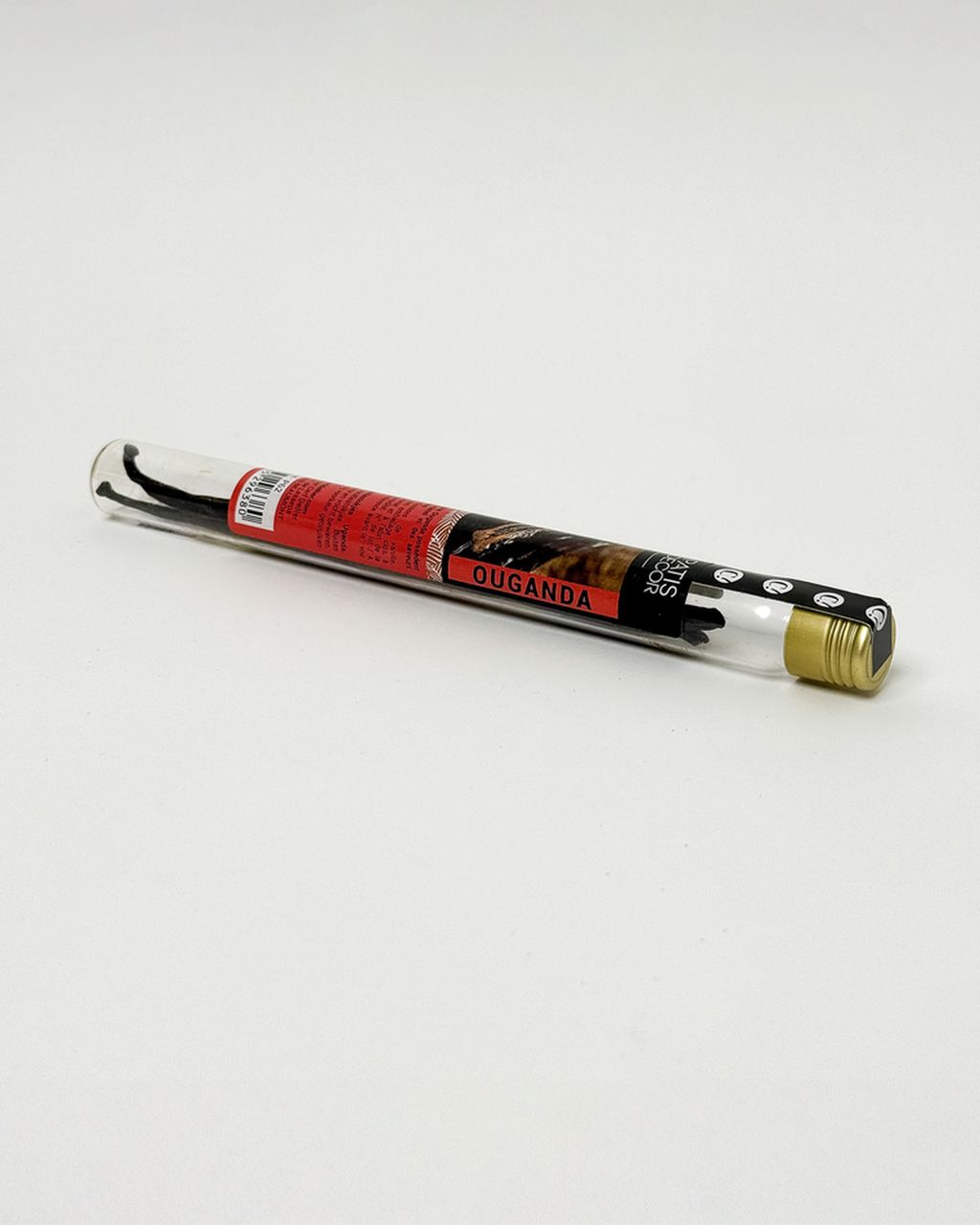
The best vanilla sugar is powdered sugar mixed with the seeds from a vanilla pod. For 200 g of sugar, the seeds from one pod are enough.
Don't throw away the scraped pod. Tuck it into a jar of powdered sugar, and in 1–2 weeks you have a supply of fragrant sugar for next time.
Dust through a sieve over the baking sheet, then turn the boží milosti over and dust the other side. Or gently toss them in a bowl of sugar, which gets sugar into the slit as well.
If you like, add a second, fresh layer of sugar just before serving, since the first one sinks into the surface a little.
Baked boží milosti are best the same day, and they stay crisp for roughly 1–2 days at room temperature in a dry tin. After that they start to soften, faster in plastic and in humid conditions.
Let them cool completely on a wire rack before you close the container. Leftover steam would soften them from the inside.
A metal tin or cardboard box, layered with parchment paper. A plastic container with a lid traps moisture, and boží milosti go limp in it quickly.
Room temperature, dry. The fridge doesn't suit them. It's humid in there and the dough picks up odors.
Baking ahead? Store them without sugar and coat them just before serving. You'll find how above, in the section on coating in vanilla sugar.
Boží milosti belong to Masopust (the Czech carnival season). You'll find more carnival baking in the articles below.
Yes, but freeze the raw, cut dough, not the baked pastries. Spread the pieces on a baking sheet, freeze them, then transfer to a bag. Bake straight from frozen at the same temperature, just 2–3 minutes longer. Baked boží milosti turn soft once thawed, and you can't bring the crunch back.
Simply leave the rum or wine out, or replace it with a teaspoon of lemon juice. Alcohol helps hold back gluten, and most of it evaporates during baking, though not quite all of it. Without it the pastries come out slightly less tender, so pay extra attention to rolling the dough thin and handling it as briefly as possible.
Put soft boží milosti in an oven heated to 150°C (300°F) for 3–5 minutes, then let them cool on a wire rack. The moisture evaporates and the surface crisps up again. Then dust them with fresh vanilla sugar, since the original coating will have absorbed moisture in the meantime.
250 g of flour makes roughly 35–45 boží milosti measuring 5 × 10 cm, when you roll the dough to 2 mm. The dough weighs about 450 g in total and each piece about 10 g. The exact count depends on how many scraps you re-roll. Roll the scraps only once, since dough rolled a second time is tougher.
One recipe worth heating the oven for, one tip, and one deal from the shop. Nothing else.