- Season
- Year-round.
- Price
- Low
Calories and nutrition
per 100 g
286 kcal
Calories
7.1 g
Protein
52.4 g
Carbs
3.6 g
Fat
Hot Dog Buns
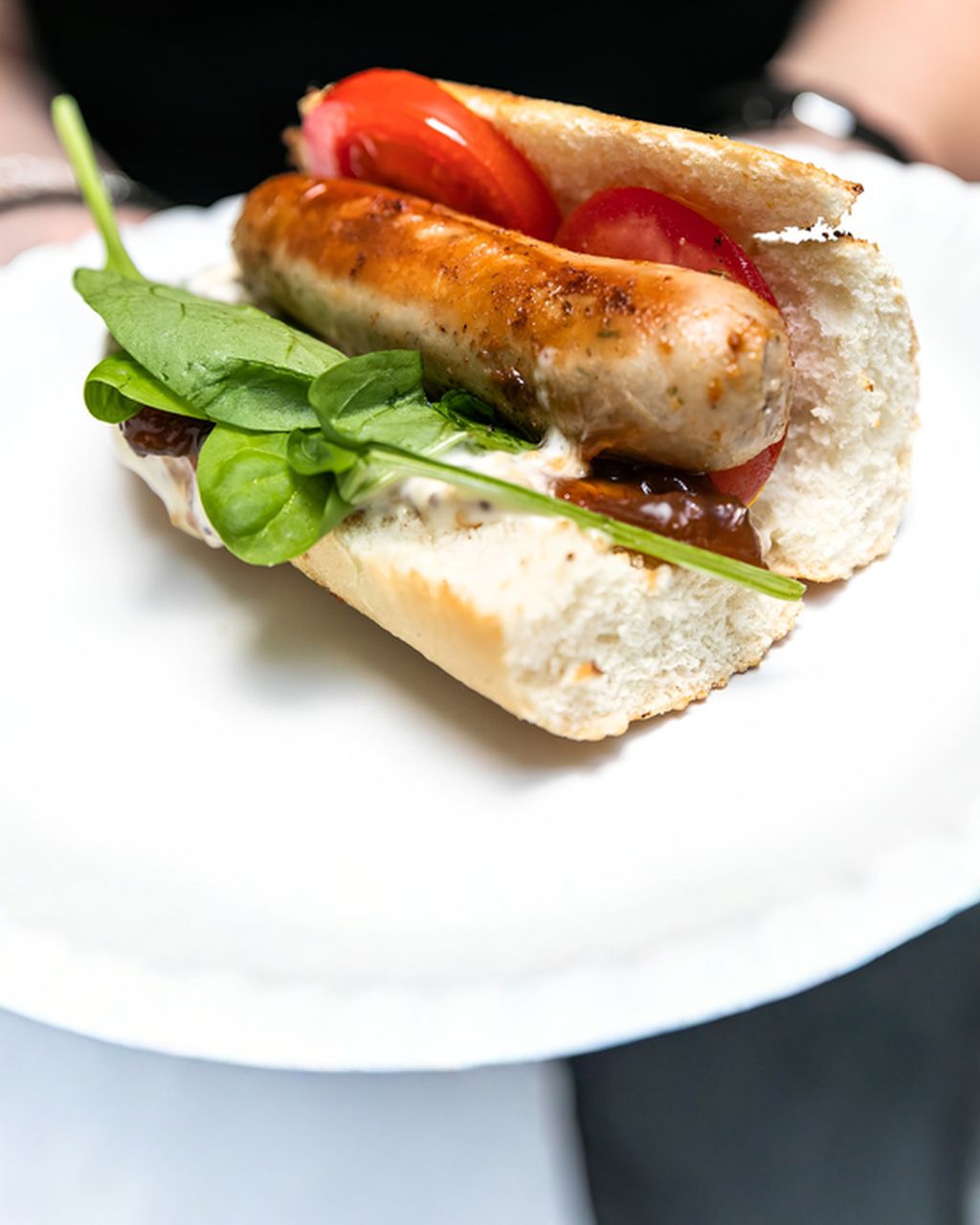
A hot dog bun is a soft, elongated wheat roll, split lengthwise to hold a heated sausage with mustard, ketchup, onion or sauerkraut. Czech shops sell them as hot dog buns or rolls, usually about 60 g each.
per 100 g
286 kcal
Calories
7.1 g
Protein
52.4 g
Carbs
3.6 g
Fat
Keep them in a closed bag at room temperature, away from heat and direct sun. Eat packaged buns by the date on the pack and bakery buns on the day or the next day.
Do not refrigerate them. Bread stales fastest in the cold, because starch recrystallises (retrogrades) most quickly just above freezing.
Freeze them fresh in a sealed freezer bag; they keep their quality for about 3 months. Let them thaw on the counter for about an hour, then wrap them in foil and heat for 10 minutes in an oven preheated to 175 °C.
Choose soft, springy buns with a pale, uncracked crust that bounce back when pressed. For packaged buns, check the best-before date and the ingredients, especially if you watch for allergens. Do not buy or eat buns with any sign of mould; throw away the whole pack.
A soft rohlík (Czech roll) or small baguette: push a hole into it, pour in mustard or ketchup and slide in the sausage, the way Czech párek v rohlíku is made.
A brioche bun or a slice of sandwich bread, lightly warmed and folded around the sausage.
Just warm the bun: wrapped in foil for a few minutes in a hot oven, cut side down in a dry pan or on the edge of the grill until lightly golden. Heat the sausage separately in hot, not boiling, water and put it in the bun just before serving so the bun does not go soggy.
Cube stale buns and dry them into croutons, or grind them into breadcrumbs. They also work in bread pudding or a savoury bake.
Roughly what one piece weighs.
62 g
1 piece
The bun is not baked, only warmed: in the oven wrapped in foil, dry in a pan cut side down or on the edge of the grill. In New England, flat-sided buns are buttered and toasted on a griddle.
A hot dog bun is a soft, elongated roll shaped to fit a sausage. It is baked from wheat flour, water, yeast, a little sugar, oil and salt. Kuchenmeister Hot dog žemle sold on Rohlík come four to a pack at 62 g each and, per the label, have 276 kcal, 50 g carbohydrate (7.5 g sugars), 4 g fat and 8.5 g protein per 100 g. They contain gluten from wheat and, depending on the recipe, other allergens such as sesame; these are always emphasised in the ingredients list. Gluten-free versions made from rice flour and starches are sold too.
The taste is mild, slightly sweet and wheaty, with a soft, tender crumb and a thin, pale crust. The bun is not meant to outshine the sausage or the sauces, only to hold them together.
3 min read
A hot dog bun is a soft, elongated roll of yeasted wheat dough, split lengthwise to take a sausage. Czech shops sell them as hot dog žemle, bulky or rohlíky, usually in packs of two to four. One weighs about 60 g: Kuchenmeister Hot dog žemle are 62 g, and Free Days gluten-free Hot dog rohlíky are 60 g.
The basic recipe is simple: wheat flour, water, sugar, yeast, rapeseed oil and salt, plus emulsifiers and an acidity regulator in factory-made buns. Sugar and fat make the crumb softer than an ordinary roll and keep the crust thin.
In most of the US, hot dog buns are split from the side. In New England, top-split buns are common; they are baked close together, so their sides are flat and crustless. They were developed in the 1940s by the J. J. Nissen bakery for Howard Johnson's restaurants. In Chicago, hot dogs come in poppy-seed buns.
In Central Europe a hot dog is made differently: a baguette or roll is pushed onto a heated spike that makes a hole, sauce is poured in and the sausage slid inside. At home, a hole pressed into a rohlík does the same job. Which sausages to choose is covered on the hot dog sausages page.
A bun only needs warming. Wrap it in foil and put it in a hot oven for a few minutes, or place it cut side down in a dry pan or on the edge of the grill until lightly golden. Meanwhile heat the sausages in hot, not boiling, water for about 5 minutes; the full method is in how to reheat hot dogs, sausages and špekáčky without splitting them.
Put the sausage in the bun just before serving and add sauces last, or the bun goes soggy. A finished version is in the recipe hot dog with sausage and mustard mayo.
Keep buns in a closed bag at room temperature and eat packaged ones by the date on the pack. They do not belong in the fridge: bread stales mainly because its starch recrystallises, and that happens fastest just above freezing. In the freezer the process almost stops.
Freeze what you will not eat while it is fresh, in a sealed bag; it keeps its quality for about 3 months. Thaw the buns on the counter for about an hour, then wrap them in foil and heat for 10 minutes in an oven preheated to 175 °C. Details are in how to thaw bread and rolls.
Standard hot dog buns contain gluten from wheat, one of the allergens that must be emphasised in the ingredients list under EU Regulation 1169/2011; some also contain sesame. For a gluten-free diet there are buns made from rice flour and starches, such as Free Days Hot dog rohlíky or Nutrifree Hot dog žemličky. Under EU Regulation 828/2014, only food with no more than 20 mg of gluten per kilogram may be labelled gluten-free.