Marzipan Cake Toppers: How to Shape, Color and Store Them
Marshmallow Fondant: How to Make It at Home, Shape Figures and What to Glue Them With
Updated Nov 17, 2026
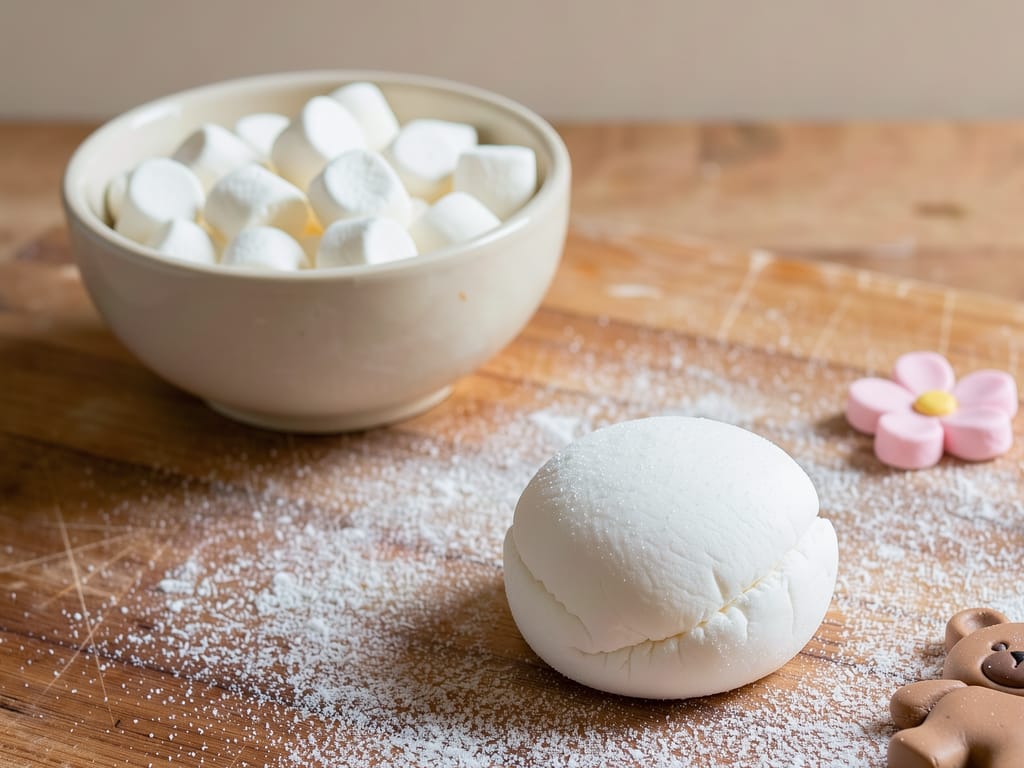
You make marshmallow fondant from just two ingredients: melted white marshmallows and roughly twice their weight in powdered sugar, plus a little water and some fat for your hands. Melt the marshmallows in the microwave, work in the sugar, knead until smooth and let it rest overnight wrapped in plastic wrap. You get a soft, pliable, fully edible dough with a vanilla marshmallow flavor. It's good for covering a smaller cake and for modeling figures, flowers and little animals. Below you'll find the exact method, a milk powder version, coloring, modeling, sticking pieces together and storage.
The basic ratio is 1 part marshmallow to 2 parts powdered sugar (by weight), plus 2–5 tablespoons of water per 450 g (1 lb) of marshmallows. The cake-supply brand Wilton calls in its recipe for a 450 g bag of white mini marshmallows, 2–5 tablespoons of water and about 900 g (2 lb) of sifted powdered sugar; it greases hands and work surface with vegetable shortening. For one smaller cake or a set of figures, half a batch (225 g / 8 oz of marshmallows) is enough, and 1 tablespoon of water is usually all it needs.
For a smaller cake or a set of figures, you need just these four things:
225 g (8 oz) white marshmallows (white, so you can color them any shade)
1 tablespoon water
400–450 g (14–16 oz) sifted powdered sugar
vegetable shortening for your hands and work surface
Melt the marshmallows with the water in the microwave in 30-second bursts, stir in three quarters of the sugar, knead in the rest on a surface greased with shortening and let the fondant rest overnight in plastic wrap. It takes about half an hour of work, then a night of resting.
Put the marshmallows and water in a microwave-safe bowl. Heat on full power in 30-second bursts, stirring after each one. According to Wilton, a whole bag melts in about 2.5 minutes; a half batch is usually done sooner.
Stir about three quarters of the sugar into the melted mixture. Use a wooden spoon for as long as you can.
Grease your hands and work surface with vegetable shortening, turn the mixture out and knead it like dough. Gradually add the rest of the sugar. Wilton allows about 8 minutes of kneading.
The dough is ready when it's smooth, elastic and doesn't stick to your fingers. If it tears, add water half a teaspoon at a time. If it's sticky, add sugar.
Coat it with a thin layer of vegetable shortening, wrap it in plastic wrap and let it rest overnight (Wilton). The next day, knead it briefly and start working with it.
Why it works: marshmallow is essentially whipped sugar syrup with gelatin. Once melted, the gelatin gives the dough its elasticity and the powdered sugar thickens it to a modeling-clay consistency. The shortening on your hands stops it sticking without drying the fondant out, which is what happens when you keep dusting it with more sugar.
Most common mistakes: don't add all the sugar at once, because it can't be worked in and the dough turns crumbly. Melt the marshmallows in short bursts, or they overheat and the fondant stays stiff and rubbery. And sift the sugar, because lumps can't be removed from finished dough.
Marshmallows contain gelatin, often pork gelatin, so fondant made from them isn't vegetarian. If you need that, look for marshmallows labeled "vegetarian" or "vegan" and read the ingredients before buying.
Seasonal baking plans, tested recipes and kitchen tricks that save you time. Unsubscribe in one click.
If you don't have marshmallows, a milk modeling dough made from milk powder will do the job. Potato fondant, on the other hand, is more of a curiosity, and people searching for that name usually mean something else.
Milk powder fondant (often called "fake marzipan"): in Czech home recipes, milk powder is most often mixed with powdered sugar 1:1, with a tablespoon or two of honey and oil, and water added drop by drop until a smooth dough forms. It has a milky, caramel flavor and is a bit more brittle than marshmallow fondant. It works well for figures but less well for covering a cake, because it breaks more easily.
Potato fondant can mean two things. As a confectionery dough it's an old method: cooked potatoes are mashed and worked with a large amount of powdered sugar into a stiff dough (in America, "potato candy"). It contains cooked potato, so keep it in the fridge, use it right away and don't put it on a cake that will stand in a warm place. Much more often, though, "potato fondant" means fondant potatoes, a side dish of potatoes browned and finished in stock with butter. They have nothing to do with cake.
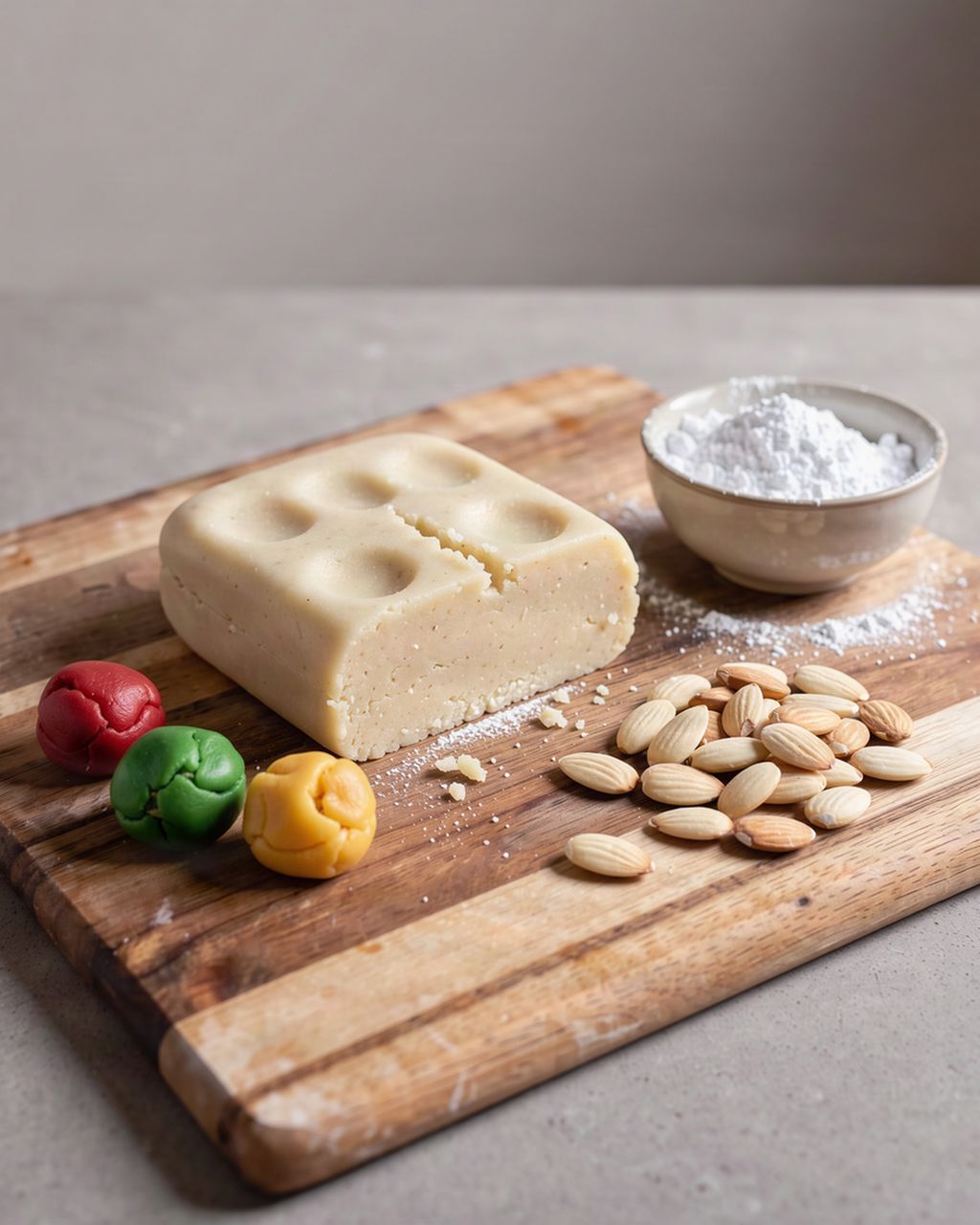
For modeling and sticking, the same rules below apply to all three doughs. If modeling is your main interest, compare them with marzipan cake figures and glucose modeling chocolate. Marzipan smells better and holds fine detail better, while modeling chocolate doesn't need glue because it fuses together with the warmth of your hand.
Use gel or paste colors, not liquid ones. Liquid coloring adds water, the fondant turns sticky and you have to thicken it with sugar again, which makes the color fade.
Small amount of color: put a drop of gel on a piece of fondant with a toothpick or the tip of a knife, fold the fondant over the color and knead until the streaks disappear. Wear gloves, because gel stains your hands too.
Large batch of one color: add the color straight into the melted marshmallows, before the sugar. It mixes in evenly and saves you kneading.
Deep black and red: these need a lot of coloring. For red, color the melted marshmallows directly (see above); for black, start with a cocoa dough or store-bought chocolate fondant, then adjust the color.
Color darkens over time. Let colored fondant rest wrapped up and only then judge the shade. It's better to color a shade lighter.
A few basic colors are usually enough for figures, and you can mix others from them. ProGel food coloring Rainbow Set of 6 is handy for this: gel colors in tubes, where you really only need a drop per batch of fondant. You'll find more shades, powder and shimmer colors in the colors and food coloring for fondant and creams category.
You build figures from three basic shapes: a ball, a roll and a teardrop. From these you can put together animals, characters and flowers. Before you start, add a little CMC stabilizer (tylose) to the fondant you're modeling with. About 1 teaspoon per 250 g (9 oz) of fondant is commonly given. The dough then sets faster and holds its shape, without sagging or cracking.
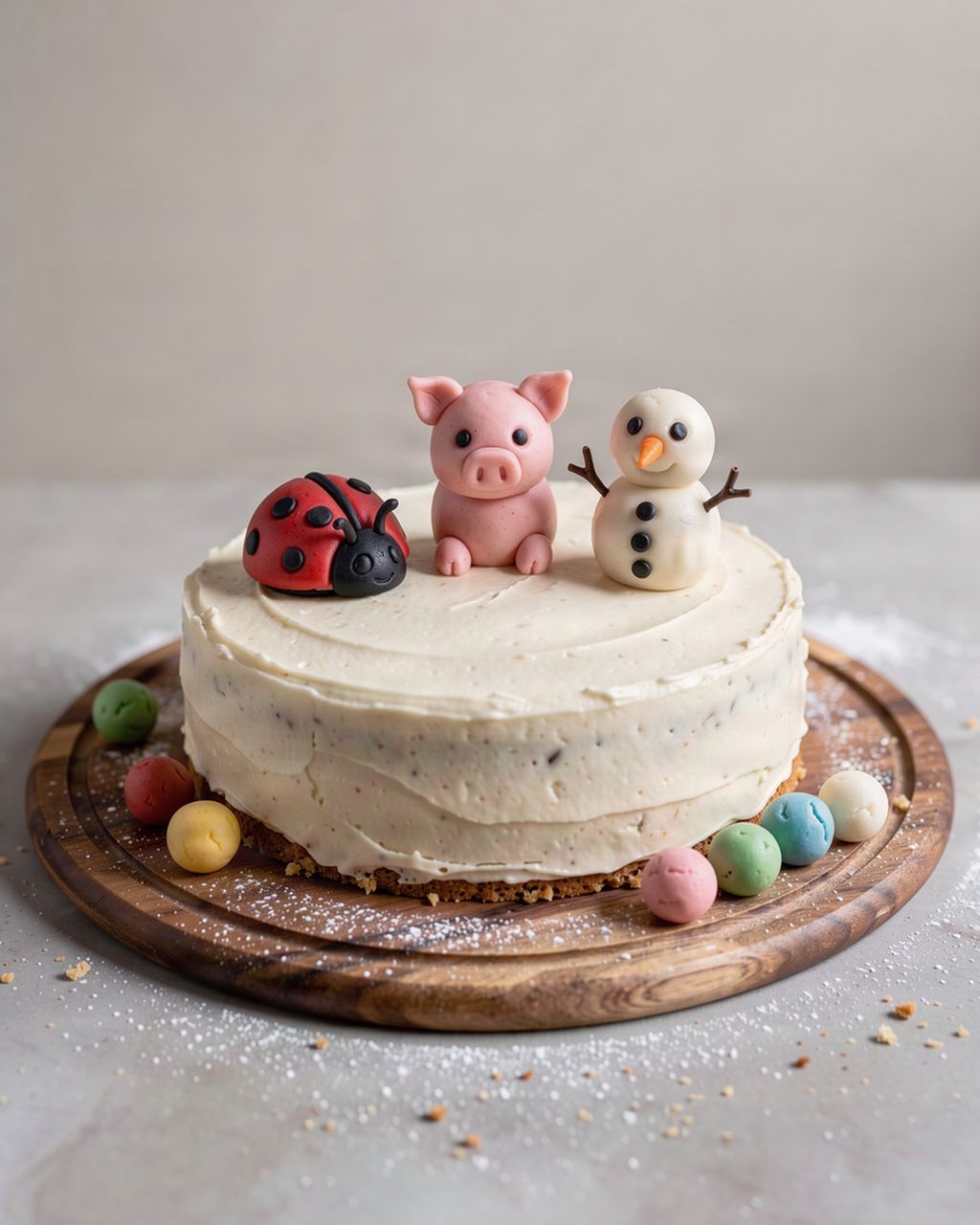
You build an animal or character from a body, a head and a few small parts:
Shape the body from a larger ball or teardrop and the head from a smaller ball. The head should be about half to two thirds of the body's volume. A big head compared with the body gives the figure a cute look.
Roll the legs and arms as rolls and flatten the ends slightly.
Make ears, tails and snouts from small teardrops. A flattened teardrop is an ear, a stretched one is a tail.
Press in details (eyes, smile, fur) with a modeling tool, a skewer or the back of a knife. You can make the eyes from tiny balls or paint them with gel.
You roll a rose up from a strip, and cut out a simple flower:
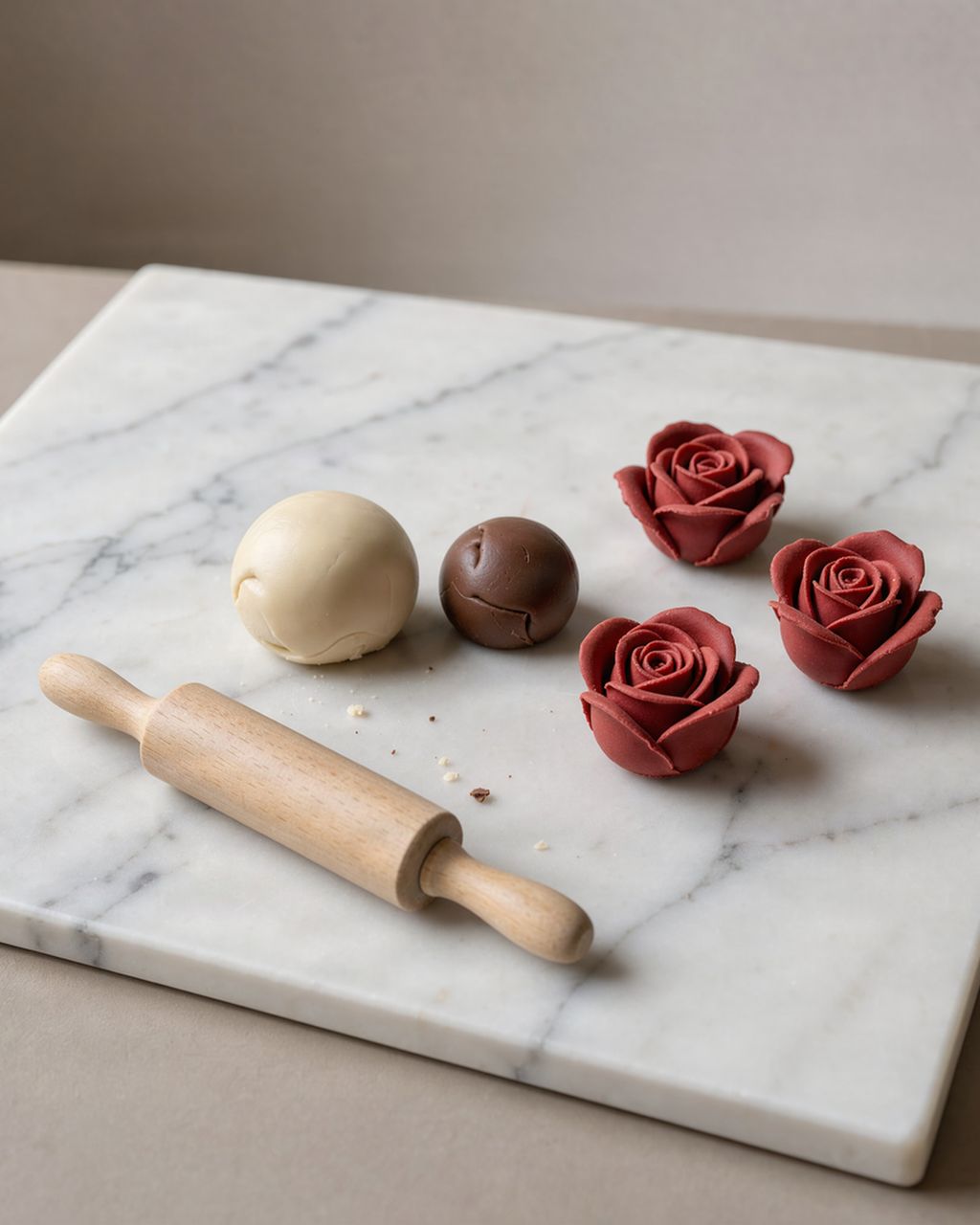
Rose: roll out a thin strip, fold it in half lengthwise and roll it into a spiral. Pinch the base and trim off the excess.
Simple flower: cut out the shape with a cutter, stretch the edges of the petals on a soft pad with a round tool or your finger so they ruffle, and let the flower dry in a muffin tin cavity. It takes on a cup shape there.
Keep any fondant you're not working with wrapped in plastic wrap, because it dries out and cracks quickly in the air. If it sticks to your fingers, grease them with shortening, not sugar. Let finished figures dry in the air on parchment paper before you set them on the cake, so they don't warp or sag.
There are three ways to stick fondant: water for light pieces, edible CMC glue for most things and melted chocolate for heavy pieces.
Water: for light details (eyes, buttons, a small flower), brush on a little water with a thin brush and press the piece on. Use just enough water to dampen the surface. Too much water dissolves the sugar, the piece slides around on the fondant and leaves a shiny smear.
Edible CMC (tylose) glue: following standard cake-decorating instructions, stir about ¼ teaspoon of CMC into 2 tablespoons of warm water, leave it to swell in the fridge, ideally overnight, and stir again. You get a clear, syrupy gel. If it's too thick, add water; if it's runny, sprinkle in more CMC. It holds noticeably better than water and suits heads, arms and legs. Store it in a sealed container in the fridge.
Melted chocolate: for large, heavy pieces and especially for attaching a finished figure to a covered cake. Once set, chocolate holds like cement.
A warning about CMC: buy only food-grade. CMC is sodium carboxymethylcellulose, an additive approved in the EU as E466, for which the European Food Safety Authority (EFSA) found no safety concern at normal use levels in food when it re-evaluated it in 2018. However, technical CMC is also sold as wallpaper paste, and it doesn't belong in food. Buy it from a cake-supply shop and look for E466 and "food grade" on the packaging.
Gluing a head to a body isn't enough on its own; with larger figures, also set it on a support (see the warning above). The glue holds, but by itself it can't carry a heavier head, which will slide backward over time.
Coat unused marshmallow fondant with a thin layer of shortening, wrap it tightly in plastic wrap and put it in a resealable bag or container. Wilton recommends storing it double-wrapped in an airtight container at room temperature; in the fridge, it says, it keeps for several weeks. Before using it, let it come up to room temperature and knead it. Cold fondant straight from the fridge is stiff and breaks.
Finished figures: store at room temperature in a cardboard box, away from sun and moisture. In an airtight box they can get damp and soft.
Fondant cake in the fridge: when you take it out, water condenses on the fondant and figures can turn sticky or "sweat". Don't touch them until the droplets dry on their own. It's better to set the figures on the cake just before serving.
Potato dough contains cooked potato. Keep it in the fridge and use it as soon as possible, ideally the same day.
If you want to cover a whole cake with fondant, the article fondant for cakes: which filling goes under it, how to roll it out and cover the cake walks you through the process, from the cream under the fondant to smoothing the edges. It applies to homemade marshmallow fondant too.
Yes, marshmallow fondant is completely edible. It tastes sweet with a light vanilla flavor, like a soft candy. It's soft and pliable, so it's easy to cut and eat. Only supports such as toothpicks or wires are inedible, if you put them inside your figures.
No. Ordinary marshmallows contain gelatin, often pork gelatin, so fondant made from them isn't vegetarian. Gelatin-free marshmallows labeled vegetarian or vegan do exist. Always read the ingredients before buying, and if no vegetarian option is available, use the milk dough made from milk powder.
Marshmallow fondant tears when it has too little water or too much sugar, and turns sticky when it has too little sugar. Fix a tearing dough with half a teaspoon of water and some kneading, and a sticky one with a little powdered sugar. Use vegetable shortening, not sugar, on your fingers and work surface, or you'll gradually dry the dough out.
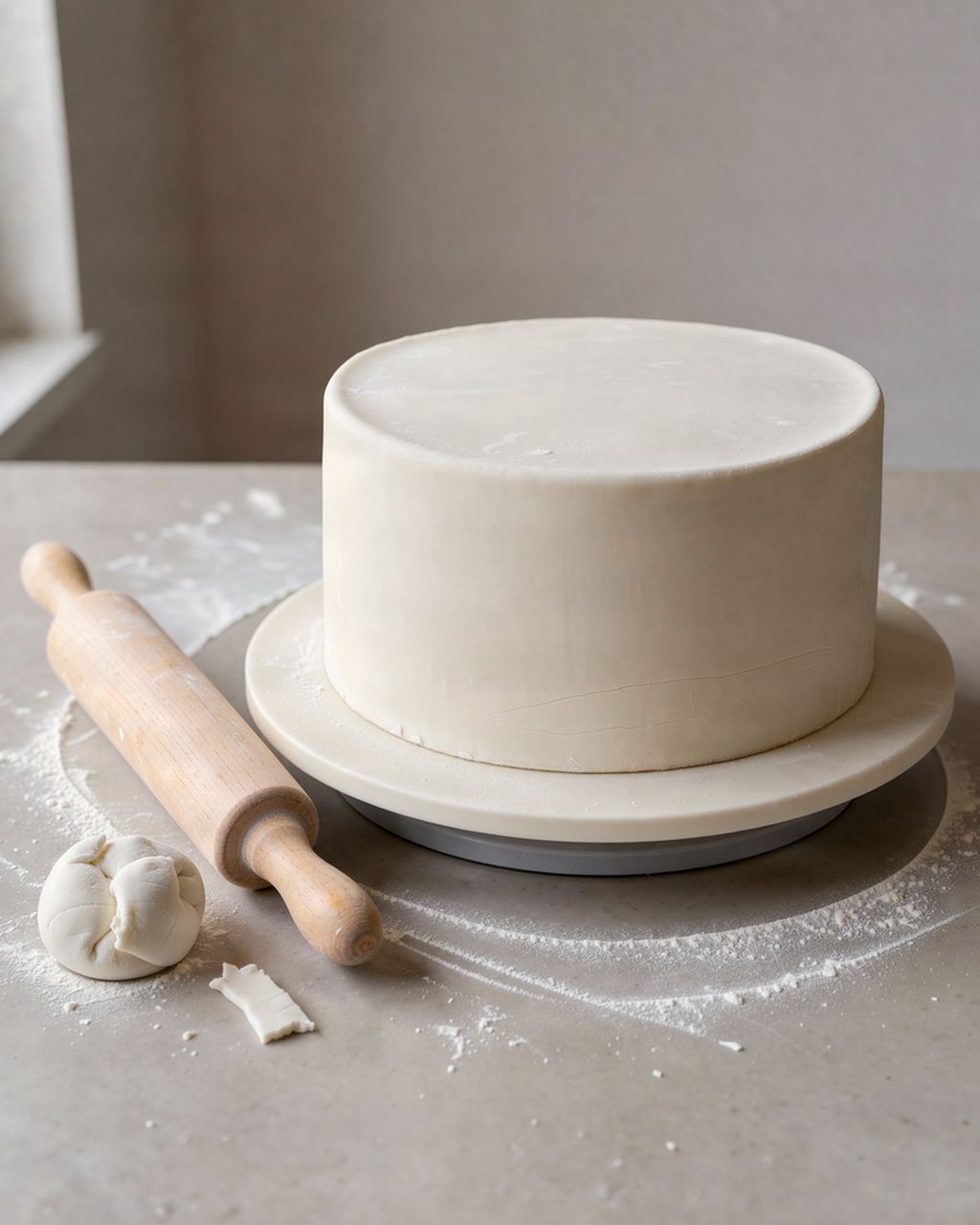
Yes, you can cover a smaller cake with marshmallow fondant if you make it without the CMC stabilizer, let it rest overnight wrapped in plastic wrap and roll it out to about 3–5 mm (1/8–1/5 inch) thick. CMC firms it up for figures, but on a cake covering it would set quickly and crack at the edges. Roll it out on a surface lightly greased with vegetable shortening or dusted with starch.
One recipe worth heating the oven for, one tip, and one deal from the shop. Nothing else.