Chocolate brownie ball monsters

Updated Aug 30, 2026
The difference between dark, milk and white chocolate really comes down to the ratio of three things: cocoa solids, cocoa butter and sugar — with milk added into the mix for milk and white chocolate. That ratio is what shapes the flavour, the sweetness, and how the chocolate behaves in the oven, in a custard or cream, and when melted. Here's what sets each one apart and when to reach for which, so your dessert turns out right.
In short: dark chocolate has the highest cocoa solids and the least sugar, milk chocolate adds milk and sugar, and white chocolate contains no cocoa solids at all — just cocoa butter, milk and sugar. Under the EU's Cocoa and Chocolate Directive (2000/36/EC), each type has to meet a minimum standard:
Dark chocolate — at least 35% cocoa solids (of which at least 18% is cocoa butter). Shop-bought bars typically range from 50–99%.
Milk chocolate — at least 25% cocoa solids and 14% milk solids. More sugar and milk, less cocoa.
White chocolate — at least 20% cocoa butter and 14% milk solids, but 0% cocoa solids.
Two things worth telling apart: cocoa mass (ground cocoa beans — this is what carries the bitterness, colour and "chocolatey" flavour) and cocoa butter (the pure fat from the beans — this brings creaminess and governs how the chocolate melts). Dark chocolate has plenty of both, milk chocolate has less mass, and white chocolate has only the butter. The more cocoa solids, the more intense the flavour, the less sweet it is, and the harder it sets.
Dark chocolate is the most intense of the three, since it has the highest proportion of cocoa solids — at least 35%, though for baking it works best around 55–70%. The higher the percentage, the more pronounced the bitterness, the less sugar, and the firmer the set once it's cooled.
It behaves reliably when baked: thanks to its high cocoa butter and solids content, it holds its shape well, gives a deep dark colour and rich aroma. In a ganache or fondant, it melts into a silky-smooth mixture, and in brownie batter it adds moistness and a dark crust. Because it brings its own bitterness to the party, factor that in — with very dark chocolate (85% and above), feel free to add an extra spoonful of sugar so the dessert doesn't turn out tannic.
Flavour-wise, it pairs best with things that can stand up to its strength: espresso and coffee, toasted nuts, salt, dried raspberries or orange. It contains no milk, so in its plain form it's suitable for vegans too (always check the label to be sure).
From a health angle, it's notable for its cocoa flavanol content. According to EFSA and Cochrane reviews, regularly eating cocoa flavanols may modestly support blood vessel flexibility and slightly lower blood pressure — by just a few mmHg. It's no substitute for medicine, but it's a good reason to reach for dark chocolate with a high cocoa content.
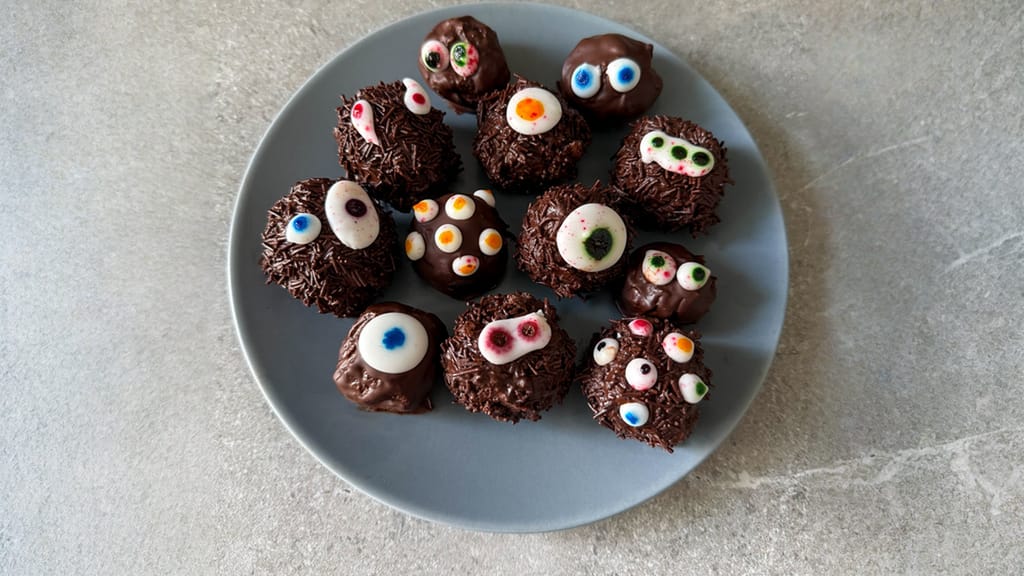
Chocolate brownie ball monsters
Dark chocolate brownie balls
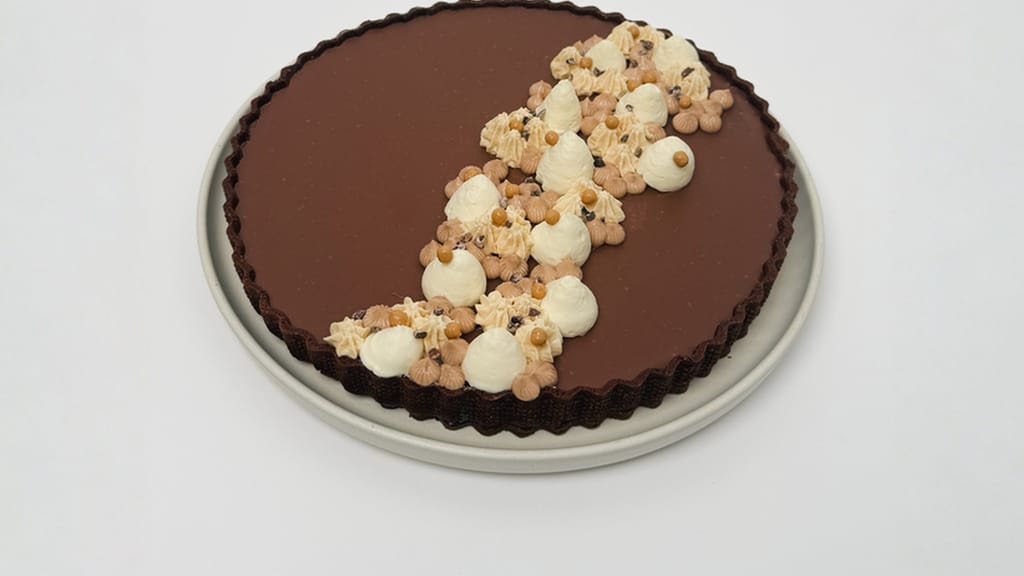
Chocolate tart with salted caramel
Dark chocolate tart with salted caramel
Milk chocolate combines a smaller share of cocoa solids with sugar and milk powder, making it sweeter, lighter in colour and softer than dark chocolate. Milk fat and proteins give it that signature creaminess that melts on the tongue.
It behaves differently in the kitchen than dark chocolate, so it's worth planning for. It has less cocoa solids, so it sets softer and tastes sweeter — if a recipe calls for dark chocolate and you're using milk instead, cut back on the sugar. Because of the milk proteins, it's also more sensitive to heat: overheating easily causes it to seize into a grainy mess, so melt it gently (see the melting section below).
It pairs best with partners that play up its sweetness rather than compete with it: caramel, hazelnuts and almonds, vanilla or biscuits. It really shines in icings, creams and fillings, where the goal is smoothness rather than cocoa punch.

Chocolate cupcakes with salted caramel cream
Chocolate cupcakes with milk chocolate caramel frosting
White chocolate is a blend of cocoa butter, milk and sugar — it contains no cocoa solids whatsoever, which is why it has neither a "chocolatey" taste nor a brown colour. Under EU rules, it still counts as proper chocolate (min. 20% cocoa butter), just built entirely on the fat from the beans rather than their ground pulp.
As a result, it tastes buttery, vanilla-like and quite sweet — and it's the most delicate of the three. That sweetness practically begs for something sharp to balance it: raspberries, passion fruit, citrus, redcurrants. As for spices, it loves vanilla, cardamom or tonka bean. This is exactly why it's the star of light desserts — mousses, panna cotta, cheesecake, and colourful glazes.
Watch the heat when working with it: both white and milk chocolate contain milk proteins and sugar, which start to scorch and brown above roughly 45°C. So melt white chocolate slowly, and never directly over a burner.

White chocolate mousse – light and fluffy
White chocolate mousse – light and airy
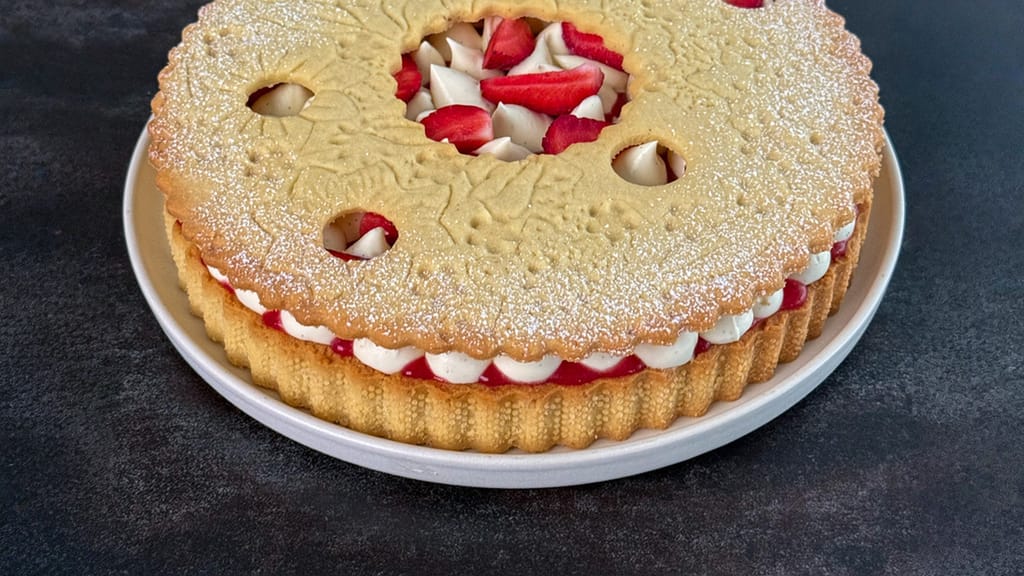
Strawberry tart with white chocolate and almonds
Strawberry cake with white chocolate and almonds
Choose your chocolate based on whether it needs to be the star of the flavour show, or a gentle backdrop for the other ingredients. Here's a simple guide:
Want a bold cocoa flavour (brownies, fondant, dark ganache, chocolate tart) → dark, ideally 60–70%.
Want creamy sweetness and smoothness (icings, fillings, caramel pralines, milk creams) → milk.
Want a delicate, sweet contrast to fruit and spice (mousses, panna cotta, cheesecake, colourful glazes) → white.
A few practical differences that will make or break your result: dark chocolate sets the firmest and holds its shape best, milk chocolate is softer and sweeter (cut back on sugar), and white chocolate is the sweetest and most heat-sensitive of all. When combining types in one dessert, keep their sweetness in mind — balance white chocolate with tart fruit, and dark chocolate with a pinch of salt.
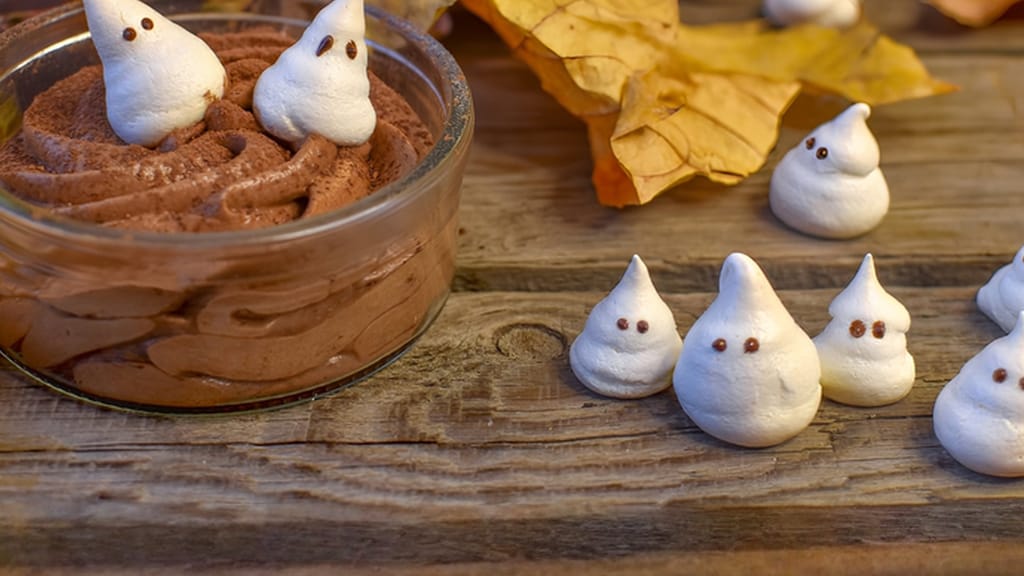
Halloween chocolate mousse with meringue ghosts
Dark chocolate mousse with meringue ghosts
Melt chocolate slowly and keep it dry — even two drops of water or overheating can cause it to seize into a grainy lump. A double boiler is your safest bet: set a bowl over a pot of hot (not boiling) water, making sure neither steam nor water touches the bottom of the bowl. In the microwave, heat in 20–30 second bursts, stirring in between.
For chocolate to have shine and that crisp "snap" once set, you need to temper it — bring it through precise temperatures so the cocoa butter forms the right crystal structure. Rough guide temperatures:
Dark — melt at 45–50°C, cool to 28–29°C, working temperature 31–32°C.
Milk — melt at 45°C, cool to 27–28°C, working temperature 29–30°C.
White — melt at 40–45°C, cool to 26–27°C, working temperature 28–29°C.
Milk and white chocolate work at lower temperatures precisely because they contain milk and sugar, which scorch easily. For icings, mousses and ganache, you don't need to temper at all — that's mainly for bars, bonbons and decorations that need to stay glossy and snap cleanly.
Yes — under EU Directive 2000/36/EC, white chocolate counts as proper chocolate, even though it contains no cocoa solids at all. It must have at least 20% cocoa butter and 14% milk solids. What it lacks is the ground cocoa mass, which is why it has neither the typical brown colour nor that classic "chocolatey" bitterness.
You can swap them, but adjust the sugar and expect a different intensity. Use milk chocolate instead of dark and your dessert will turn out sweeter and less cocoa-forward — cut back on the sugar in the recipe and maybe add a spoonful of cocoa powder for colour and flavour. Going the other way, swap in dark for milk and add a bit of sugar, and expect it to set firmer.
Chocolate seizes into a grainy lump when water or steam gets into it, or if it overheats. To rescue it, stir in a spoonful of hot cream or a little melted cocoa butter bit by bit, whisking vigorously until it comes back together into a smooth mass. Use rescued chocolate in a ganache or cream filling rather than for tempered decorations.
That white or greyish coating isn't mould or a sign of spoilage — it's what's known as bloom. Fat bloom happens when chocolate is stored somewhere warm and the cocoa butter rises to the surface; sugar bloom is caused by moisture. Either way, the chocolate is still perfectly fine to eat, and the issue disappears once melted. Store chocolate somewhere dry at 15–18°C, away from the fridge and strong smells.
For both baking and snacking, the most versatile dark chocolate sits at 60–70% cocoa, where intensity meets a still-pleasant sweetness. The legal minimum for dark chocolate is 35% cocoa solids; anything above 85% turns noticeably tannic and works best in recipes where you can balance it out with sugar. Check the ingredient list too — on a good-quality bar, cocoa mass should come before sugar.
One recipe worth heating the oven for, one tip, and one deal from the shop. Nothing else.