Panna cotta: a simple italian dessert ready in no time

Updated Aug 15, 2026
French desserts get their finishing touch from five tried-and-true techniques: tempered chocolate, poured isomalt and caramel, edible flowers, edible gold leaf, and now even 3D printing. Each creates a different effect — from a glossy chocolate lattice to a transparent isomalt bubble to a golden accent on a macaron. Below you'll find exact temperatures, step-by-step methods, and the mistakes to avoid so you can pull off at home what looks like it came straight from a Parisian pâtisserie.
Chocolate is the most versatile decoration for French desserts — it holds its shape, shines beautifully, and unlike most decorations, it actually tastes good too. There's just one catch: you need to temper it correctly. Skip tempering and the chocolate turns grey, breaks with a soft snap, and leaves greasy fingerprints. Get it right, though, and you get a firm, glossy surface that snaps cleanly on the tongue.
Tempering is controlled crystallisation of cocoa butter in three stages: melt the chocolate, cool it down, then gently rewarm it to working temperature. Pastry schools give each type its own target temperatures:
Dark: melt at 50–55°C → cool to 28–29°C → work at 31–32°C
Milk: melt at 45–50°C → cool to 27–28°C → work at 29–30°C
White: melt at 45°C → cool to 26–27°C → work at 28–29°C
Use a good-quality couverture (at least 31% cocoa butter for dark chocolate) and a kitchen thermometer — a couple of degrees make all the difference. Quick test: dab a bit on the tip of a knife; properly tempered chocolate sets within 3–5 minutes with a glossy, streak-free finish. Work in a cool room (18–20°C).
One batch of tempered chocolate is all you need for three crowd-pleasing shapes:
Curls and shavings: spread a thin layer over marble or the back of a baking tray, let it set until just matte (not fully hard), then scrape it into curls with a scraper held at a 45° angle. Too hard and it snaps; too soft and it smears — expect to need a try or two to get the timing right.
Lattices and filigree: pour tempered chocolate into a paper piping cone, trace a lattice or pattern onto baking paper, and let it set. Before it fully hardens, drape the sheet over a rolling pin to shape it into a curve.
Leaves: coat the underside of a clean, non-toxic leaf (rose, camellia) — where the veins stand out most — with a thin layer of chocolate, chill until set in the fridge, then carefully peel away the real leaf. The vein pattern stays behind in the chocolate.
Pick your chocolate based on what you need the decoration to do:
Dark (55–70%): bold flavour, holds shape best — ideal for lattices, filigree, and dark contrast against a pale cream.
Milk: sweeter and softer, curls beautifully into shavings and swirls.
White: a neutral canvas — colour it with fat-soluble (oil-based) colours for splashes of colour or marbling.
If you want a mirror-glossy finish over the entire surface of a cake, chocolate decoration won't get you there — for that, reach for a mirror glaze for flawless cake shine.

Isomalt and caramel are both poured and blown into glass-like decorations, but they differ in one key way: isomalt stays clear and lasts a long time, while caramel has a nutty flavour but quickly turns sticky and golden. Isomalt is a sugar alcohol made from beet sucrose; manufacturers note it only starts absorbing moisture above roughly 85% relative humidity, so decorations survive even in a humid kitchen. It's also about half as sweet as sugar.
Choose caramel for quick, delicate pieces with a nutty flavour, and isomalt for detailed, long-lasting decorations where you need time to work and true clarity:
Caramel: made by melting sugar alone, which browns and develops flavour as it cooks. It sets fast and is brittle, so you need to work quickly and precisely. Best for sweet ribbons, sugar threads, and pralines.
Isomalt: melts around 145°C, tolerates higher heat without browning, and stays transparent. It stays workable for longer, making it ideal for bubbles, 'glass' shards, and jewel-like pieces where you need time for detail.
Both isomalt and sugar are poured once heated to 165–175°C; the process has four steps:
Heat isomalt (or sugar) to 165–175°C and let it sit for a few minutes so the bubbles can rise out.
Colour it with gel or powder colouring stirred directly into the mixture.
Pour onto a silicone mat or into silicone moulds; for 'shards,' let it set in a thin layer, then break it up.
For bubbles, wrap the mixture around a pump and slowly stretch and inflate it under the heat of a lamp.
Thanks to its clarity and longer working time, isomalt can hold finer detail than caramel.
Safe choices for edible decoration include violets, roses, marigold (calendula), lavender, daisies, and cornflowers — but only ever flowers grown specifically for eating and free of chemical treatment. Each brings its own flavour: violet is delicately sweet, rose is perfumed, marigold slightly peppery, and lavender honeyed (use it sparingly, or your dessert can start tasting like soap).
Gently rinse the flowers, pat dry on paper towel, and remove the pistils, stamens, and the bitter white base of the petals. There are two ways to use them:
Fresh — place them on just before serving, or they'll wilt.
Candied — brush with whisked egg white, coat in fine caster sugar, and let dry for a few hours; they'll keep for weeks and add a lovely sparkle.
Match by flavour, not just colour. Violet and rose suit delicate panna cotta and crackling crème brûlée alike, rose is a classic on macarons, and honeyed lavender pairs beautifully with chocolate fondant au chocolat. You'll find tested recipes for both panna cotta and fondant on Yumst — just top them with a flower.
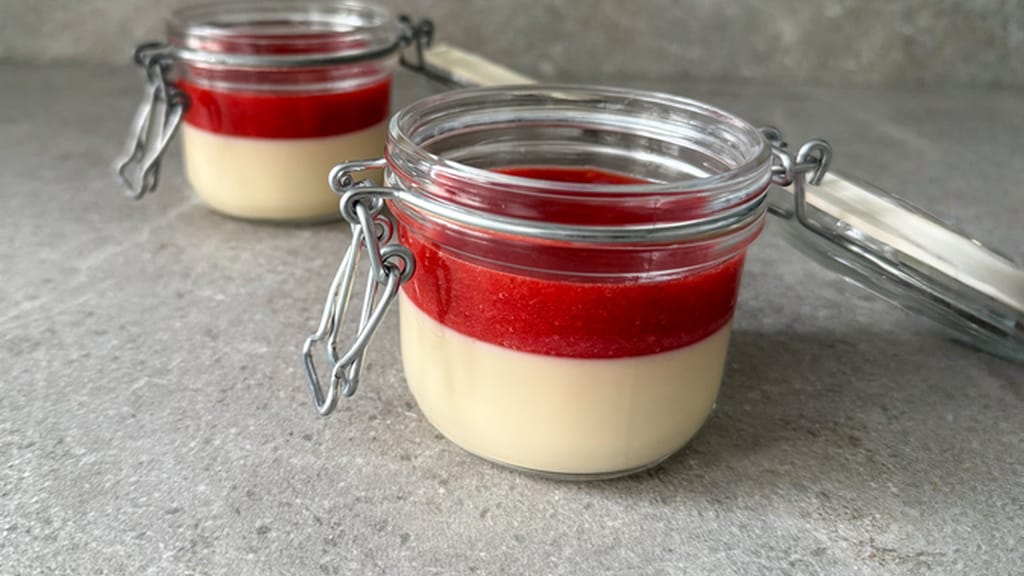
Panna cotta: a simple italian dessert ready in no time
Panna cotta — a silky Italian dessert that's the perfect base for edible flowers
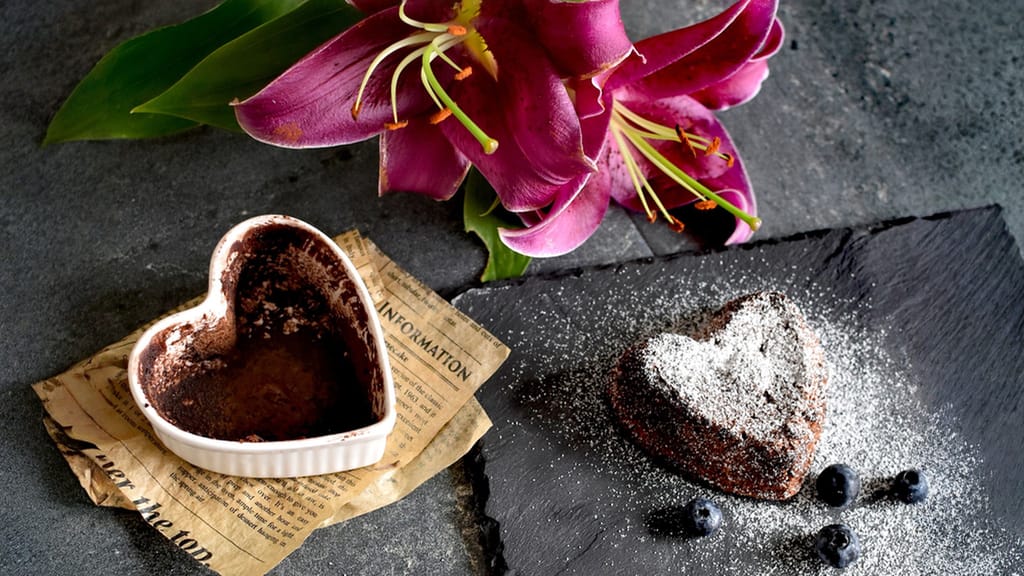
Chocolate fondant with fruit and whipped cream
Chocolate fondant with fruit and whipped cream — an ideal base for lavender and gold
Edible gold (labelled E175, typically 23–24 carat) is tasteless and odourless, so it decorates without changing anything else — a few flakes on a dark fondant or a macaron add real glamour without touching the flavour or texture. That's exactly why it's used so generously on wedding cakes and mignardises.
Start with a dry, chilled surface — on a damp cream, gold clumps together instead of laying flat.
Leaf: pick it up with dry tweezers or a soft brush, never with your fingers (it sticks instantly). Lay it onto the surface and press gently.
Dust: apply dry with a soft brush for a subtle sheen, or mix a few drops of clear spirit (vodka) into it to make a paste for painting fine details or edges. The alcohol evaporates, leaving just the shine behind.
Keep both leaf and dust dry, dark, and in a sealed container away from sunlight — moisture and light both dull the shine. Keep leaf sheets separated with paper so they don't crease. Stored this way, it lasts essentially indefinitely and is ready to go for your next bake.
3D printing can turn chocolate, marzipan, or sugar paste into shapes that are almost impossible to make by hand — lace-like lattices, a repeatable logo, or a flower accurate down to the millimetre. Its real strength is precision and personalisation: print the same motif a hundred times identically, or tailor a design to a specific order. For now, this remains mostly the domain of professional kitchens; home food printers are becoming more common, but the upfront cost and the prep work involved still keep them out of most home kitchens. We dig into where these trends are headed in our article on modern pastry techniques.

A grey film (known as 'bloom') means the chocolate wasn't tempered properly, or it was stored somewhere warm and damp. Fat bloom forms when cocoa butter melts and re-solidifies; sugar bloom comes from moisture. Either way, the decoration isn't unsafe to eat — it just loses its shine. Re-tempering the chocolate and storing it somewhere dry at 15–18°C, away from the fridge, will fix it.
Isomalt decorations can last weeks to months, while caramel ones last only days — the difference comes down to how much moisture each absorbs. Store them in an airtight container with a sachet of silica gel, since humidity will soften and eventually dissolve them. Caramel absorbs moisture fastest, so add it to the dessert only right before serving.
Yes — isomalt is an approved edible sweetener (a sugar alcohol) commonly used in confectionery and sweets. Like other polyols, it can have a laxative effect in large amounts, so it's better suited as decoration than as a main ingredient. For specific guidance on quantities and health considerations, check with a nutrition professional.
No. Genuine edible gold (E175) is odourless, tasteless, and has no nutritional value, passing through the body unchanged. It's purely a visual flourish, so don't hesitate to use it even on delicate desserts — it won't alter the flavour of fondant or macarons.
No — never use flowers from a florist or garden centre, as they're typically treated with pesticides and fertilisers unsafe for consumption. Only use flowers specifically labelled edible from a trusted grower, or ones you've grown yourself without chemicals, and always wash them before use.
One recipe worth heating the oven for, one tip, and one deal from the shop. Nothing else.