Salted Caramel Macarons
·The right flour
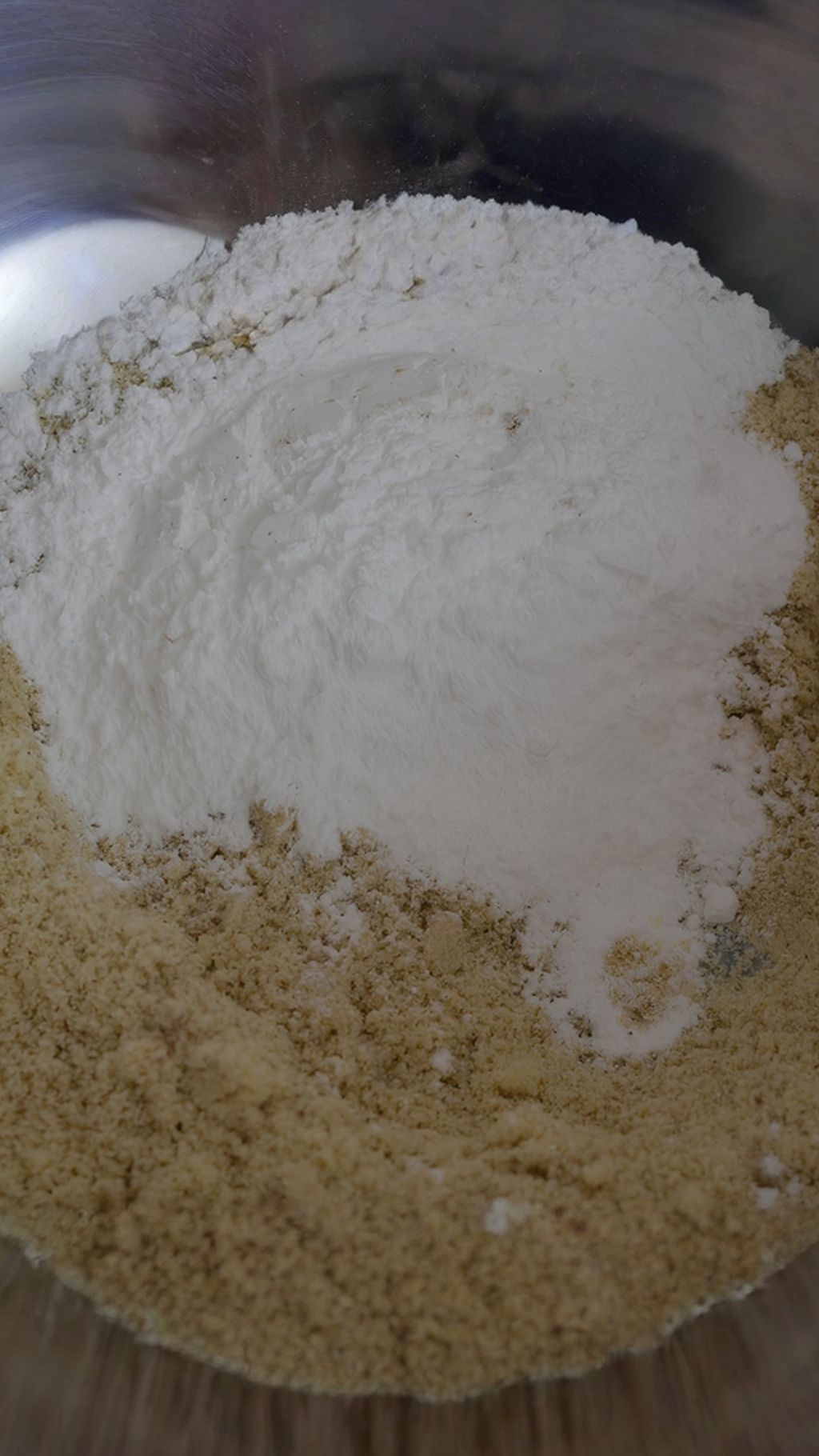
In a large bowl, mix together the icing sugar and almond flour. The almond flour should be finely ground. Blanched almonds are recommended, but I've also tried it with unpeeled ones and it worked fine — the resulting macaron batter just turns out a bit darker.
Flavouring and colour
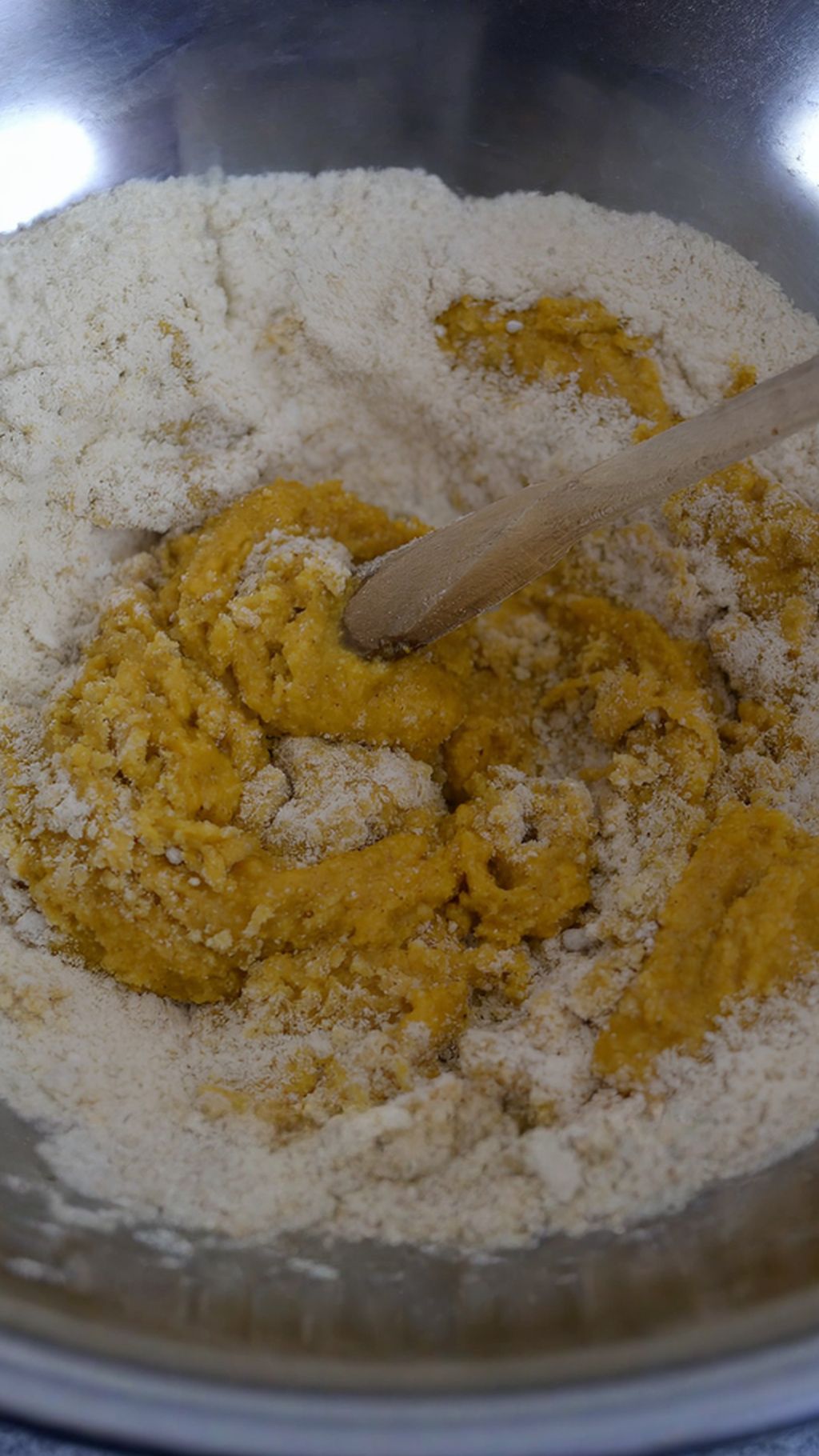
Stir the walnut essence and gel food colouring into the egg whites. Pour this mixture over the sugar and almond flour, but don't mix it in yet.
Sugar syrup
Put the caster sugar and water into a saucepan. This is where you'll make the sugar syrup. After many attempts, I firmly believe the best macarons are made with a syrup like this. It needs to reach 118°C, so get yourself a candy thermometer — ideally a digital one — to measure it accurately.
When to whisk the egg whites
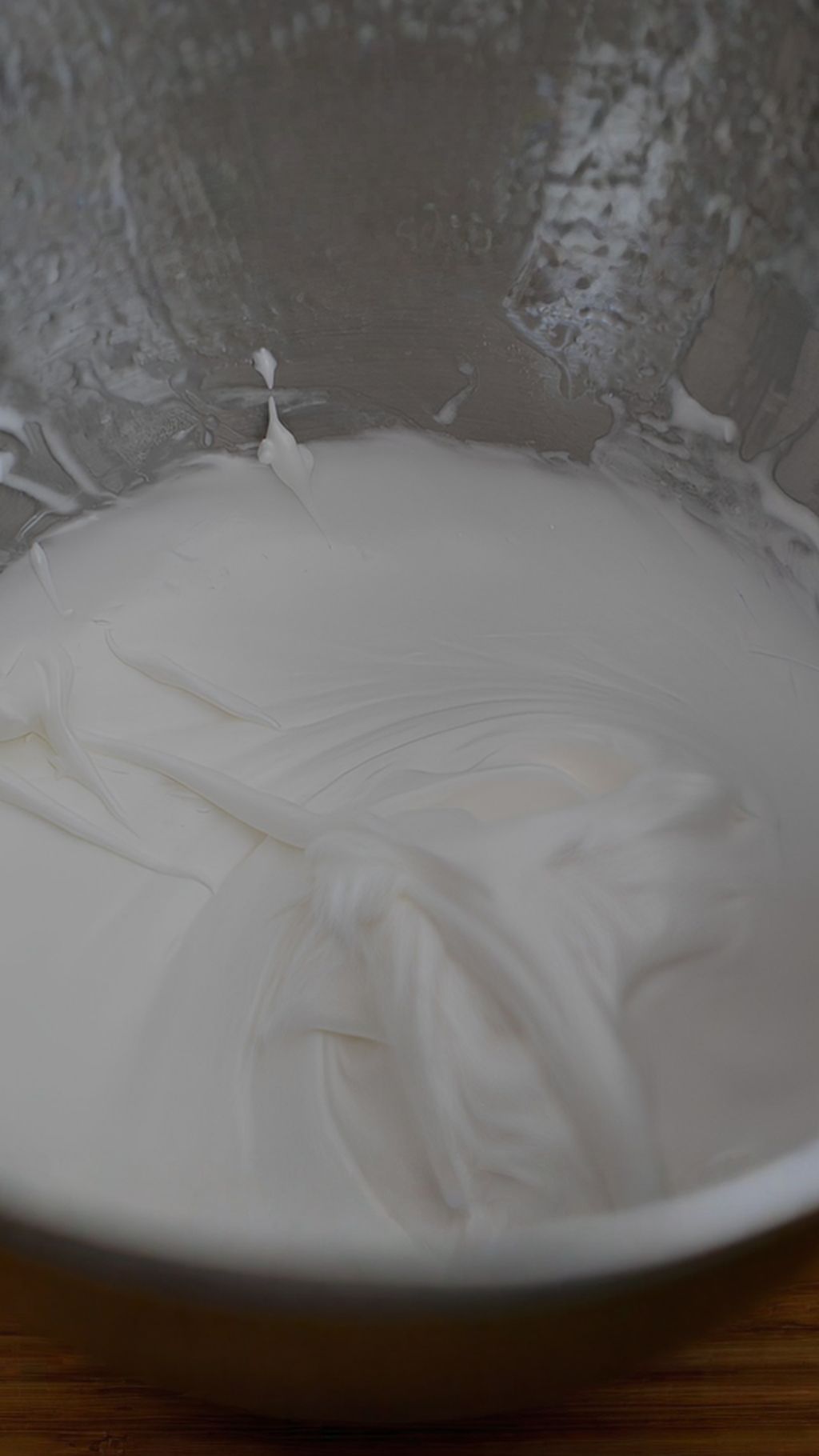
Turn on the heat to fairly high (but not the very highest setting) and keep an eye on the rising temperature. At around 110°C, start whisking the egg whites in your stand mixer on medium speed. Recipe books usually say to start at 115°C, but I started earlier and it paid off. The whites should whip up nice and stiff.
Syrup at 118°C
Perfect. Now start pouring it into the mixer bowl while the whites are still whisking. Just turn the speed down to the lowest setting so you don't get splashed with hot syrup or spatter it all over the bowl.
Whisk the whole mixture on high
Once all the syrup is in the bowl, increase the speed again (back to medium) and keep whisking until the meringue cools down to 50°C.
Fold until smooth
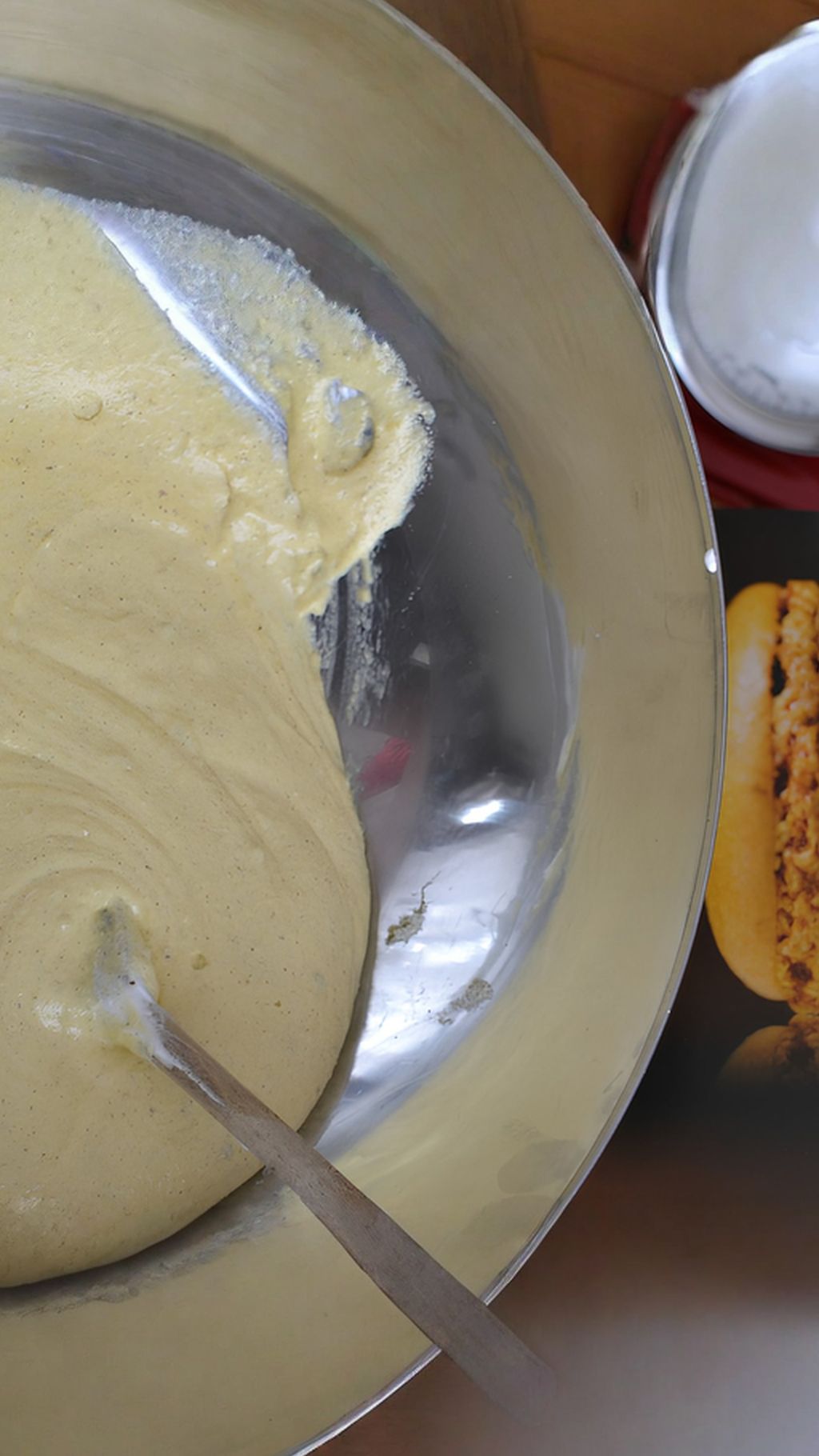
Now fold the meringue into the almond mixture. Mix thoroughly. The batter needs to be smooth and perfectly combined.
Transfer to a piping bag
Spoon the batter into a piping bag fitted with a plain, fairly wide round tip.
Template with circles
Prepare your baking trays lined with either regular baking paper — on which you'll need to draw circles about 3.5 cm in diameter, ideally with a black marker, then flip the paper over so the ink is underneath.
Silicone mat
Even better are silicone macaron baking mats. Mine are great because one side has slots for larger macarons and the other for smaller ones. This time I went with the smaller size. The batter quantity is enough for 5 silicone mats.
A smooth surface
Pipe the batter carefully onto the mat. If the batter is properly prepared, it will spread out into a nice round shape and the surface will stay smooth.
Tap the tray
Once your tray is full of piped macarons, tap it firmly against the counter a few times. You'll see a few small bubbles form on the surface and then disappear. If they're left in, the macarons will crack while baking.
Watch for the skin to form
Preheat the oven to 180°C. Leave the macarons on the tray for about half an hour, then check whether the surface is still sticky. Once it's dry and no longer tacky, they're ready to bake. Sometimes it takes half an hour, sometimes a full hour — keep checking on them.
Bake
Bake for 12–13 minutes in the middle of the oven. I haven't had much luck baking macarons on a fan setting with several trays at once. Let the baked shells cool completely before peeling them off the mat. Now prepare the filling.
Bring the cream to a boil
Bring the cream to a boil in a saucepan.
Melt the sugar
Put 50 g of sugar into a second saucepan. Turn the heat up to almost the highest setting and wait for the sugar to melt. Add another 50 g of sugar and wait again until it melts. Keep repeating this in 50 g increments until you've used up all the sugar.
Tip:
I recommend using a stainless steel saucepan — a non-stick one might not survive this little experiment. The sugar will gradually caramelize beautifully.
Watch out for burns and for browning too much
Keep an eye on two things: don't burn yourself (hot caramel really hurts!), and make sure the caramel doesn't get too dark, or it could burn and turn bitter.
Add butter and salt
Take the finished caramel off the heat and stir in 65 g of salted butter. Or, like me, use plain butter plus a teaspoon or two of salt, depending on how salty you want your caramel. Stir until everything is well combined.
Pour in the cream
Put the pan back on the heat over low heat and stir. Slowly pour in the hot cream, stirring constantly until you get a smooth caramel mixture. Let it cool completely.
Whip and fill the macarons
Whip the softened butter together with the cooled caramel. Beat for a good while, around 8 minutes. Use this filling to fill the macaron shells. Chill in the fridge until the next day.