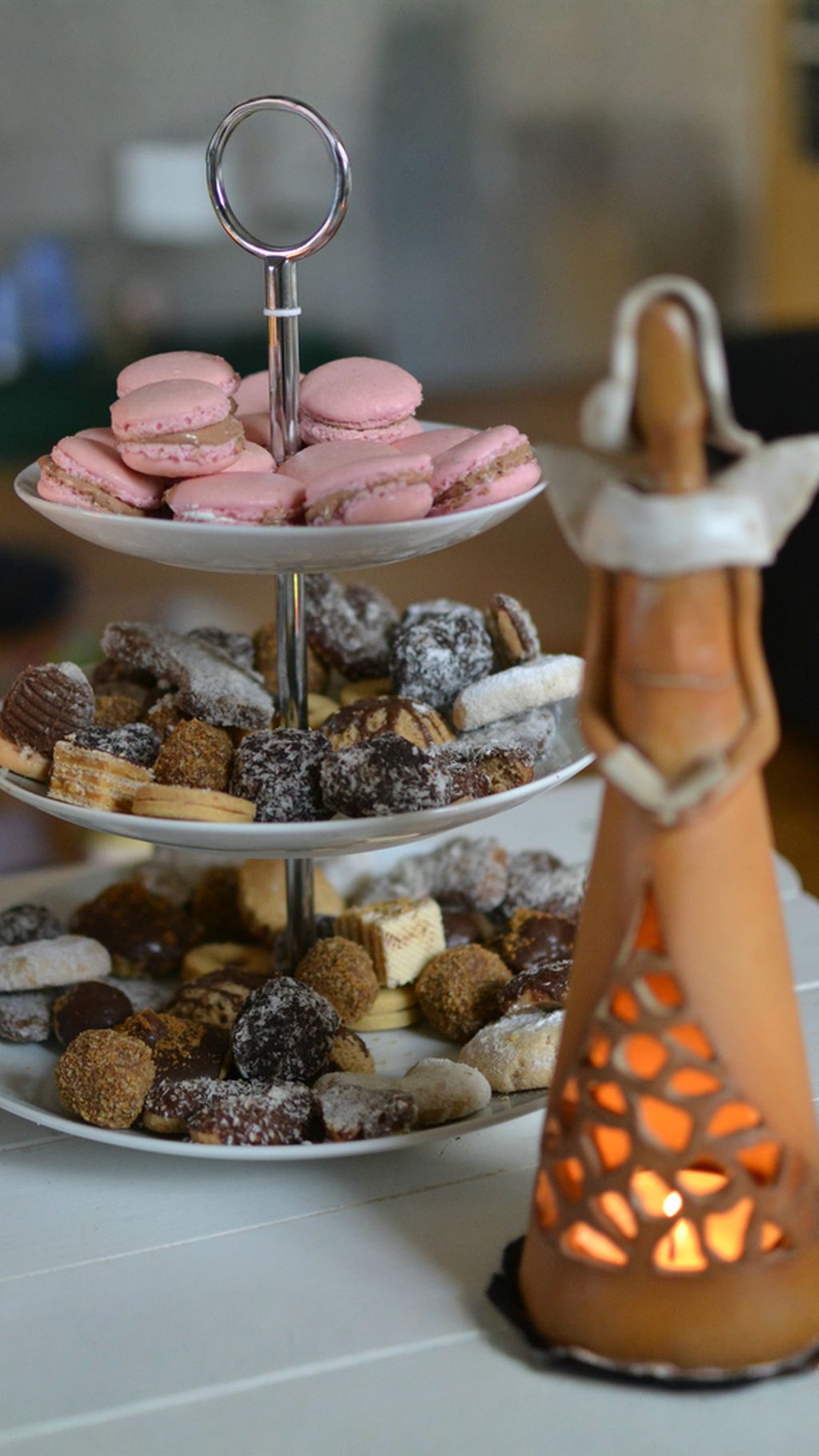
Macarons with Vanilla and Chocolate Cream
·Prepare the egg whites a few days ahead
The egg whites used for the macaron shells shouldn't come from freshly cracked eggs. Ideally, let them sit in a container in the fridge for about five days. Mine had been resting for around seven days.
Process the flour mixture
Mix the icing sugar with the almond flour. Transfer the mixture to a food processor and blitz briefly to make it even finer and thoroughly combined. Return it to a larger bowl and add half of the egg whites (110 g).
Make the sugar syrup
Pour water into a saucepan and add the granulated sugar. Stir and start heating. You're making a sugar syrup that needs to reach 118°C — keep an eye on the temperature with a sugar thermometer.
Whip the meringue and add the syrup
While the syrup is heating, put the remaining egg whites into the mixer and start whipping into a meringue. Whip until stiff, then gradually pour in the sugar syrup once it has reached the right temperature.
Check for 50°C
Keep whipping until the meringue has almost cooled down. It should be around 50°C — check again with the sugar thermometer.
Fold in gently
Gently fold the sugar, almond flour and remaining egg white mixture into the meringue. Mix carefully but thoroughly.
Colour it and transfer to a piping bag
You can tint the shell batter with a little gel food colouring, if you like. Once ready, transfer the coloured batter into a piping bag fitted with a plain round tip.
Piping the shells
Pipe small round macarons onto a baking tray lined with parchment paper, on which you've traced circles beforehand using a small glass as a guide. Alternatively, use silicone macaron moulds.
Tap the tray
Once the whole tray is piped, tap it firmly against the table a few times. This releases air bubbles from the batter, keeping the macaron tops smooth so they won't crack while baking.
Let the surface dry
Leave the piped macarons on the tray or mat to dry for about one to two hours. The surface shouldn't feel sticky to the touch before baking.
Bake and keep an eye on them
Bake in an oven preheated to 165°C for about 12–15 minutes, depending on your oven. My first tray wasn't quite done after 12 minutes, so I left the following trays in for 15 minutes and they turned out perfect.
Let them cool
Let the shells cool completely, peel them off the mat, and fill them the next day with your chosen cream. This time I went for a filling made from Swiss meringue and butter.
Whipping method one
Put the egg whites and sugar into a Kenwood Cooking Chef mixer, as they need to be whipped over steam. I skipped the classic double-boiler method and simply used the induction heating function on this brilliant machine, which works just like whipping over a water bath.
Whipping method two
If you don't have a stand mixer with heating, set up a water bath and whip the mixture in a bowl over simmering water. Whip until very stiff, then gradually beat in softened butter to create a smooth, silky base cream.
Split into two batches
I divided the finished cream into two halves. Into one, I whipped just a few vanilla seeds. Into the other, I folded in chocolate ganache.
Chocolate ganache
Bring the cream to a boil in a small saucepan, then remove from the heat. Immediately break the chocolate into it and let it sit for about five minutes. After that, stir gently with a small whisk until smooth. Fold this ganache into the second half of the base cream.
Chill, then fill the shells
Chill both creams in the fridge for about an hour. Then transfer them into piping bags and fill the macaron shells, sandwiching them together in pairs. Let the finished macarons rest in the fridge again, ideally until the next day, so the filling and shells meld together beautifully.