- Season
- Available all year; more choice and gift packs before Christmas and Easter
- Price
- Medium
- Nutrition per 100 g
- 583 kcal
- 6.1 g protein
- 38.9 g fat
- 51.2 g carbs
Milk Chocolate 35%
Baking ingredients
Milk Chocolate 35%
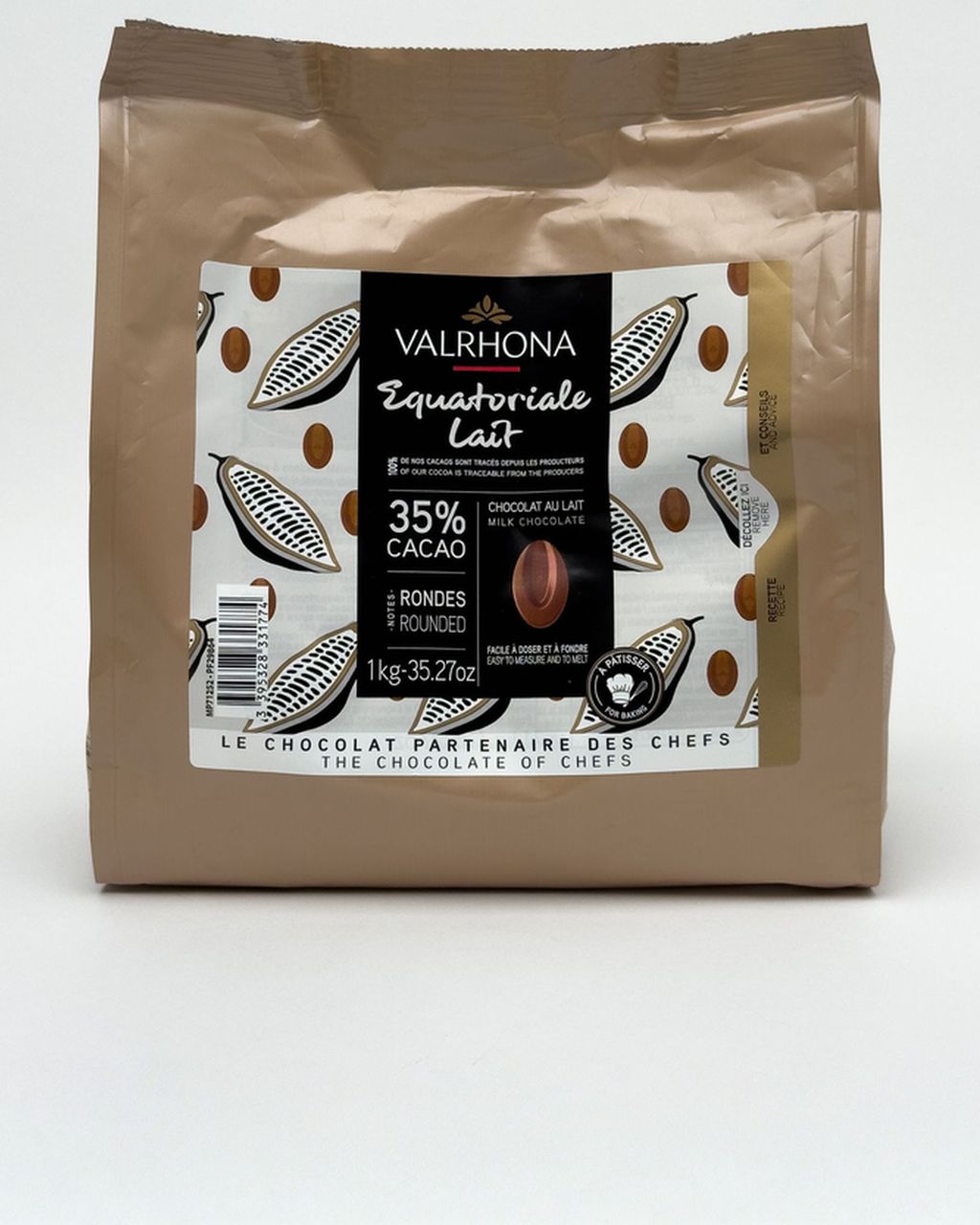
Čokoláda mléčná 35 % is milk chocolate that contains at least 35 % total dry cocoa solids, as the label states. It is sold in Czech shops as tablets for eating and as drops (pecky, callets) or blocks of couverture for baking.
In practice
How to store
- On the counter
Keep tightly wrapped in a cool, dry, dark place, ideally at 15–18 °C, away from strong smells it can absorb (coffee, spices). Above about 25 °C it softens, and after temperature swings it develops fat or sugar bloom. Unopened chocolate keeps until the best-before date (minimální trvanlivost), often 12–18 months.
- In the fridge
Only use the fridge when the room is too warm. Wrap the chocolate airtight, and let it reach room temperature before you unwrap it, so condensation does not cause sugar bloom.
- In the freezer
Can be frozen airtight for several months for baking, but freezing does not improve it. Thaw it slowly in the fridge and then at room temperature while still wrapped. Bloom may still appear, though this does not affect melting into a batter or ganache.
How to choose
Read the front label and the ingredients. The percentage refers to total cocoa solids ('kakaová sušina nejméně 35 %'). The ingredient list should name cocoa butter, cocoa mass and milk powder. If the product contains vegetable fats other than cocoa butter (up to 5 % is allowed), the label must say so. For baking and tempering, choose products sold as couverture (couverture, 'na vaření', pecky). They usually contain more cocoa butter, melt more fluidly and state tempering temperatures. A bar should look glossy and break with a clean snap. A dull, greyish or white-streaked surface (bloom) does not make it unsafe, but shows the bar was stored badly.
What to swap in
Best swap
Another milk chocolate or milk couverture with 33–38 % cocoa solids, swapped weight for weight.
In a pinch
Ordinary milk chocolate of about 30 %, which is sweeter, or a mix of about two parts milk chocolate to one part dark chocolate. Cocoa coatings (kakaová poleva) are a last resort for glazes only: they set without tempering but taste flatter and are not chocolate.
Preparation
Chop the chocolate evenly or use drops. Melt gently over a water bath (vodní lázeň), keeping the bowl clear of the water, or in the microwave in short bursts, stirring each time. Milk chocolate burns and seizes more easily than dark chocolate because of its milk solids and sugar, so do not take it above about 45–48 °C. Keep water and steam away from it: a single drop can make it seize into a grainy paste. To temper for a glossy, snapping finish, a common method for milk couverture is to melt it at 45–48 °C, cool it to 27–28 °C while stirring and then rewarm it to 29–30 °C. Follow the manufacturer's figures where they are given.
Don't toss it
Keep broken pieces, bloomed bars and leftover tempered chocolate in a jar and remelt them into hot chocolate, ganache, bábovka batter or a glaze for vánočka. Bloom disappears completely once chocolate is melted.
Buy it from us
In the kitchen
Cooking
Eaten as it is. Melted into ganache and truffle fillings (milk chocolate needs less cream than dark, often about 2 parts chocolate to 1 part cream), mousse, glazes for cakes, bábovka and Christmas biscuits (vánoční cukroví), hot chocolate and dipped fruit or nuts. Tempered for moulded figures, bonbons and decorations. Chopped into cookie, muffin and brownie doughs, where it holds its shape less well than baking-stable drops. It overpowers delicate desserts less than dark chocolate does, and suits recipes where children are the main audience.
Goes well with
- Hazelnuts
- Almonds
- Caramel
- Coffee
- Vanilla
- Cinnamon
- Orange Zest
- Banana
- Raspberries
- Sour Cherries
- Sea Salt
- Rum
- Whipped Cream
- Tvaroh
What it is
Čokoláda mléčná 35 % is milk chocolate that contains at least 35 % total dry cocoa solids, as the label states. It is sold in Czech shops as tablets for eating and as drops (pecky, callets) or blocks of couverture for baking. Under EU chocolate rules (Directive 2000/36/EC, which Czech law adopts), anything sold as milk chocolate must have at least 25 % total dry cocoa solids, 2.5 % non-fat cocoa solids, 14 % milk solids, 3.5 % milk fat and 25 % total fat. At 35 % this product sits well above that minimum. It tastes more of cocoa and less sugary than everyday milk chocolate, which often lists around 30 % (Milka, for example, states at least 30 %). It is not dark chocolate (hořká čokoláda), and it is not a cocoa-flavoured coating (kakaová poleva) or a 'cocoa treat' (kakaová pochoutka): those products fall below the legal limits and may not be called chocolate.
How it tastes
Sweet and creamy, with a clear roasted cocoa note and flavours of caramel, cooked milk and sometimes honey or malt, depending on the milk powder used. Compared with standard milk chocolate it is less sweet and tastes more of chocolate, but it stays mild and has none of the bitterness of dark chocolate. A good bar melts smoothly on the tongue because cocoa butter softens just below body temperature.
Common questions
What does 35 % mean on milk chocolate?
Is 35 % milk chocolate the same as dark chocolate?
Can I use it instead of dark chocolate in a recipe?
At what temperature should I temper milk chocolate?
Why does my chocolate have white streaks?
Which allergens does it contain?
Deep dive
3 min read
Varieties
Eating tablets.
Bars of 80–200 g, plain or with nuts, raisins, caramel or biscuit. Some brands on the Czech market state 35 % or more on milk lines, often Swiss or Belgian imports, own-label premium ranges and craft makers.
Couverture and baking drops.
Sold in 100 g to 1 kg bags or blocks as pecky, callets or 'čokoláda na vaření'. They are made for melting and tempering, with tempering curves printed on the pack. Professional examples at around 35 % include products from French, Belgian and Swiss chocolate houses, which Czech confectioners and baking shops sell.
Bean-to-bar 'dark milk'.
Small Czech and foreign craft makers produce milk chocolates with 40–50 % or more cocoa, which taste noticeably more of cocoa. They are milk chocolates by law but sit between this item and dark chocolate in taste.
Related but different products.
Dark chocolate (hořká čokoláda, at least 35 % cocoa solids, with no milk solids requirement). White chocolate (bílá čokoláda, cocoa butter with no cocoa mass). Milk chocolate with a higher milk content. Cocoa coatings and 'cocoa treats' (kakaová poleva, kakaová pochoutka), which do not meet the definition of chocolate and usually use other vegetable fats.
History
Milk chocolate came out of Swiss work in the late 19th century, which combined chocolate with condensed or powdered milk. In the Czech lands, industrial chocolate making grew in the same period: the Prague company that became Orion (now part of Nestlé) dates from the 1890s. Today's '35 %' labelling is a recent marketing distinction. The EU chocolate directive of 2000, applied from 2003, requires the cocoa content to be declared, and higher-cocoa milk chocolates have become more common as interest in cocoa-forward flavour has grown.
Science
Chocolate is a suspension of fine sugar, cocoa and milk particles in a continuous fat phase of cocoa butter plus milk fat. Cocoa butter can crystallise in six forms. Tempering encourages form V, which gives gloss, snap and melting just below body temperature. Milk fat interferes with cocoa butter crystals, so milk chocolate is softer, melts at a lower temperature and is tempered a few degrees cooler than dark chocolate. Caramel and cooked-milk notes come from Maillard reactions in the milk powder (or milk crumb) during processing. Fat bloom is cocoa butter migrating to the surface and recrystallising after warming. Sugar bloom is sugar dissolved by condensation and then recrystallised.
Sourcing and ethics
Most cocoa is grown by smallholders in West Africa, especially Côte d'Ivoire and Ghana, where child labour, low farmgate prices and deforestation are documented problems. Certifications seen on Czech shelves include Fairtrade and Rainforest Alliance, and some brands run their own sourcing programmes. The EU Deforestation Regulation (EU 2023/1115) covers cocoa and will require deforestation-free supply chains for products placed on the EU market, from 30 December 2026 for large and medium companies and from 30 June 2027 for small ones. Milk comes from dairy supply chains, often unspecified on the label. Bean-to-bar makers frequently publish their farm or cooperative of origin.