- Season
- Year-round
- Price
- Medium
Calories and nutrition per 100 g
- 351 kcal
- 23.6 g protein
- 1.9 g fat
- 62.2 g carbs
Black beluga lentils
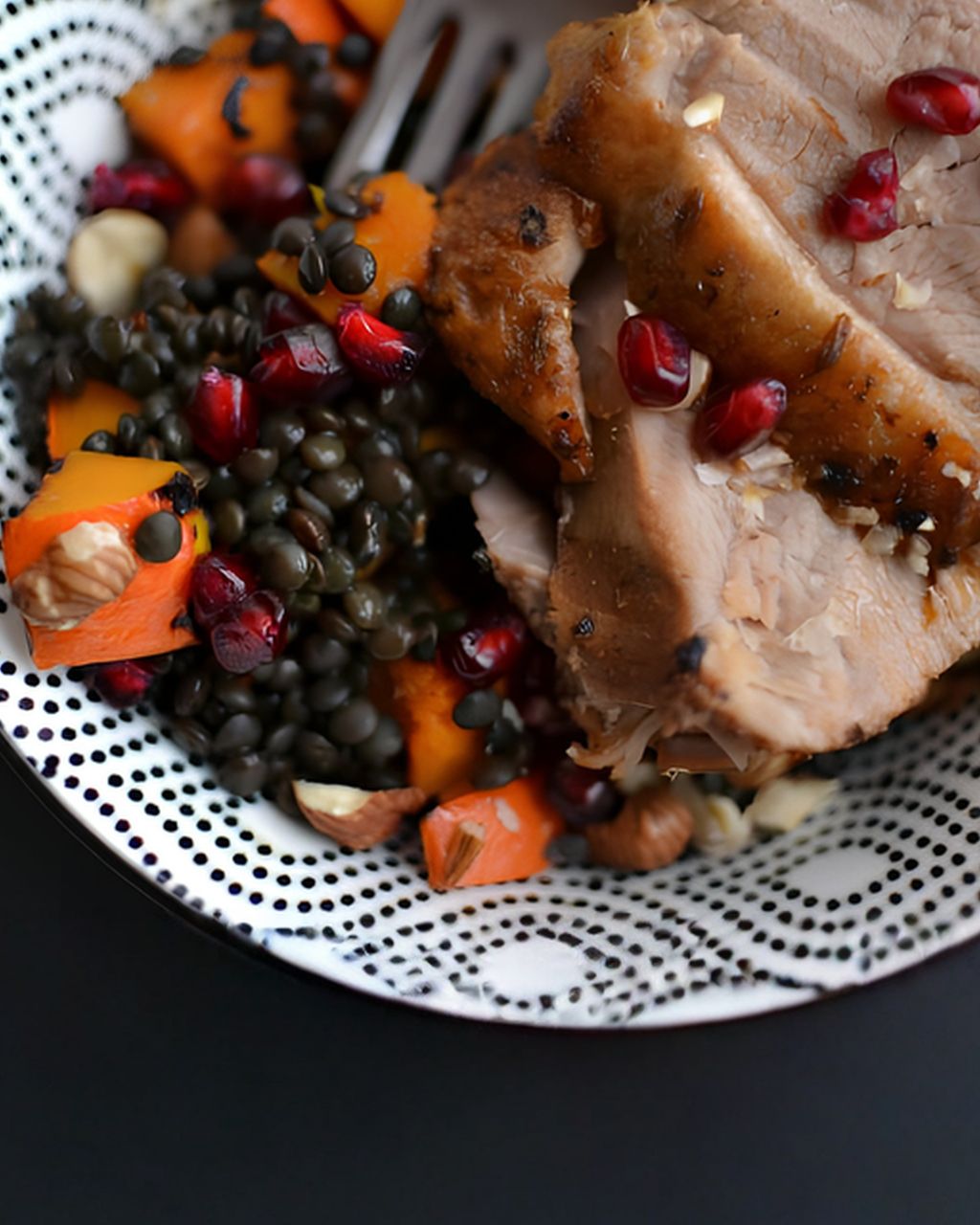
Black beluga lentils are small, bead-like legumes (Lens culinaris) with a glossy jet-black seed coat and yellow cotyledon. Named for their striking resemblance to beluga caviar when cooked, these lentils are prized for their ability to hold their shape, their rich earthy flavor, and their impressive nutritional density.
Dried beluga lentils keep for 1–2 years in an airtight container in a cool, dark, dry place. They slowly lose quality, and older lentils take longer to cook and may cook unevenly.
Cool cooked lentils quickly, within two hours, and store them in an airtight container in the fridge for 3–4 days.
Spread cooked lentils in a single layer on a sheet pan to freeze individually, then transfer to freezer bags for up to 6 months.
Seek out lentils with a uniform, deep black color and a glossy sheen—dull or faded specimens may be old and will cook unevenly. The lentils should be whole and intact without cracks or chips. Avoid packages with excessive dust or debris. Most beluga lentils are grown in Canada and the northern United States; organic lentils carrying the EU organic logo are widely available.
French green lentils (Puy lentils)—similar size, firm texture, and shape-holding ability, though lacking the dramatic color and anthocyanin content.
Small green or brown lentils can work in most recipes, though they may become softer. For visual impact, consider mixing with wild rice or black beans.
Unlike many legumes, black beluga lentils require no soaking—simply rinse under cold water to remove any dust or debris. Use about 750 ml liquid (water or stock) for every 200 g lentils, roughly three times their volume. Bring to a boil, reduce to a gentle simmer, and cook uncovered for 20-25 minutes until tender but still holding their shape. Season the cooking liquid with salt, aromatics (bay leaf, garlic, thyme), or a splash of vinegar to infuse flavor. Drain any excess liquid or, better yet, incorporate the cooking liquid into your dish to preserve the anthocyanin-rich pigments.
Never discard the cooking liquid—the dark, almost black broth is loaded with anthocyanins and water-soluble nutrients. Use it as a base for soups, grain cooking liquid, or plant-based gravies. Overcooked lentils that have lost their shape can be blended into hummus-style dips, veggie burger patties, or stirred into chocolate desserts like brownies and puddings where their earthy flavor and nutritional density go undetected.
Roughly what one measure weighs, scooped the way you normally would in the kitchen.
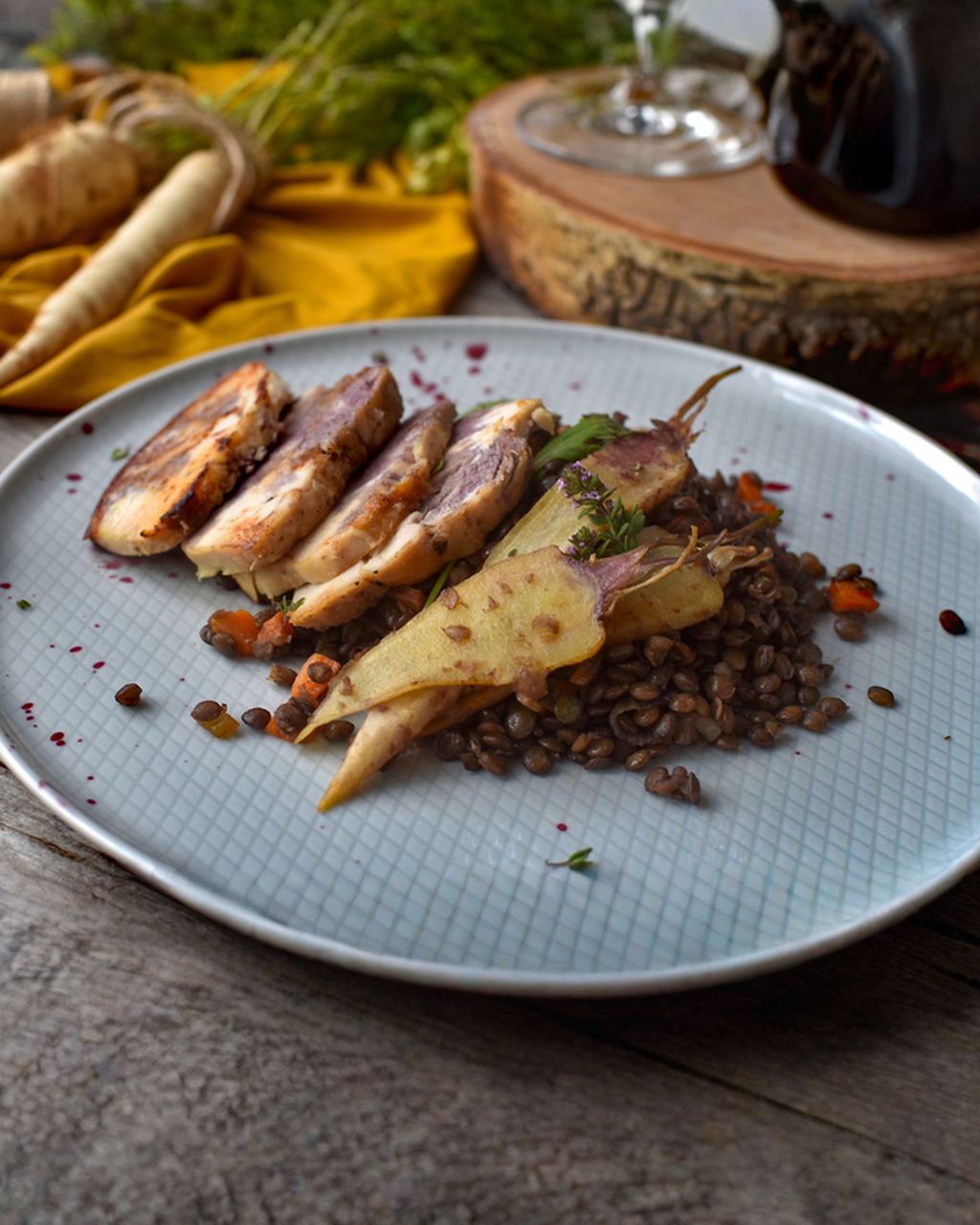
Black beluga lentils excel across multiple cooking methods. Simmering on the stovetop (20-25 minutes) is the classic approach; pressure cooking (about 6 minutes at high pressure with natural release) offers speed and convenience. They shine in composed salads served warm or at room temperature, hearty stews and braises where they absorb rich flavors, elegant side dishes alongside seared proteins, Mediterranean and Middle Eastern preparations, vegan bolognese sauces, and even as a bed for pan-seared scallops or roasted fish. Their structural integrity makes them unsuitable for dal-style dishes where a creamy breakdown is desired.
Black beluga lentils are small, bead-like legumes (Lens culinaris) with a glossy jet-black seed coat and yellow cotyledon. Named for their striking resemblance to beluga caviar when cooked, these lentils are prized for their ability to hold their shape, their rich earthy flavor, and their impressive nutritional density. They come from 'Indianhead', a small black lentil bred in Saskatchewan, Canada, as a green-manure crop, and were rebranded as a gourmet ingredient from the late 1980s and 1990s.
Black beluga lentils offer a delicate yet full-bodied taste with pronounced earthy, nutty undertones and a subtle sweetness that distinguishes them from their green and brown cousins. Their flavor is mild enough to absorb surrounding aromatics—garlic, miso, herbs, and spices—yet substantial enough to anchor a dish. When cooked, they develop a slightly creamy interior while maintaining a satisfying bite, delivering textural intrigue that elevates both rustic stews and refined salads.
Seasonal baking plans, tested recipes and kitchen tricks that save you time. Unsubscribe in one click.
3 min read
The commercial 'Beluga' designation refers specifically to the 'Indianhead' cultivar, though the broader category of black lentils includes several related varieties. Mt. Byron Black lentils are nearly as small as Beluga but feature red rather than yellow cotyledons. It's crucial not to confuse true black lentils (Lens culinaris) with urad dal or black gram (Vigna mungo)—a completely different legume common in South Asian cooking that requires much longer cooking times. Urad dal, despite its similar appearance, is used for dishes like dal makhani and has different culinary applications and nutritional properties.
Lentils rank among humanity's oldest cultivated crops, domesticated roughly 10,000 years ago in the Fertile Crescent alongside barley and ancient wheat varieties. The legume's journey eastward reached India around 2000 BC, where it became the foundation of dal and a dietary staple that persists today. Black beluga lentils, however, have a distinctly modern origin story. The 'Indianhead' lentil was bred in Saskatchewan, Canada, initially as a nitrogen-fixing green-manure crop to be ploughed back into the soil. During the farm crisis of the 1980s—marked by drought, volatile wheat prices, and rising fertilizer costs—farmers on the northern Great Plains began exploring diversified crops. By the 1990s, enterprising producers and marketers recognized the lentil's visual appeal and culinary potential, christening it 'Beluga' for its resemblance to the prized caviar. This rebranding transformed a humble rotation crop into a designer ingredient, commanding premium prices in gourmet markets worldwide.
The striking jet-black color of beluga lentils comes from a previously unknown anthocyanin compound identified by USDA chemist Gary R. Takeoka in 2005. This pigment—chemically named delphinidin-3-O-(2-O-beta-D-glucopyranosyl-alpha-L-arabinopyranoside)—belongs to the same family of pigments that give blueberries, blackberries, and red cabbage their vivid hues. The lentil's seed coat holds these pigments, and together with the lentil's small size it helps the lentils keep their shape during cooking. Notably, the anthocyanins are water-soluble, which is why the cooking liquid turns dark; adding this liquid to your dish keeps the pigments in it.
Black beluga lentils represent one of the more sustainable protein sources available. As legumes, they fix atmospheric nitrogen in the soil through symbiotic bacteria in their root nodules, reducing the need for synthetic fertilizers and making them valuable rotation crops for wheat farmers. The majority of commercial beluga lentils are grown in Canada (particularly Saskatchewan) and the northwestern United States (Montana, Washington, Idaho), regions with established sustainable and organic farming practices. For organic lentils, look for the EU organic logo. Supporting small-scale producers who practice crop rotation contributes to soil health and agricultural biodiversity. The lentil's low water requirements compared to animal protein sources, combined with its nitrogen-fixing properties, make it an environmentally responsible choice for conscious consumers.