Did it work out?
One click, and we know how the recipe works in a real kitchen.
Cooking
Caramel Cake
·I never bake any other type of sponge – I just adjust the ratio of eggs (and other ingredients) to the size of the tin. For one baking tray: use a batter made with 4 eggs for a base layer (for slices with gelatine). For one baking tray: use a batter made with 6 eggs for a sponge meant to be sliced and filled.
26 cm round cake tin – batter made with 6 eggs. 30 cm round cake tin – batter made with 8 eggs.
The sponge can be flavoured with hazelnuts, coconut, almonds, cocoa or chocolate. Whichever ingredient you mix in with the flour needs to weigh the same as the eggs you're using. I used 50 g of finely ground hazelnuts instead of 50 g of coarse-ground (semi-coarse) flour.
Weigh your eggs in their shells (using however many eggs you plan to use) – then weigh out the same amount of caster sugar and the same amount of coarse-ground (semi-coarse) flour. Allow 2 tablespoons of hot water per egg.
Whisk the egg yolks with the sugar and water. Once the mixture thickens and the sugar has dissolved, whisk the egg whites into stiff peaks and fold them into the yolk mixture alternately with the flour.
Add the hazelnuts, or whichever flavouring you're using.
Pour the sponge batter into a greased and flour-dusted baking tin. Bake in an oven preheated to 175 °C (160 °C fan). Baking time depends on the size and height of the sponge, but it's usually somewhere between 30 and 50 minutes.
Don't open the oven door for the first half hour, or the sponge might sink. After that, you can open the oven and insert a skewer into the centre of the sponge – it should come out clean.
Let the sponge cool completely. Only then slice it into as many layers as you like, depending on how tall the sponge is.
Bring the cream to the boil in one pot. Put the sugar into a second pot. Turn the heat up to nearly full and wait for the sugar to melt. I'd recommend using a stainless steel pot – you could ruin a non-stick one with this trick. The sugar will gradually caramelise nicely.
Keep an eye on two things: don't burn yourself (hot caramel really does hurt!), and don't let the caramel get too dark – it could scorch and turn bitter.
Take the finished caramel off the heat and stir in the butter. I used plain butter and about a teaspoon of salt, but adjust to how salty you like your caramel. Stir until both are fully combined.
Return the pot to the heat and stir over a gentle temperature. Slowly pour in the hot cream. Keep stirring until you get a smooth caramel mixture. Let it cool completely.
Beat the softened butter together with the cooled caramel. Beat for a good while, around 8 minutes. Add the mascarpone and beat again thoroughly until you have a smooth, silky frosting.
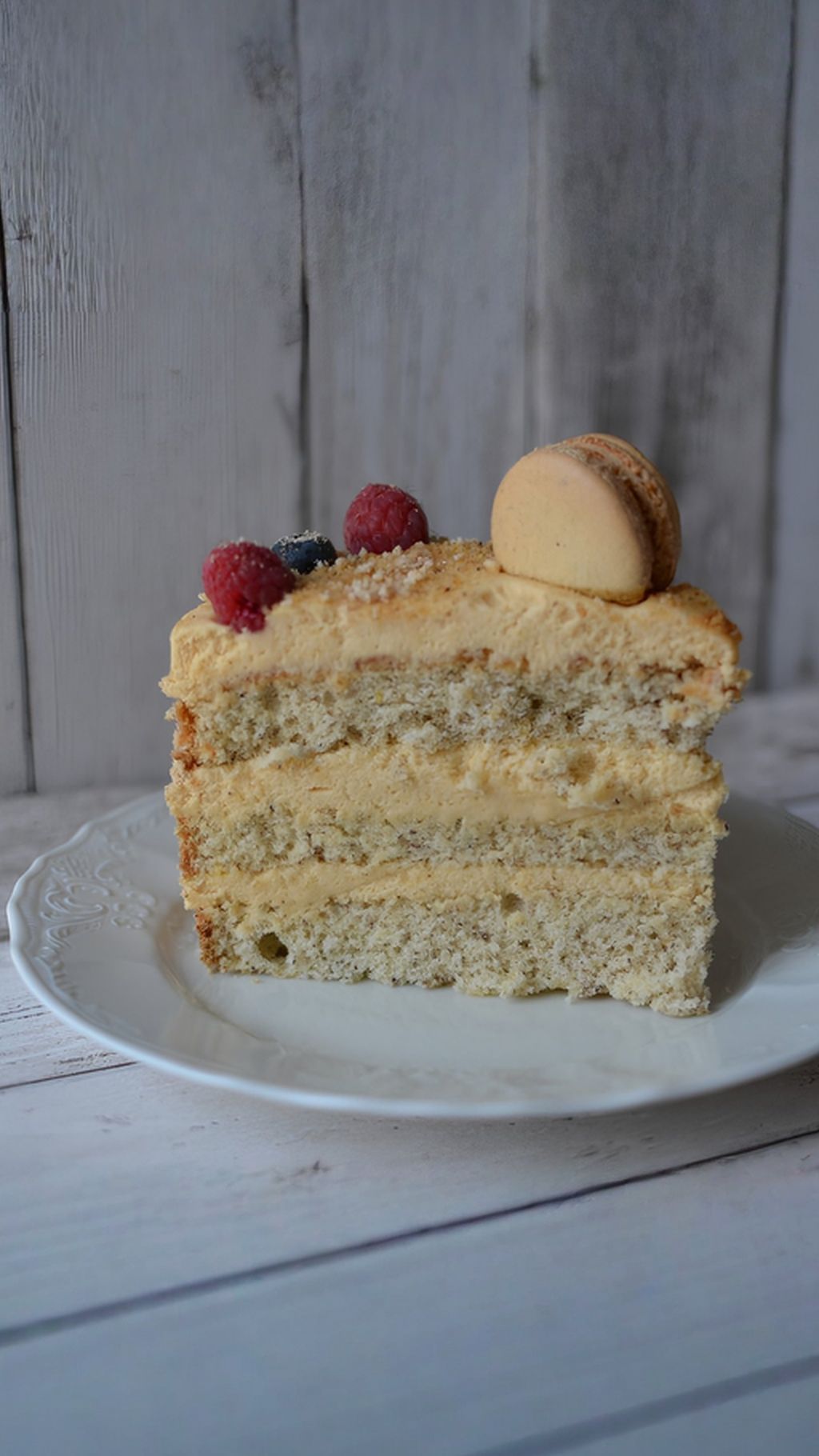
Spread a generous layer of frosting between the sponge layers. Assemble the cake and cover the top and sides with frosting too. You can sprinkle it with crumbs from the sponge trimmings and decorate however you like.